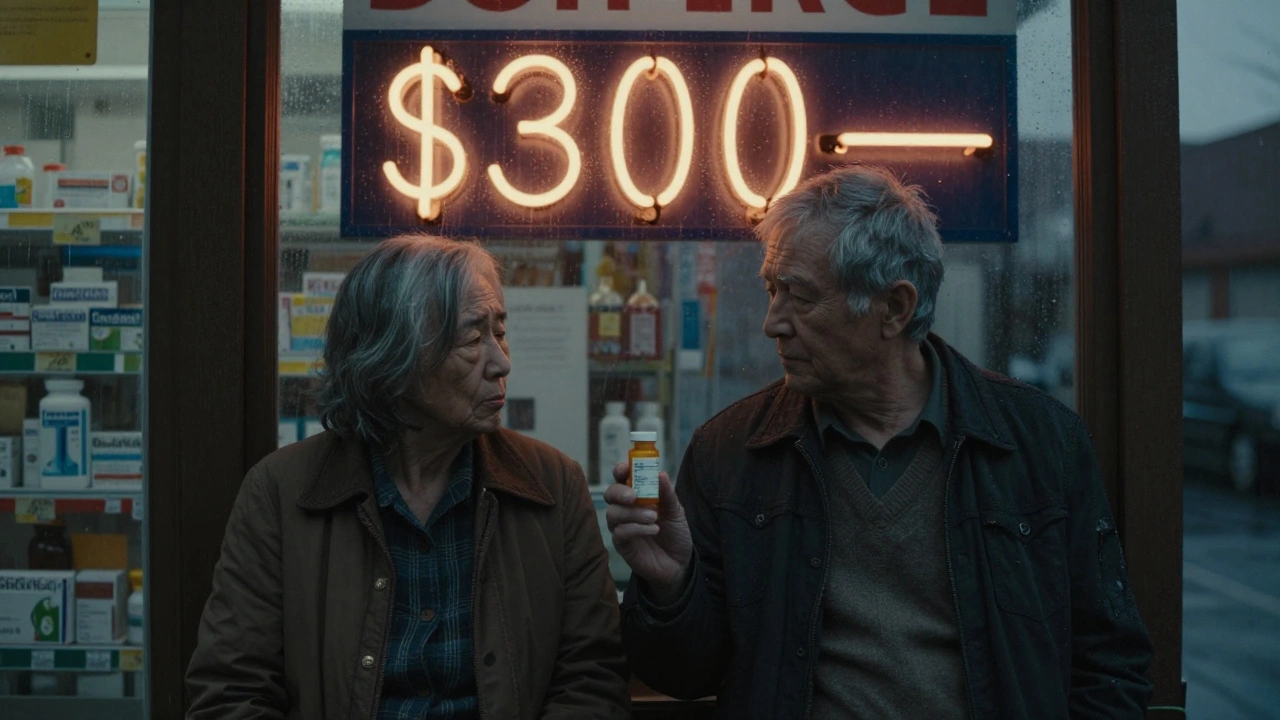
Every year, the U.S. FDA approves hundreds of generic drugs - and each approval saves billions. But how much? And why do the numbers jump from year to year? If you’ve ever wondered why your $10 prescription suddenly dropped to $4, or why your insurance company seems to care so much about generics, the answer lies in these numbers. This isn’t just about drug companies or regulators. It’s about real money - billions of it - flowing back into patients’ pockets, Medicare’s budget, and state health programs.
What Exactly Counts as a "Savings"?
When a brand-name drug loses patent protection, generic versions flood the market. Prices drop - often by 80% or more. That difference between what the brand charged and what the generic charges? That’s the savings. But there are two ways to measure it, and they tell very different stories.
The FDA looks at savings from new generic approvals in a single year. They track only the first 12 months after a generic is approved. For example, if a new generic version of a $200-a-month heart medication hits the market at $30, the FDA calculates how much was saved by everyone who switched - plus how much the brand lowered its price to compete. This method captures the immediate shockwave of competition.
The Association for Accessible Medicines (AAM) takes a broader view. They measure total savings from all generics in use during a calendar year. That includes generics approved five years ago and still being filled today. This number is much bigger - because it’s cumulative.
Think of it like this: the FDA sees the spark. The AAM sees the whole fire.
Year-by-Year Breakdown: FDA’s New Generic Savings
Here’s what the FDA recorded for savings from first-time generic approvals - the big hits that knock brand drugs off their pedestal:
- 2018: $2.7 billion
- 2019: $7.1 billion - the highest year on record
- 2020: $1.1 billion
- 2021: $1.37 billion
- 2022: $5.2 billion
Why the wild swings? It’s all about which drugs go generic. In 2019, multiple blockbuster drugs - including treatments for high cholesterol, depression, and autoimmune diseases - lost patent protection at once. That’s when savings spiked. In 2020, fewer big-ticket drugs expired, so savings dropped. Then in 2022, a cluster of high-demand medications - including a top-selling diabetes drug - went generic, pushing savings back up.
One thing stands out: half of all first-generic savings in 2021 came from just five drugs. In 2021, 21 new molecular entity (NME) generics - meaning generics of brand-new drugs that had never had a generic version - generated nearly $1.4 billion in savings. That’s a lot of money concentrated in a handful of products.
Total Generic Savings: What the Market Actually Saves
While the FDA tracks new entries, the AAM tracks the full impact. And the numbers are staggering:
- 2020: $338 billion in total savings from all generics
- 2022: $408 billion
- 2023: $445 billion
That’s $445 billion in 2023 alone - more than the entire annual budget of the Department of Education. And it’s not just about the price tag. It’s about access.
Medicare saved $137 billion in 2023 - an average of $2,672 per beneficiary. Commercial insurers saved $206 billion. Medicaid saved the rest. In California, generics saved the state’s Medicaid program nearly $38 billion in a single year. In Alaska, it was $354 million. The scale changes with population, but the impact is always the same: lower costs for patients and less strain on public funds.
Who Benefits the Most?
Patients with chronic conditions benefit the most. In 2023:
- Heart disease patients saved $118.1 billion
- Mental health patients saved $76.4 billion
- Cancer patients saved $25.5 billion
For someone on a daily medication for high blood pressure or diabetes, going from a $300 monthly brand-name pill to a $12 generic can mean the difference between taking their medicine - or skipping doses to save money. Pharmacists report that 92% of generic prescriptions are filled for under $20. The average copay? Just $6.97.
But here’s the catch: not all savings reach the patient. Pharmacy benefit managers (PBMs) often negotiate rebates with drugmakers. A 2023 Senate investigation found that only 50-70% of the savings from generics actually make it to the consumer. The rest gets absorbed by middlemen, insurance plans, or rebates that don’t lower your out-of-pocket cost.
Why Do Generic Approvals Keep Rising?
The FDA approved 633 generic applications in 2021 - representing 408 unique drugs. In 2022, that jumped to 742 applications. Why? Because more brand-name drugs are losing patents. The Hatch-Waxman Act of 1984 created the pathway for generics, and since then, the system has worked - mostly.
Now, the FDA is moving faster. Thanks to the Generic Drug User Fee Amendments (GDUFA), 95% of standard generic applications are reviewed within 10 months. That’s a big deal. Faster approvals mean faster savings.
But challenges remain. Some brand-name companies use legal tricks - like patent thickets or complex REMS programs - to delay generic entry. Others raise prices just before generics arrive, trying to squeeze out last-minute profits. The FDA’s 2023 Drug Competition Action Plan is targeting these barriers head-on.
What’s Next? Biosimilars and Complex Drugs
Most savings come from small-molecule generics - pills and injections you’ve been taking for years. But a new wave is coming: biosimilars. These are generic versions of complex biologic drugs - things like insulin, rheumatoid arthritis treatments, and cancer therapies.
As of August 2024, the FDA had approved 59 biosimilars. They’re not as cheap as traditional generics - yet. But they’re starting to move the needle. Experts predict biosimilars could add $50-100 billion in annual savings by the end of the decade.
Meanwhile, the FDA is working on new guidelines for complex generics - harder-to-make drugs like inhalers, patches, and injectables. These used to take years to approve. Now, the goal is to cut that time in half. More approvals. More savings.
The Big Picture: Generics Are the Silent Engine of Affordable Care
Generics make up 90% of all prescriptions filled in the U.S. - but only 13% of total drug spending. That’s the power of competition. Without generics, prescription costs would be double, maybe triple. Medicare would be broke. Medicaid programs would collapse. Millions of people would skip their meds.
The year-to-year numbers may look erratic - $7 billion one year, $1 billion the next - but the trend is clear. Every time a generic hits the market, it doesn’t just lower a price. It changes lives. It lets a senior choose between insulin and groceries. It lets a parent afford their child’s asthma inhaler. It lets a veteran manage their PTSD medication without going into debt.
These aren’t abstract figures. They’re real dollars in real pockets. And every FDA approval - whether it saves $10 million or $1 billion - is a step toward a more affordable health system.
How much do generics save the average American each year?
The average U.S. household saves about $1,200 per year just from generic medications. For Medicare beneficiaries, that number jumps to $2,672 annually. These savings come from lower copays, reduced out-of-pocket costs, and lower premiums as insurers spend less on brand-name drugs.
Why do some generic drugs cost more than others?
Price depends on competition. If five companies make the same generic, prices drop fast. If only one or two are approved, the price stays higher. Some complex generics - like inhalers or injectables - are harder to manufacture, so fewer companies can make them, keeping prices up. The FDA is working to speed up approvals for these harder-to-make drugs to boost competition.
Do generic drugs work as well as brand-name drugs?
Yes. The FDA requires generics to have the same active ingredient, strength, dosage form, and route of administration as the brand-name drug. They must also prove they’re absorbed into the body at the same rate and extent. Over 90% of generics are rated as therapeutically equivalent. Millions of patients use them safely every day.
Why don’t I see lower prices at the pharmacy even when generics are approved?
Pharmacy benefit managers (PBMs) often negotiate rebates with drugmakers that don’t always get passed to you. A generic might cost $10 to the pharmacy, but your copay could still be $20 if your insurance plan doesn’t adjust its pricing structure. Some states have passed laws requiring PBMs to pass savings to patients, but it’s not universal yet.
How long does it take for a generic to become available after a brand drug’s patent expires?
Legally, generics can be approved as soon as the patent expires. But delays happen. Some companies file lawsuits to extend exclusivity, or use REMS programs to block competitors. On average, generics enter the market within 6-18 months after patent expiry. Thanks to FDA reforms, review times have dropped to under 10 months for most applications.
Are biosimilars the next big wave of savings?
Yes - but they’re slower to catch on. Biosimilars are complex and expensive to produce, so they’re not as cheap as traditional generics. Still, they’re 15-35% cheaper than the brand biologic. With 59 approved as of 2024 and more in the pipeline, they’re expected to save $50-100 billion annually by 2030, especially for cancer, autoimmune, and diabetes treatments.
What You Can Do
If you’re on a prescription drug, ask your pharmacist: "Is there a generic version?" Even if your doctor didn’t prescribe one, it’s often just as effective and far cheaper. If your copay hasn’t dropped after a generic came out, call your insurer. Ask why. You might be surprised how often the answer is: "We haven’t updated our formulary yet."
Generics aren’t magic. They’re competition. And competition works - if it’s allowed to.


Frank Nouwens
December 10, 2025 at 19:07
The FDA’s methodology is technically sound, but it’s like measuring the size of a wildfire by counting only the sparks that ignite it. The real story is in the inferno that follows.