
Why do patients stick with expensive drugs even when cheaper ones work just as well?
It’s not about money. It’s not about knowledge. And it’s definitely not about logic.
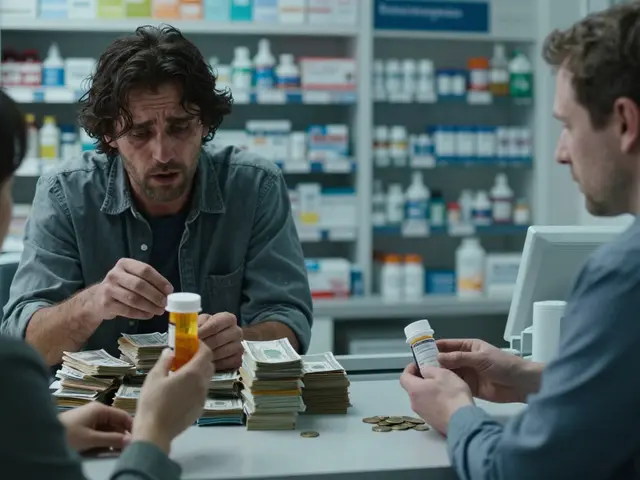
Every day, millions of people ignore cheaper, equally effective medications-and stick with prescriptions that cost twice as much. A diabetic might keep taking a brand-name insulin that costs $300 a vial, even though a generic version works identically and costs $120. A patient with high blood pressure might refuse to switch from a branded pill to a generic, even after their doctor explains it’s the same drug. Why?
The answer isn’t in medical textbooks. It’s in the mind.
Behavioral economics explains how real people make health decisions-not the rational, cost-calculating agents of traditional economic models, but humans who are tired, scared, confused, and influenced by invisible mental shortcuts. These shortcuts, called cognitive biases, shape everything from whether someone fills a prescription to whether they take their medicine at all.
The hidden forces behind drug choices
When people choose medications, they’re not weighing pros and cons like a spreadsheet. They’re reacting to emotions, habits, and social cues. Here are the big ones:
- Loss aversion: People hate losing more than they like gaining. Switching to a new drug feels like giving up something they already have-even if the new one is better. Studies show 68% of patients won’t switch to a cheaper, equally effective drug because they fear losing the perceived benefits of their current one.
- Confirmation bias: If you believe a brand-name drug is stronger, you’ll ignore evidence that generics work just as well. A 2022 study found patients often assume higher price = higher quality, even when clinical data says otherwise.
- Present bias: Humans prioritize immediate comfort over future health. That’s why one-third of prescriptions are never filled. The side effects might come tomorrow. The cost is right now. So they skip it.
- Social norms: If your neighbor says their doctor gave them a certain pill, you’re more likely to ask for it too. One HIV clinic saw adherence jump 22.3% just by posting public charts showing who was taking their meds on time.
- Framing: Saying a vaccine is “95% effective” gets more people to say yes than saying it’s “5% ineffective.” The same applies to medications. Telling someone “this drug reduces your risk of stroke by 40%” works better than “there’s still a 60% chance you’ll have a stroke.”
These aren’t quirks. They’re predictable patterns. And they cost lives.
How defaults change behavior
Imagine you’re a doctor ordering medication for a patient. The electronic health record shows three options: Drug A (expensive, branded), Drug B (cheaper, generic), and Drug C (new, experimental).
If Drug A is the default option-already selected when you open the screen-you’re far more likely to click “confirm” without thinking. That’s not laziness. That’s how the brain works.
A 2012 study showed that when hospitals changed their default settings in electronic prescribing systems to highlight generic alternatives during drug shortages, appropriate substitutions jumped by 37.8%. No lectures. No extra paperwork. Just a change in the order of options.
This is called a “nudge”-a tiny design tweak that guides behavior without forcing it. And it’s one of the most powerful tools in behavioral economics.
Pharmaceutical companies have caught on. Some now design patient support apps that auto-fill refill requests. Others set up automatic reminders framed as “Don’t break your streak!”-leveraging loss aversion to keep people on track.
Why education alone fails
For decades, the go-to solution for poor medication adherence was simple: educate patients. Brochures. Videos. One-on-one counseling. The idea? If people understood their condition better, they’d take their pills.
It didn’t work.
A 2022 review of 44 studies found traditional education programs improved adherence by only 5-8%. Meanwhile, behavioral interventions-like changing defaults, using loss-framed messages, or adding social accountability-boosted adherence in 92% of cases. Some saw improvements of over 28%.
Why the gap? Because knowledge doesn’t drive behavior. Emotion does.
Knowing your blood pressure medicine prevents a stroke doesn’t help if you’re overwhelmed by work, scared of side effects, or think the pill doesn’t really matter because you “feel fine.”
Behavioral economics doesn’t assume people are irrational. It assumes they’re human.

Real-world wins: When nudges save lives
One of the most striking examples comes from a 2021 study on statins-medications that lower cholesterol and prevent heart attacks. Researchers gave patients a choice: get a $100 rebate at the end of the month if they took their pills every day, or get nothing.
That’s it. No lectures. No apps. Just money.
But here’s the twist: half the group was told they’d receive the rebate and would lose it if they missed doses. The other half was told they’d earn it if they stayed on track.
The “loss” group had 23.8% higher medication persistence. That’s not a small difference. That’s life or death.
Another study used SMS reminders. One group got: “Take your medication today.” Another got: “Don’t lose your streak!” The second group had 19.7% better adherence.
Even small tweaks-like switching from daily pills to weekly ones-can make a huge difference. Each extra pill a person takes per day cuts adherence by 8.3%. For someone on five medications, that’s a 41.5% drop in likelihood they’ll stick with their regimen.
The hidden costs of non-adherence
When people don’t take their meds, the consequences aren’t just personal. They ripple through the whole system.
In the U.S., medication non-adherence costs $289 billion a year. That’s more than the entire annual budget of the CDC. It leads to 125,000 avoidable deaths.
Why? Because missed doses lead to hospitalizations. Hospitalizations lead to emergency visits. Emergency visits lead to longer stays and higher bills. And often, the root cause isn’t poverty or access-it’s psychology.
Patients with diabetes, high blood pressure, or depression are especially vulnerable. These conditions often have no obvious symptoms when they’re under control. So why take the pill? “I feel fine” becomes the excuse. Behavioral economics helps fix that by making the invisible consequences visible.
Barriers no one talks about
Not everyone responds to nudges the same way.
People with severe depression or anxiety are 31.4% less likely to benefit from behavioral interventions. Why? Because their mental health overrides decision-making capacity. For them, even the best-designed nudge feels impossible.
Then there’s polypharmacy-taking multiple medications. Each additional pill reduces adherence by 8.3%. A patient on six drugs is nearly half as likely to take them all correctly as someone on one.
And let’s not forget negative beliefs. Over 40% of people who stop their meds do so because they believe the drug is unnecessary, harmful, or “just for profit.” That’s not ignorance. That’s distrust.
Successful programs don’t push. They listen. They ask: “What’s stopping you?” Then they design around the answer.

What’s changing in 2025
Behavioral economics is no longer just a research topic. It’s policy.
In 2023, the Centers for Medicare & Medicaid Services (CMS) started requiring Medicare Part D plans to use at least two evidence-based behavioral interventions for high-risk patients. That means plans now have to offer things like automated refill reminders, loss-framed incentives, or default generic substitutions.
The FDA’s 2023 draft guidance now requires drug companies to evaluate how dosing frequency and pill size affect patient decisions. If a drug requires five pills a day, that’s a red flag. If it’s a once-weekly injection, that’s a win.
And companies are investing. The market for behavioral health consulting grew from $187 million in 2018 to $432 million in 2022. Pharmaceutical firms are now hiring behavioral scientists alongside pharmacologists.
Even biosimilars-cheaper versions of biologic drugs-are seeing higher adoption thanks to nudges. In one trial, framing the switch as “your insurer wants you to save money without losing effectiveness” increased switching rates by 29.4%.
The future: Personalized nudges
What’s next? Personalization.
Machine learning is now being trained to predict which patients will respond to which nudges. Someone who responds to financial incentives? They get a rebate. Someone who’s motivated by social accountability? They get a weekly text from their care team. Someone overwhelmed by complexity? They get a simplified dosing schedule.
Early pilots show this approach can boost adherence by 42.3%-far beyond what any single nudge can achieve.
It’s not about manipulating people. It’s about designing systems that work with how humans actually think.
Because the goal isn’t to make patients obey. It’s to make taking medicine easy, natural, and meaningful.
What you can do
If you’re a patient: Ask yourself-why are you taking this drug? Is it because your doctor said so? Because it’s expensive? Because you’ve always taken it? Or because it actually helps you?
If you’re a caregiver or clinician: Don’t just explain. Observe. Ask what’s getting in the way. Try a nudge: a simple reminder, a default switch, a loss-framed message. Small changes. Big results.
If you’re in healthcare policy: Stop assuming people are irrational. Start designing for human behavior. Because the science is clear: when you align systems with how people think, adherence goes up-and lives improve.
Medicine isn’t just about pills. It’s about people. And people don’t follow logic. They follow feeling.
Why do patients refuse cheaper generic drugs even when they’re just as effective?
Patients often avoid generics because of confirmation bias-they believe higher price means better quality. Loss aversion also plays a role: switching feels like losing something familiar, even if the new drug works the same. Studies show 68% of patients stick with branded drugs despite equally effective, cheaper alternatives.
How effective are behavioral nudges compared to patient education?
Traditional education improves adherence by only 5-8%. Behavioral nudges-like changing defaults, using loss-framed messages, or adding social accountability-boost adherence in 92% of cases, with some interventions seeing improvements over 28%. For example, framing a reminder as “Don’t lose your streak!” increased adherence by 19.7% compared to neutral messages.
Can behavioral economics help with medication non-adherence in chronic diseases?
Yes. In diabetes, where regular dosing is predictable, behavioral interventions have been adopted in nearly half of all programs. Loss aversion-based rebate systems increased statin adherence by 23.8%. Reducing pill burden-switching from daily to weekly doses-can improve adherence by up to 41.5% for patients on multiple medications.
Are behavioral interventions ethical?
They’re designed to preserve choice, not remove it. A nudge doesn’t force anyone to act-it just makes the better option easier. For example, setting a generic drug as the default doesn’t prevent a doctor from choosing a brand. It just makes the easier, cost-saving choice the first one people see. Experts like Dr. Aaron Kesselheim say these interventions preserve liberty because patients and providers can still override them.
Why do some patients still stop taking their meds even with reminders and incentives?
Mental health conditions like depression and anxiety reduce the effectiveness of behavioral interventions by 31.4%. Negative beliefs about medications, complex regimens, and asymptomatic conditions (like high blood pressure) also play major roles. In these cases, one-size-fits-all nudges don’t work. Personalized support-like counseling, simplified dosing, or trust-building conversations-is needed.
How are healthcare systems implementing behavioral economics today?
Many are using defaults in electronic prescribing systems, automated refill reminders, loss-framed incentives (e.g., “You’ll lose your $50 reward if you miss a dose”), and social norms (e.g., public adherence dashboards). CMS now requires Medicare Part D plans to use at least two evidence-based behavioral interventions. Hospitals are also testing smart pill bottles and AI-driven personalized nudges.





iswarya bala
December 9, 2025 at 16:07
omg i just realized i’ve been doing this with my blood pressure meds 😅 i thought the brand was stronger but turns out the generic is literally the same?? why did i pay extra for so long??