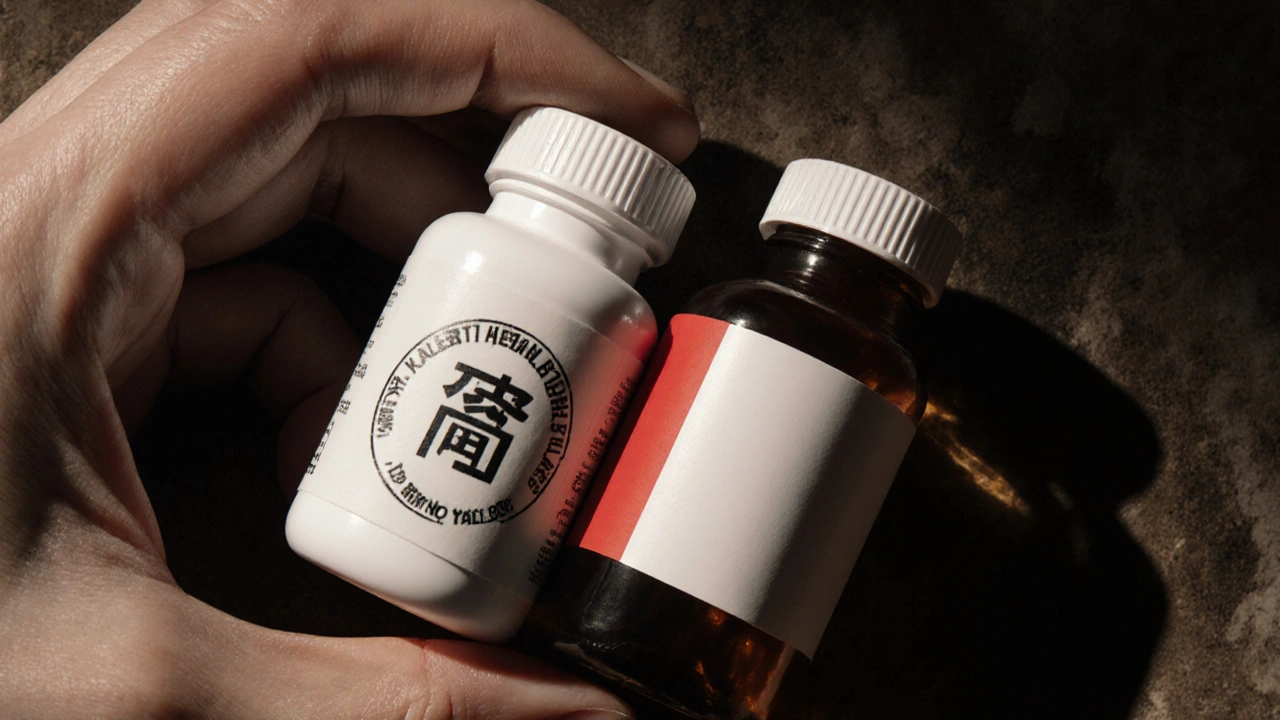
Ever opened your prescription bottle and seen a pill that looks exactly like your brand-name drug-but without the brand name on it? You might’ve thought it was just another generic. But it’s not. It’s something called an authorized generic. And it’s not what most people think.
What Exactly Is an Authorized Generic?
An authorized generic is the exact same drug as the brand-name version you’re used to-same active ingredient, same inactive ingredients, same size, same shape, same factory. The only difference? No brand name on the label. The U.S. Food and Drug Administration (FDA) defines it clearly: an approved brand-name drug sold without the brand name on the packaging. That’s it. No changes to the formula. No shortcuts. No compromises. It’s the same pill, just packaged differently. This isn’t a trick. It’s not a knockoff. It’s the original manufacturer selling their own drug under a different label. Think of it like a car company making the exact same model but selling it under a no-name badge at a lower price.How Are Authorized Generics Different From Regular Generics?
This is where things get confusing. Most people think all generics are the same. They’re not. Regular generics go through a process called the Abbreviated New Drug Application (ANDA). To get approved, they must prove they’re bioequivalent to the brand-name drug. That means they work the same way in your body. But here’s the catch: they can have different inactive ingredients-fillers, dyes, coatings, preservatives. These don’t affect how the drug works, but they can change how it looks or, in rare cases, how your body reacts to it. Authorized generics don’t need to prove bioequivalence. Why? Because they’re the exact same product. They’re made in the same facility, with the same formula, using the same equipment. They’re simply repackaged under a different name. No testing needed. Just a quick notice to the FDA. And here’s something most people don’t know: authorized generics aren’t listed in the FDA’s Orange Book-the official list of approved generic drugs. Regular generics are. Authorized generics? Not there. They’re in a separate, less-known category.Why Do Brand Companies Make Authorized Generics?
At first glance, it seems odd. Why would a company that spent millions developing a drug turn around and sell a cheaper version of it? The answer is business strategy. When a brand-name drug’s patent expires, other companies can legally make generics. That usually causes prices to drop fast. But brand manufacturers don’t want to lose all their customers. So they launch their own authorized generic-often just before or right after the first generic hits the market. This lets them keep a piece of the action. Instead of losing 90% of sales to competitors, they still capture a chunk of the market. And because it’s identical to the brand, many patients and pharmacies stick with it. It’s familiar. It’s trusted. A 2022 study found that between 2010 and 2019, there were 854 authorized generic launches in the U.S. And 75% of them came out after traditional generics had already entered the market. That’s not random. That’s calculated. Some experts call it a defensive move. Others call it a smart one. Either way, it works.Who Makes Authorized Generics?
There are two ways this happens: 1. The brand-name company makes the authorized generic themselves-often through a subsidiary or a separate division. For example, Pfizer might make a version of Lipitor without the Pfizer name on it. 2. The brand-name company licenses the exact formula to another manufacturer. That company then produces and sells it as an authorized generic. Prasco Laboratories, for instance, makes the authorized generic of Colcrys (colchicine). Greenstone Pharmaceuticals does the same for Celebrex (celecoxib). Either way, the drug inside the pill is unchanged. You’re getting the real thing.
How Do Authorized Generics Compare in Price?
Authorized generics are cheaper than the brand-name version-but not always cheaper than traditional generics. Typically, they cost 15-25% less than the brand. That’s a good savings. But once several traditional generics enter the market, prices can drop even further-sometimes 70-80% below the brand price. So here’s the trade-off: authorized generics give you the exact same drug as the brand, with no risk of formulation differences. But if you’re looking for the lowest possible price, you might find a traditional generic that’s even cheaper. It’s a balance between certainty and cost.Why Do Patients Get Confused?
Many patients don’t even realize they’re taking an authorized generic. Pharmacists often dispense them without explanation. That’s a problem. Because sometimes, the pill looks different. The color changes. The shape changes. The imprint on the pill is different. Patients panic. “This isn’t my medication!” they say. The truth? It’s the same drug. Just packaged differently. Pharmacists are trained to explain this. But not all do. And not all patients ask. That’s why confusion is common. A 2020 report from US Pharmacist noted that patient education is one of the biggest challenges in using authorized generics. If you switch from your brand-name drug to a pill that looks different, ask your pharmacist: “Is this an authorized generic?” If yes, you’re getting the exact same medicine-just without the brand name.Examples of Authorized Generics
Here are a few real-world examples:- Colcrys (brand) → Colchicine (authorized generic by Prasco)
- Concerta (brand) → Methylphenidate ER (authorized generic by Watson/Actavis)
- Celebrex (brand) → Celecoxib (authorized generic by Greenstone)
- Unithroid (brand) → Levothyroxine (authorized generic by Jerome Stevens)

Are Authorized Generics Safe?
Yes. Completely. They’re made under the same strict quality controls as the brand-name drug. The same inspections. The same testing. The same standards. The FDA doesn’t approve them separately because they don’t need to. They’re identical. If the brand-name version passed safety checks, so does the authorized generic. In fact, for patients who’ve had bad reactions to traditional generics-due to different fillers or dyes-authorized generics are often the best alternative. No guesswork. No unknown ingredients.What Should You Do as a Patient?
Here’s a simple checklist:- If your prescription switches to a cheaper version and the pill looks different, ask your pharmacist: “Is this an authorized generic?”
- If yes, you’re getting the same drug as the brand. No need to worry.
- If no, check whether it’s a regular generic. Ask if the inactive ingredients are different.
- If you’ve had issues with other generics before (like stomach upset or rashes), ask if an authorized generic is available.
- Compare prices. Sometimes the authorized generic is cheaper than the brand but more expensive than a traditional generic. Decide what matters more: price or consistency.
What’s the Future of Authorized Generics?
They’re not going away. In fact, they’re growing. As more brand-name drugs lose patent protection, manufacturers are using authorized generics as a key tool to protect revenue. Regulators are watching. Some lawmakers are asking whether this practice undermines the spirit of the Hatch-Waxman Act-the law meant to encourage generic competition. But for now, authorized generics are here to stay. And for many patients, they’re a quiet win: lower cost, same drug, no surprises. The key is awareness. If you understand what they are, you can make smarter choices about your meds-and your money.Are authorized generics the same as brand-name drugs?
Yes. Authorized generics are identical to the brand-name drug in every way: same active and inactive ingredients, same strength, same dosage form, same manufacturing process. The only difference is the label-no brand name. They’re made by the same company, in the same facility, using the same formula.
Are authorized generics cheaper than brand-name drugs?
Yes, usually. Authorized generics typically cost 15-25% less than the brand-name version. But they’re often more expensive than traditional generics that enter the market later, especially after multiple manufacturers start producing the drug. So while they’re cheaper than the brand, they’re not always the cheapest option.
Why don’t authorized generics show up in the FDA’s Orange Book?
The Orange Book lists only traditional generics that went through the Abbreviated New Drug Application (ANDA) process and proved bioequivalence. Authorized generics don’t need to prove anything because they’re the same product as the already-approved brand-name drug. They’re listed separately by the FDA in a different database, not in the Orange Book.
Can authorized generics cause different side effects than the brand?
No. Because they contain the exact same ingredients-active and inactive-they should cause the same side effects as the brand-name version. If you’ve never had a reaction to the brand, you shouldn’t have one to the authorized generic. If you’ve had issues with other generics due to fillers or dyes, an authorized generic might be a better fit.
How do I know if I’m getting an authorized generic?
Check the label. Authorized generics won’t have the brand name. Ask your pharmacist directly: “Is this an authorized generic?” They can tell you based on the manufacturer and the drug’s listing. Some pharmacies also note it on your receipt or in your online portal. If the pill looks identical to your brand-name version but has a different name on the bottle, it’s likely an authorized generic.
Do insurance plans cover authorized generics?
Yes. Most insurance plans treat authorized generics the same as traditional generics. They usually fall into the lowest cost tier, meaning you pay less out-of-pocket than for the brand-name drug. Always check your plan’s formulary, but in most cases, they’re covered and preferred.





Kathy Grant
November 16, 2025 at 17:31
Just found out my thyroid med is an authorized generic-same pill, no brand name. I didn’t panic when the color changed. Honestly? I’m relieved. No more $50 co-pays. And I’ve been stable for years. This is the kind of transparency we need more of in pharma.
Why do we treat medicine like it’s a luxury brand? It’s not. It’s a lifeline. And if the same exact drug costs less without the logo, why are we still falling for the marketing?
I wish more pharmacists explained this. I had to Google it myself. That’s on us, not them. But still… it shouldn’t be this hard to know what’s in your body.