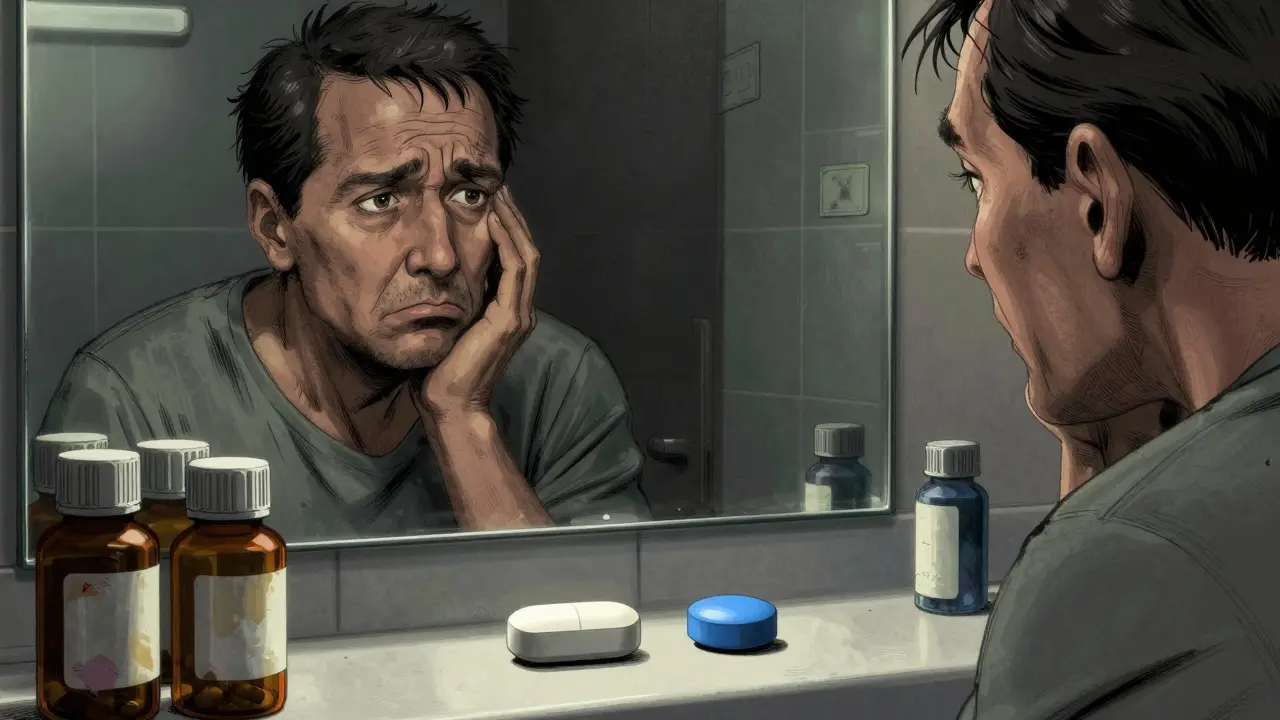
Ever opened your pill bottle and stared at a pill that looked nothing like the one you took yesterday? It’s not your imagination. Your generic medication changed color, shape, or size-and you’re not alone. Millions of people in the U.S. face this every time they refill a prescription. The reason? It’s not a mistake. It’s the law.
Why Do Generic Pills Look Different?
Generic drugs are exact copies of brand-name medicines in every way that matters: same active ingredient, same dose, same effect. But they’re not allowed to look the same. Under U.S. trademark law, a generic version can’t copy the color, shape, or markings of the original brand. This rule dates back to the 1984 Hatch-Waxman Act, which created the pathway for cheaper generics but also protected brand-name companies’ visual trademarks. So if your Lipitor was a pink oval, your generic atorvastatin might be a white round tablet. Or a pale yellow oblong one. Or even a blue capsule. It depends on which manufacturer made it this month. And if your pharmacy switches suppliers? Your pill changes again.It’s Not Just About Looks-It’s About Safety
At first glance, this seems harmless. But when you’re taking five or six pills a day for high blood pressure, diabetes, or thyroid issues, visual confusion becomes dangerous. A 2014 study from Brigham and Women’s Hospital tracked 38,507 patients on cardiovascular meds. When their pill changed appearance, 16.8% stopped taking it. For those who got the same-looking pill every time, only 12.5% stopped. That’s a 34% higher chance of quitting your medicine just because it looked different. Older adults are hit hardest. A 2022 AARP survey found 37% of people over 65 had trouble recognizing their meds after a visual change. One Reddit user wrote: “My blood pressure pill went from white oval to blue round. I almost didn’t take it-I thought it was someone else’s.” The FDA says these changes don’t affect how the drug works. But they ignore how people actually use medicine. If you can’t trust what you’re holding, you’re more likely to skip a dose, take the wrong pill, or panic and call your doctor-wasting time, money, and peace of mind.How Often Does This Happen?
More than you think. A 2022 study in the American Journal of Managed Care found that 32.7% of patients refilling chronic disease meds saw a change in pill appearance. That’s more than one in three refills. And it’s not random. The U.S. has over 9,800 approved generic drugs, and 41.7% of them have multiple manufacturers listed in the FDA’s Orange Book. That means your pharmacy might get a different version every time they restock. Insurance formularies and pharmacy benefit managers (PBMs) push for the cheapest option. They don’t care if it’s white or blue. They care about cost. So if Manufacturer A drops their price by 15%, your pharmacy switches-and your pill changes overnight.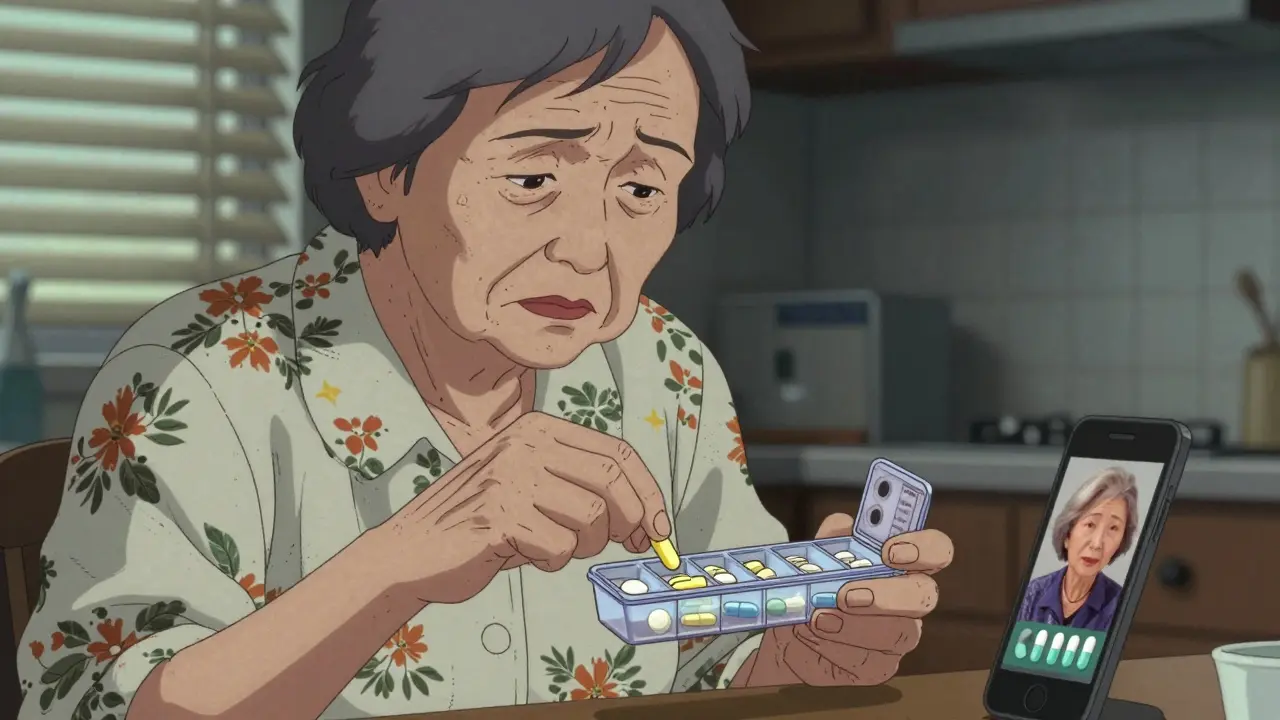
What’s Being Done About It?
The FDA knows this is a problem. In 2016, they released official guidance urging generic makers to consider pill appearance when designing products. They’ve since issued 17 warning letters to manufacturers for ignoring patient safety in design choices. In 2024, they’re working on new “Visual Medication Equivalence Standards” under their GDUFA program. Some countries are ahead of us. The European Medicines Agency requires generics for chronic conditions to match the original look whenever possible. The result? An 18.3% drop in appearance-related errors across the EU. In the U.S., progress is slow. Legal barriers remain strong. In a 2022 court case, Takeda Pharmaceuticals sued a generic maker for copying its pill’s shape. The court sided with Takeda, reinforcing that trademark law still blocks visual similarity-even if it hurts patients.What You Can Do Right Now
You can’t control which manufacturer your pharmacy uses. But you can control how you respond.- Take a photo of your pill the first time you get it. Store it in your phone. When it changes, compare. This simple step cuts medication errors by 27% in elderly patients, according to a Johns Hopkins study.
- Ask your pharmacist to show you the pill before you leave. Most pharmacies have printed ID cards or digital images. If they don’t, ask them to get them.
- Use a pill organizer with labeled compartments. Even if the pill looks different, you’ll know it’s the right one by the day and time.
- Request a specific manufacturer from your insurer. It’s not guaranteed-78% of PBMs don’t lock in suppliers-but it’s worth asking. Some insurers will honor it for high-risk meds like warfarin or levothyroxine.
- Keep a written list of every medication: name, dose, color, shape, imprint. Update it every time your pill changes.
Why This Matters More Than You Think
This isn’t just about convenience. It’s about survival. Medication non-adherence caused by appearance changes costs the U.S. healthcare system $1.3 billion every year. That’s not just money-it’s hospital visits, ER trips, strokes, and heart attacks that could have been avoided. The system is designed to save money. But when people stop taking their meds because they don’t recognize the pill, the real cost skyrockets. And here’s the truth: you’re not being paranoid. You’re being smart. If something looks different, it’s okay to question it. You have the right to know what you’re swallowing-and to feel safe doing it.What’s Next?
By 2028, experts predict 75% of new generic approvals for high-risk drugs will include voluntary appearance standardization. That’s up from just 32% today. It’s slow. But it’s moving. Until then, stay vigilant. Take photos. Talk to your pharmacist. Don’t let a change in color or shape make you skip a dose. Your health depends on consistency-not just in the medicine, but in your confidence that you’re taking it right.Why do my generic pills keep changing color and shape?
Generic pills change color and shape because U.S. trademark law prohibits them from looking identical to brand-name drugs or other generics. Even though the active ingredient is the same, manufacturers must alter appearance to avoid legal issues. This means your pill can look different every time your pharmacy switches suppliers.
Are generic pills less effective because they look different?
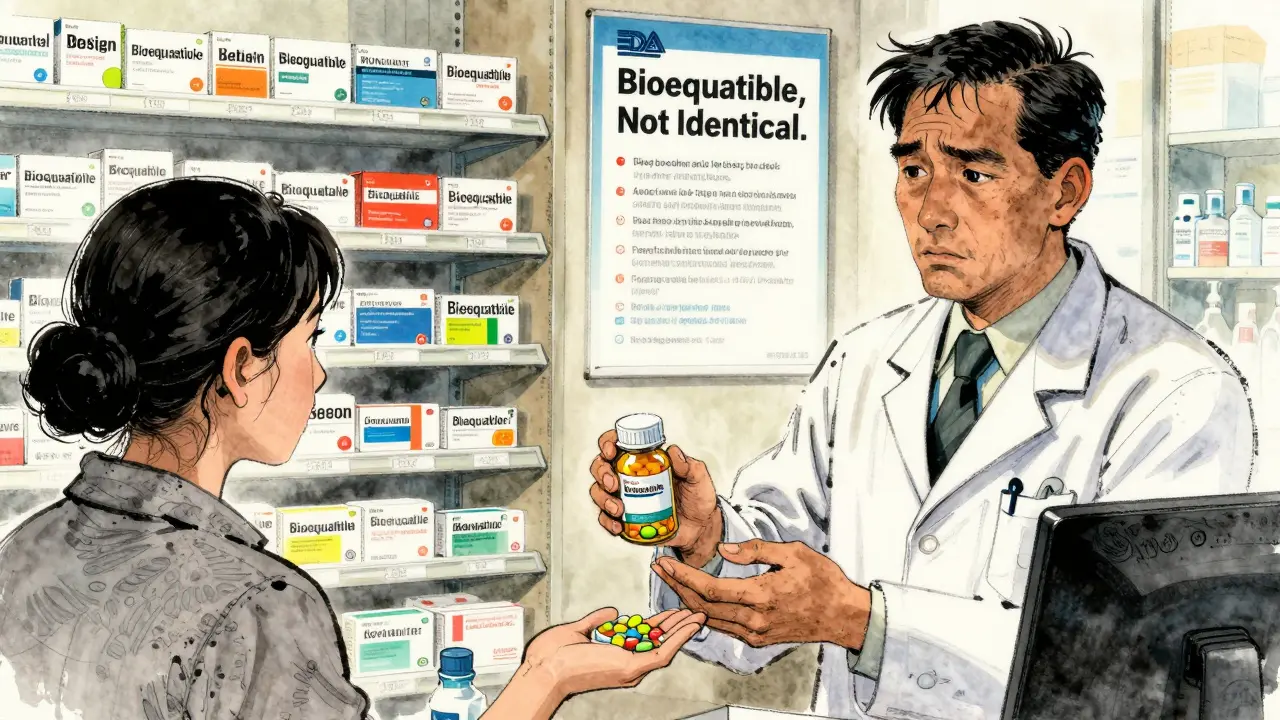
No. Generic pills are required by the FDA to be bioequivalent to brand-name drugs-meaning they work the same way in your body. The difference is only in color, shape, size, or markings, which are caused by inactive ingredients or manufacturing choices. The medicine inside is identical.
Can changing pill appearance cause me to miss doses?
Yes. Studies show that when pill appearance changes, patients are 34% more likely to stop taking their medication. This is especially common among older adults and those managing multiple chronic conditions. Confusion over looks can lead to skipped doses, wrong pills, or fear of side effects-even when none exist.
What should I do if my pill looks different?
Don’t assume it’s wrong. First, check your prescription label. Then, ask your pharmacist to confirm it’s the same medication. Keep a photo of each pill in your phone. If you’re unsure, don’t take it until you’ve verified it’s safe. It’s better to be cautious than to risk an error.
Can I ask for the same generic manufacturer every time?
You can ask, but pharmacies and insurers aren’t required to honor it. About 78% of pharmacy benefit managers don’t guarantee the same manufacturer. However, for high-risk medications like blood thinners or thyroid drugs, some insurers may allow it if you request it in writing and your doctor supports it.
Is this problem getting better?
Slowly. The FDA is developing new standards to encourage consistent pill appearance for high-risk drugs. By 2028, experts predict 75% of new generic approvals for chronic condition meds will include voluntary appearance standardization. But legal barriers tied to trademark law mean change will take time.



Emily Leigh
January 20, 2026 at 18:46
Okay but why are we still letting corporations decide what color my anxiety pill is?? Like, I get trademark law, but if my life depends on not mixing up meds, shouldn’t the FDA just say ‘nope, looks gotta match’?? This feels like a legal loophole that’s literally killing people. I’m not even mad, I’m just… disappointed. 😔