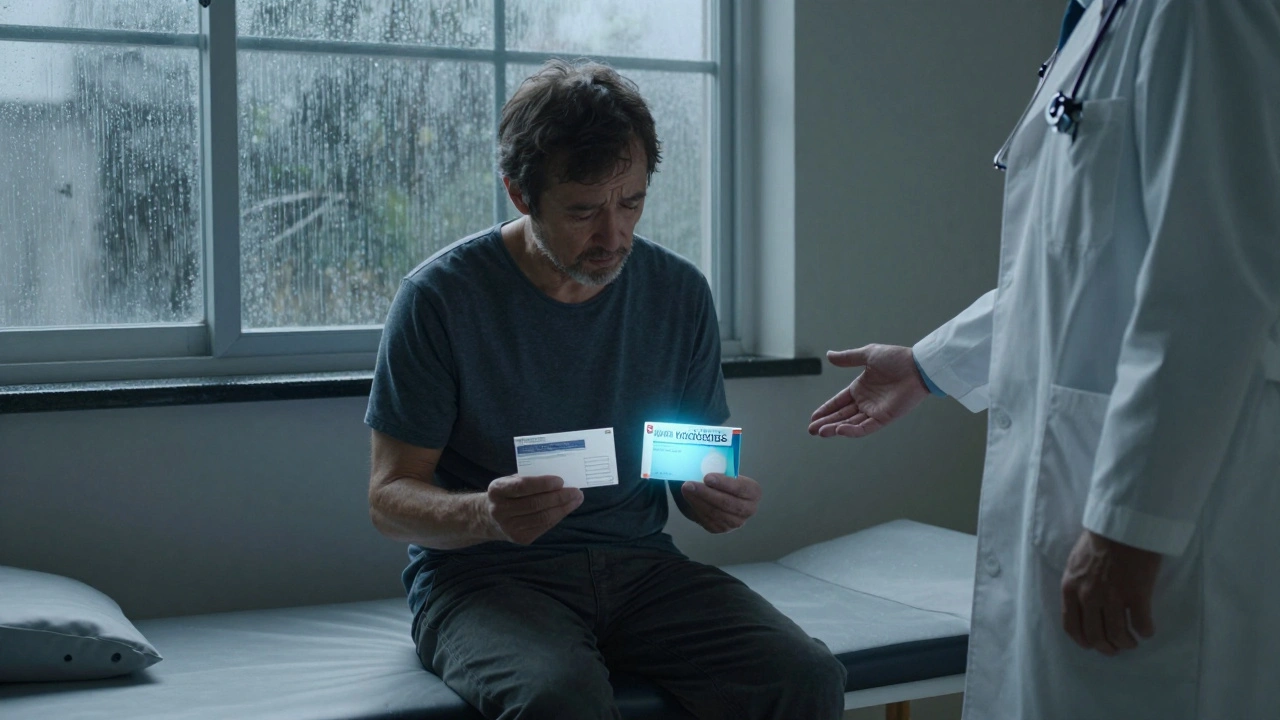
Naloxone Co-Prescribing Risk Calculator
Find out if you or your patient should receive naloxone alongside opioid pain medication based on CDC guidelines. This tool calculates your risk level based on key factors like dosage, medical history, and other medications.
Your Risk Assessment
Why Doctors Are Now Prescribing Naloxone With Opioid Pain Pills
If you’re on long-term opioid pain medication, your doctor might hand you two prescriptions at once: one for your pain pills, and another for naloxone. It sounds strange-like giving someone a fire extinguisher because they might start a fire. But this isn’t about suspicion. It’s about safety.
Every year, over 70,000 people in the U.S. die from drug overdoses, and nearly two-thirds of those involve opioids. Even if you take your medication exactly as prescribed, risks still exist. A slip-up-taking an extra pill, mixing it with alcohol or sleep aids, or losing tolerance after a break-can turn deadly. That’s where naloxone comes in. It doesn’t prevent overdose. It reverses it.
Naloxone, sold under brand names like Narcan® and Kloxxado™, is a fast-acting drug that kicks opioids off brain receptors and restores breathing within minutes. It’s not addictive. It doesn’t get you high. It’s not a treatment for addiction. It’s a rescue tool. And when doctors prescribe it alongside opioids, they’re not saying you’re likely to overdose. They’re saying: if you do, someone can save your life.
Who Gets Naloxone With Their Opioid Prescription?
The CDC doesn’t recommend naloxone for everyone on opioids. It’s targeted. If you’re taking 50 morphine milligram equivalents (MME) or more per day, you’re at double the risk of overdose compared to someone on 20 MME. That’s the baseline. But risk isn’t just about dosage.
- You’re on benzodiazepines like Xanax or Valium-these slow breathing too, and mixing them with opioids is especially dangerous.
- You’ve had a previous overdose-even if you survived it.
- You have a history of substance use disorder, even if you’re not currently using.
- You have COPD, sleep apnea, or other breathing problems.
- You use alcohol heavily or take other sedatives.
- You’ve recently been released from jail or prison-your tolerance drops fast, and relapse can be deadly.
- You live alone or don’t have someone nearby who can help in an emergency.
Some states go further. New York requires naloxone to be offered to anyone getting an opioid prescription. California sets the bar at 90 MME/day. Other states leave it up to the doctor’s judgment. But the CDC’s 2023 update added one more key group: anyone who’s had a non-fatal overdose in the past year, no matter their dose.
How Naloxone Works-And Why It’s So Simple to Use
Naloxone works by being stronger than opioids. When an overdose happens, opioids lock onto receptors in your brain and shut down breathing. Naloxone barges in, pushes them off, and lets you breathe again. It only works on opioids. If you didn’t take any, it does nothing.
Today, most naloxone comes as a nasal spray. No needles. No training needed. Just insert the nozzle into one nostril, press the plunger, and wait. The newer Kloxxado™ version has double the dose for stronger opioids like fentanyl, which are now behind most overdose deaths.
It’s not magic. You still need to call 911. Naloxone wears off in 30 to 90 minutes. Opioids last longer. The person can slip back into overdose. That’s why monitoring is critical. The S.L.A.M. method is taught to patients and families:
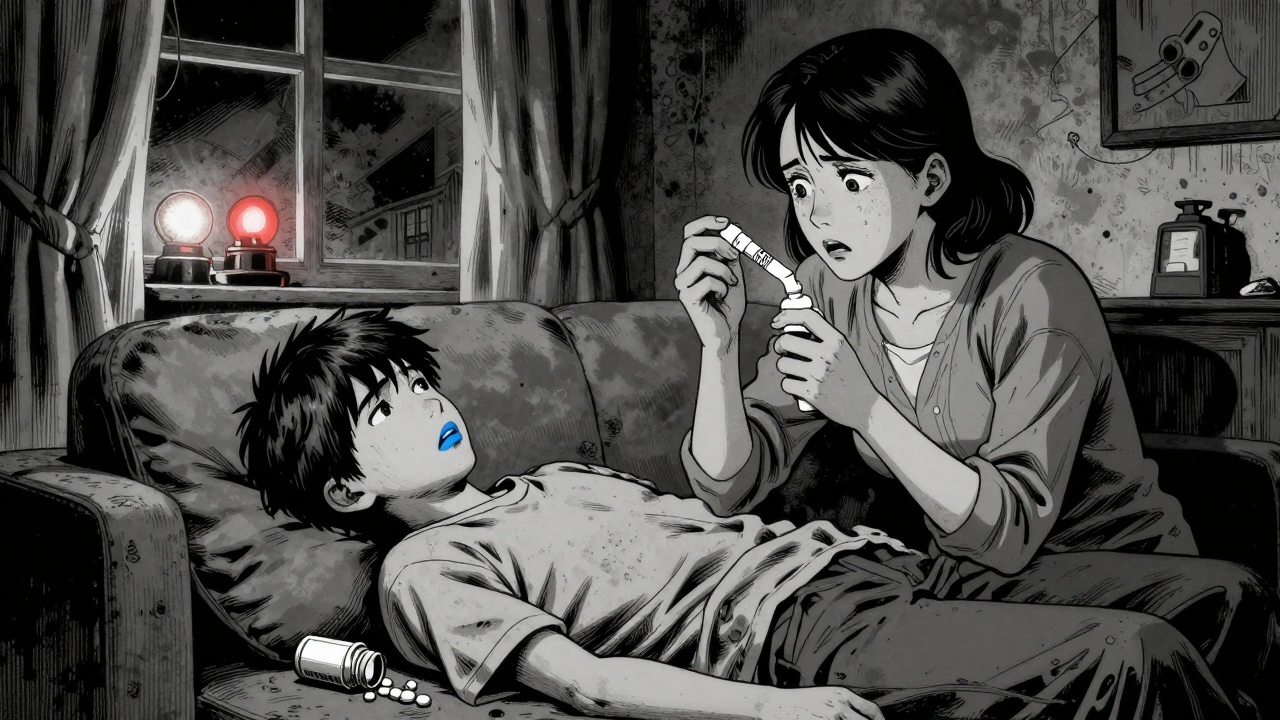
- Signs of overdose-unresponsive, slow or no breathing, blue lips, pinpoint pupils.
- Life-saving steps-call 911, start CPR if needed.
- Address the overdose-give naloxone.
- Monitor until help arrives-stay with the person.
Many families keep naloxone in the same place as their pain meds. Some keep one in their car, one at work. It’s not about fear-it’s about preparedness.
What It Costs-And How Insurance Makes It Accessible
In 2016, a single naloxone nasal spray cost over $100. Today, generic versions are widely available. You can buy them at CVS, Walgreens, or Walmart for $25 to $50 without insurance. Brand-name Narcan® still runs $130-$150, but most insurers cover it with $0 copay.
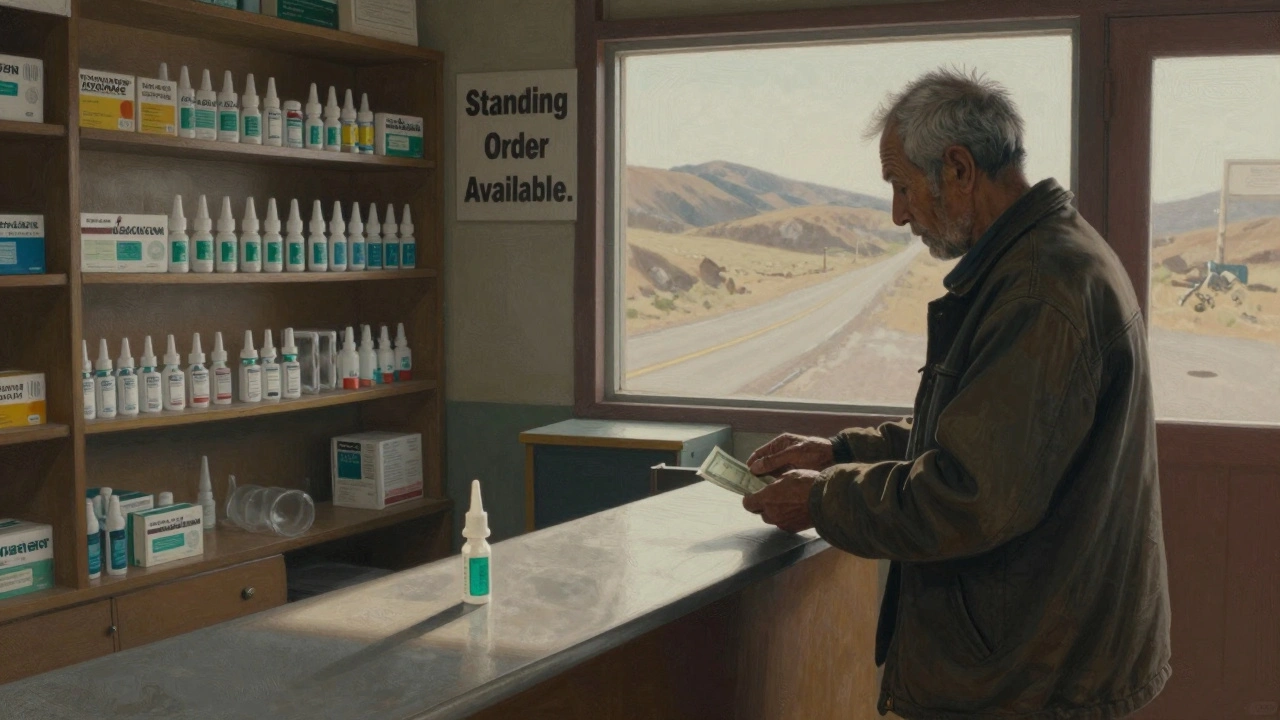
The SUPPORT Act of 2018 forced Medicare and Medicaid to cover naloxone without prior authorization. Private insurers followed. In states with standing orders, you can even walk into a pharmacy and ask for naloxone without a prescription. That’s how many people get it-not from their pain doctor, but from the pharmacist.
Still, access isn’t equal. Rural pharmacies stock naloxone only 42% of the time, compared to 85% in cities. That gap can be deadly. A patient in a small town might get the prescription but can’t fill it. That’s why some clinics now keep naloxone on-site and give it out free.
What Happens When It’s Used-Real Stories
One woman in Ohio got naloxone with her oxycodone prescription. She thought it was unnecessary. Then her 16-year-old son found the bottle, took a pill, and passed out. She used the nasal spray. He woke up before EMS arrived. She told her story to her doctor’s office. Now, every patient who gets opioids gets the same talk.
In rural Kentucky, a primary care clinic started co-prescribing naloxone in 2021. In two years, they documented 17 overdoses reversed by family members using the kit. Not one person died.
But not everyone accepts it. Some patients feel judged. One Reddit user, a physician assistant, said 60% of patients refuse because they think it means the doctor doesn’t trust them. That’s a stigma problem-not a medical one. The right way to introduce it: "I’ve seen how quickly things can go wrong. This isn’t about what you might do. It’s about what could happen by accident. And I want you to have a safety net."
Why Some Doctors Still Don’t Prescribe It
Even with clear guidelines, naloxone co-prescribing isn’t universal. A 2021 JAMA study found 68% of primary care doctors felt uncomfortable talking about overdose risk. They worried about offending patients. They didn’t know how to bring it up. Others didn’t know which patients qualified.
Some doctors fear it encourages misuse. But the data says otherwise. A 2019 study in the Annals of Internal Medicine tracked nearly 2,000 patients. Those who got naloxone had 47% fewer ER visits and 63% fewer hospital stays from overdoses. No increase in opioid misuse.
There’s also a deeper debate: Does offering naloxone make doctors less likely to reduce high opioid doses? Some experts argue yes. Dr. Jane Ballantyne warns that if we focus too much on reversing overdoses, we forget to prevent them in the first place. The goal isn’t just to keep people alive-it’s to help them get off opioids safely when possible.
But for now, the evidence is clear: naloxone saves lives. And when someone is on opioids long-term, that safety net matters.
What You Should Do If You’re on Opioids
If you’re prescribed opioids for chronic pain:
- Ask if naloxone is right for you-even if you think you don’t need it.
- Make sure your family, roommate, or close friend knows where it is and how to use it.
- Don’t store it in the bathroom or medicine cabinet with other drugs. Keep it somewhere easy to reach.
- Check the expiration date. Naloxone lasts 2-3 years. Replace it if it’s expired.
- If you’ve ever overdosed before, even once, you should have naloxone on hand.
- If your doctor refuses to prescribe it, ask why. You can also get it over the counter at most pharmacies.
If you’re caring for someone on opioids, learn how to use naloxone. Watch a 2-minute video from SAMHSA. Practice on a training kit. Keep one in your purse, your car, your wallet. It’s not morbid. It’s responsible.
Where to Get Naloxone Without a Prescription
You don’t need a doctor to get naloxone. In 49 states, pharmacists can dispense it under a standing order. That means walk in, ask for it, pay cash or use insurance, and leave with a kit.
Many community centers, needle exchange programs, and health departments give it out free. Search "naloxone near me" on Google. If you’re in a rural area, try contacting your county health department-they often have distribution programs.
The federal government has spent over $100 million since 2023 to ship naloxone to nonprofits. You can also order free kits online from organizations like Harm Reduction Therapeutics or Naloxone4All.
What’s Next for Naloxone Access
The FDA approved the first generic nasal spray in 2023, and prices are falling. A new long-acting naloxone formulation is in Phase III trials and could be available by 2025. It would last hours longer than current versions, reducing the need for repeat doses.
The Biden administration has committed $500 million in 2024 to expand naloxone distribution. That means more kits in schools, libraries, and public transit stations. The goal isn’t just to save lives-it’s to make naloxone as common as an EpiPen.
But tools alone won’t fix the crisis. Better pain management, mental health support, and addiction treatment are still needed. But for now, naloxone co-prescribing is the most proven, simplest, and most life-saving step doctors can take.
Is naloxone safe to use if I’m not sure someone overdosed?
Yes. Naloxone only works on opioids. If the person didn’t take opioids, it won’t hurt them. If they did, it could save their life. There’s no downside to using it when in doubt.
Can I use naloxone on a child or elderly person?
Yes. Naloxone is safe for all ages. It doesn’t matter if the person is young or old-what matters is whether opioids are in their system. Children have overdosed on grandparents’ pain pills. Naloxone can reverse that.
How long does naloxone take to work?
Usually within 2 to 5 minutes. If there’s no response after 3 to 5 minutes, give a second dose. Keep giving doses every 2 to 3 minutes until help arrives.
Does naloxone replace emergency care?
No. Naloxone reverses the overdose, but the person still needs medical care. They can relapse into overdose once the naloxone wears off. Always call 911 after giving naloxone.
Will insurance cover naloxone if I get it without a prescription?
Most do. Even if you buy it over the counter, many pharmacies can bill your insurance directly. If they can’t, ask for a receipt-you can often submit it for reimbursement. Generic naloxone is often under $30 even without insurance.
Can I carry naloxone on a plane?
Yes. The TSA allows naloxone in carry-on and checked bags. You don’t need a prescription to travel with it. Keep it in its original packaging if possible, but it’s not required.


Emmanuel Peter
December 4, 2025 at 08:09
This is just another way for the medical-industrial complex to profit off fear. Naloxone isn't saving lives-it's enabling addicts to keep using because they know someone will just pull them back from the edge. You don't fix a broken system by handing out bandages while the house burns down.