Medication Disposal Guide
Which type of medication do you have?
Do you have a take-back location nearby?
Recommended Action
Step-by-Step Instructions
Every year, millions of unused or expired pills sit in medicine cabinets across America - not just gathering dust, but posing real risks. Accidental poisonings, opioid overdoses, and even contaminated water supplies are all linked to improper disposal. The good news? There’s a clear, science-backed way to handle this safely. The FDA has laid out exact steps, and the system works - if you know how to use it.
What You Should Never Do
Don’t just toss pills in the trash. Don’t flush them unless you’re told to. And don’t assume your local pharmacy will take them back automatically. These are the top three mistakes people make, and they’re dangerous. Flushing non-approved medications pollutes water systems. The EPA says pharmaceuticals in water are a growing concern, even if the amounts are tiny. Throwing pills in the trash? That’s how kids, pets, or even scavengers get into them. In 2022, the CDC reported over 70,000 drug overdose deaths. A big chunk of those came from pills taken from home medicine cabinets.The Gold Standard: Drug Take-Back Programs
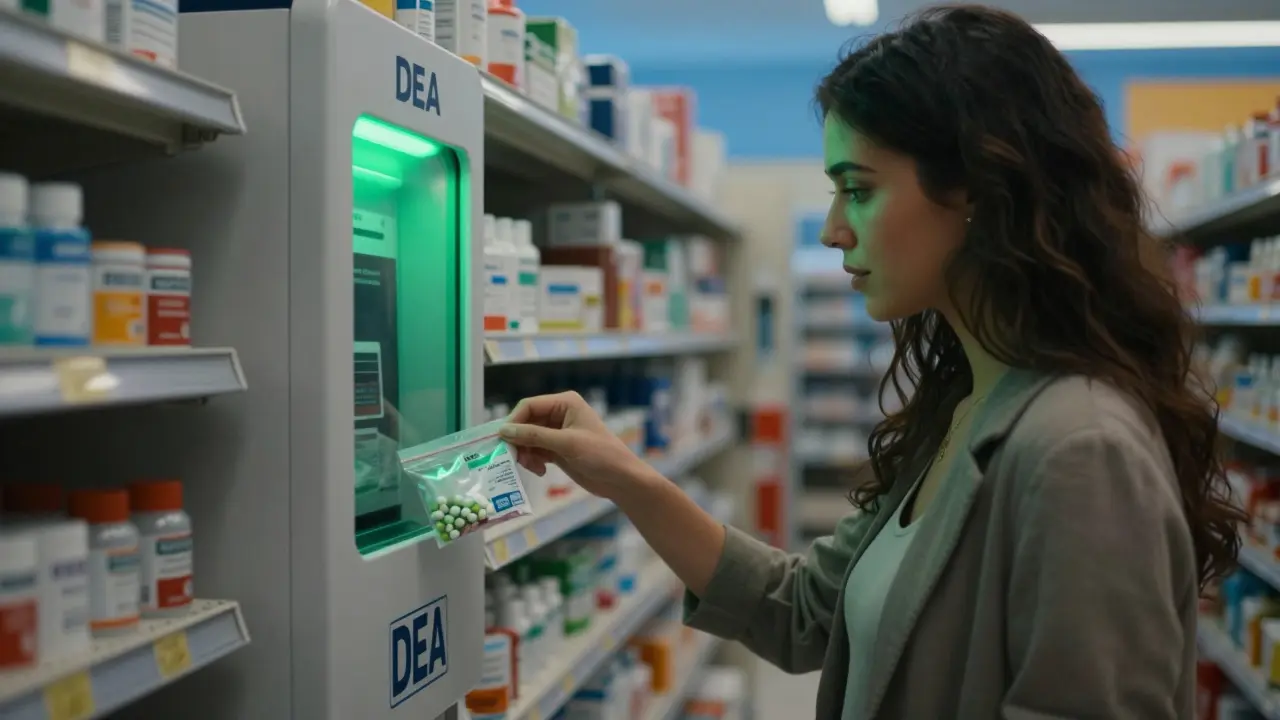
The FDA says the best, safest, and most responsible way to dispose of almost all medications is through a drug take-back program. These are drop-off locations run by DEA-authorized collectors - usually pharmacies, hospitals, or law enforcement offices. As of January 2025, there are over 14,352 permanent take-back sites across the U.S. That’s more than in any previous year. Walmart, CVS, and other major pharmacy chains have kiosks in nearly every location. You can walk in during business hours, drop off your old pills, and walk out. No questions asked. No paperwork. No cost. These programs are highly effective. According to the DEA’s 2024 report, 99.8% of medications collected through take-back are properly destroyed. That’s nearly perfect. And it’s not just about safety - it’s about prevention. Communities with more than three take-back sites per 100,000 people saw an 11.2% drop in teen opioid misuse, according to research from the National Institute on Drug Abuse.What If There’s No Take-Back Site Nearby?
If you live in a rural area or your nearest drop-off is more than 15 miles away, the FDA allows you to use a second-tier option: prepaid mail-back envelopes. Companies like DisposeRx and Sharps Compliance offer these envelopes. You put your pills inside, seal the envelope, and drop it in any mailbox. The envelope is designed to be tamper-proof and environmentally safe. The FDA requires these envelopes to meet strict postal standards (USPS Domestic Mail Manual Section 604.8.0). They cost between $2.15 and $4.75 per envelope, but many insurance plans and VA programs cover them for free. A 2024 analysis of 287,000 users by Express Scripts found 94.2% satisfaction with mail-back programs. Military families using VA-provided envelopes had an 89.2% compliance rate - far higher than those trying to dispose at home.The FDA Flush List: When Flushing Is Allowed
There are only 13 medications that the FDA says you can flush - and only if no take-back option is readily available. This list is small, specific, and updated regularly. As of October 2024, it includes:- Fentanyl patches
- Oxycodone (OxyContin, Percocet)
- Hydrocodone (Vicodin)
- Hydromorphone (Dilaudid)
- Morphine
- Tapentadol (Nucynta)
- Buprenorphine (Suboxone)
- Meperidine (Demerol)
- Methadone
- Alfentanil
- Remifentanil
- Sufentanil
- Tramadol
How to Dispose of Everything Else at Home
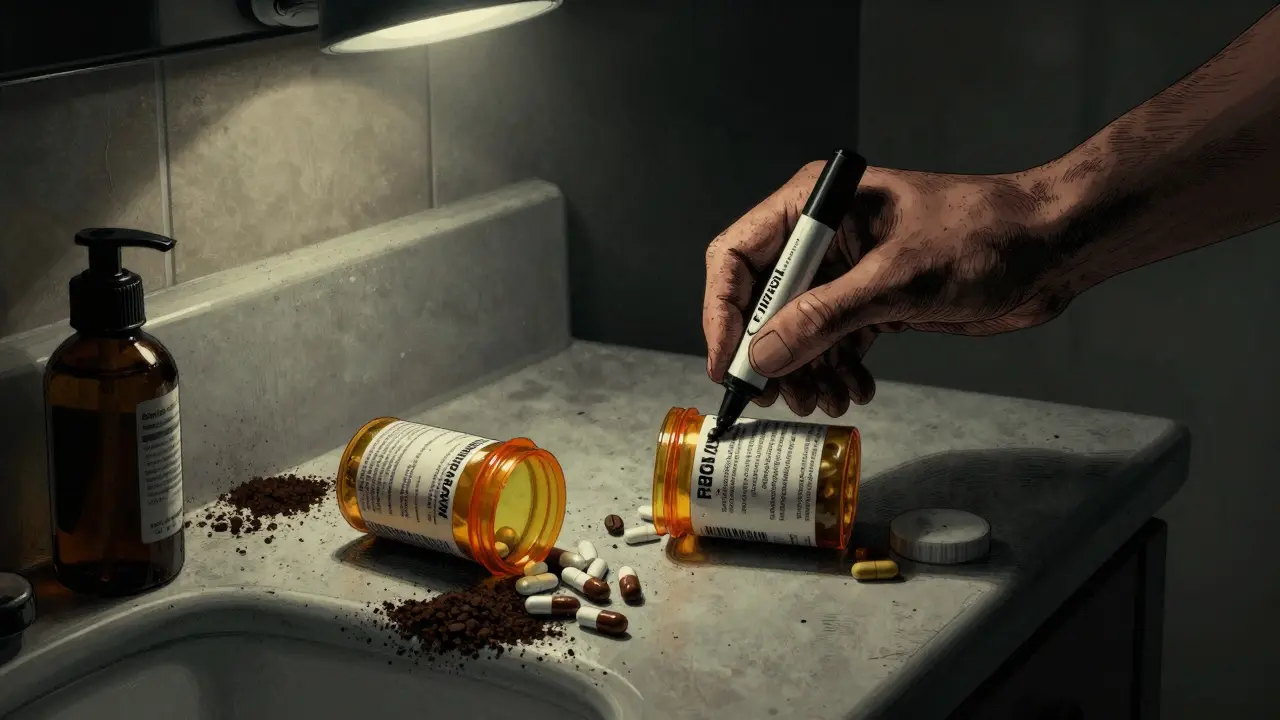
For all other medications - including antibiotics, blood pressure pills, antidepressants, and pain relievers - you must dispose of them in your trash, but not the way you think. The FDA’s 5-step home disposal method is simple, but you must follow it exactly:- Remove personal info: Take the pill bottle or box and scratch out your name, prescription number, and doctor’s name. Use a permanent marker or alcohol swab. Don’t just peel off the label - the barcode and numbers can still be read.
- Mix with unpalatable stuff: Pour the pills into a sealable bag or container. Add an equal amount (1:1 ratio) of something gross - coffee grounds, cat litter, or dirt. Coffee grounds are preferred by 78% of users because they’re easy to find and hide the smell.
- Seal it tight: Use a plastic bag or container with walls at least 0.5mm thick. Zip it, tape it, or twist it shut. The goal is to make it impossible to open without tools.
- Put it in the trash: Don’t put it in recycling. Don’t leave it on the curb. Toss it in your regular household trash.
- Recycle the empty container: Once it’s completely empty and de-identified, you can recycle the bottle if your local program accepts it.
What About Liquids, Creams, and Inhalers?
Liquid medications like cough syrup or insulin aren’t handled the same way. Don’t pour them down the sink or throw the bottle in the trash. Mix them with coffee grounds or cat litter first. Use a sealable container - even a jar with a tight lid works. Then toss it in the trash. Inhalers? Don’t puncture them or throw them in the fire. They can explode. Check with your pharmacy - many take back inhalers for proper disposal. If not, follow your local hazardous waste guidelines.Why Most People Get It Wrong
A 2024 Consumer Reports survey of 1,200 households found that 78% tried to dispose of meds at home - but 34% flushed the wrong ones. Another 12.7% failed to mix pills properly. The most common mistake? Throwing liquids straight into the trash. That’s a big no-no. Even worse, 63% of patients don’t know take-back kiosks exist, according to a pharmacy worker with 12 years of experience. Pharmacies don’t always advertise them. You have to ask.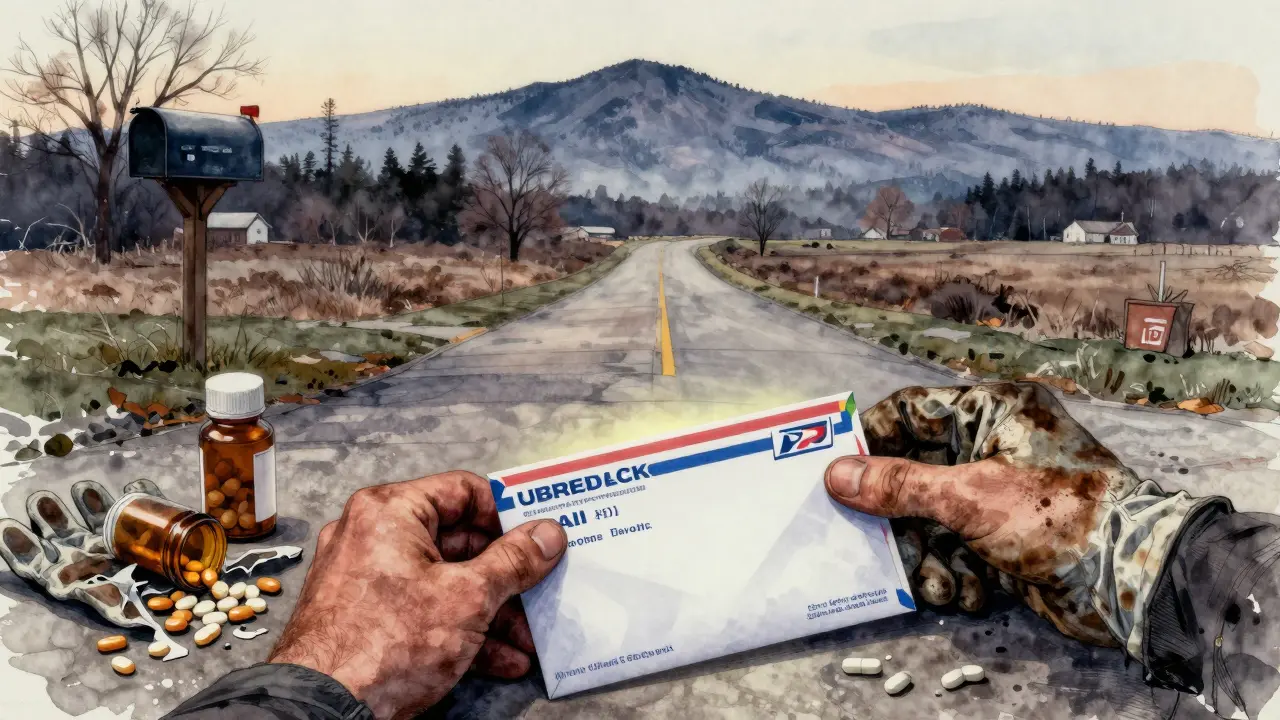
What’s Changing in 2025
The system is getting better. The DEA plans to expand take-back sites to 20,000 locations by the end of 2025. The EPA just announced a $37.5 million grant program to help rural communities build collection points. Walmart and CVS are investing millions to make drop-offs easier. The FDA’s goal? 90% of Americans will use take-back programs by 2030. Right now, only 35.7% do. That’s a big gap - but it’s fixable.Final Checklist: Are You Doing It Right?
Before you toss your meds, run through this:- Is it on the FDA Flush List? If yes, and no take-back is nearby → flush it.
- If not on the list → take it to a drop-off site.
- If no site within 15 miles → use a mail-back envelope.
- If you must use trash → mix 1:1 with coffee grounds or cat litter, seal tight, remove labels, toss.
- Never flush, pour, or burn anything unless the FDA says you can.
Can I flush any expired medication if I don’t have a take-back option?
No - only medications on the FDA’s official Flush List can be flushed, and even then, only if no take-back site is within 15 miles. Flushing other drugs harms water systems and is against EPA guidelines. Always check the current FDA list before flushing.
Are drug take-back kiosks really safe?
Yes. DEA-authorized take-back kiosks are secure, monitored, and designed to prevent theft. Collected medications are incinerated under federal regulations. In 2023, over 42% of collected drugs were opioids - and those are destroyed safely. No one can access them after drop-off.
What if I have a lot of expired pills? Can I bring them all at once?
Yes. Take-back sites accept any amount - from one pill to several bottles. You don’t need to be the original prescription holder. You can drop off meds for family members, even if they’re not yours. Just bring them in a bag or box. No ID required.
Can I recycle the pill bottles after disposal?
Yes - but only after you’ve completely removed all personal information. Scratch off your name, prescription number, and doctor’s details with a permanent marker or alcohol wipe. Then check with your local recycling program. Most accept #1 or #2 plastic bottles, but rules vary by city.
Is it okay to throw away liquid medications like cough syrup?
No - never pour liquids down the drain or throw the bottle in the trash as-is. Mix the liquid with coffee grounds, cat litter, or dirt in a sealed container (1:1 ratio). Then toss the sealed container in your household trash. This prevents accidental ingestion and leaks.



sagar patel
December 25, 2025 at 02:35
Just throw them in the river