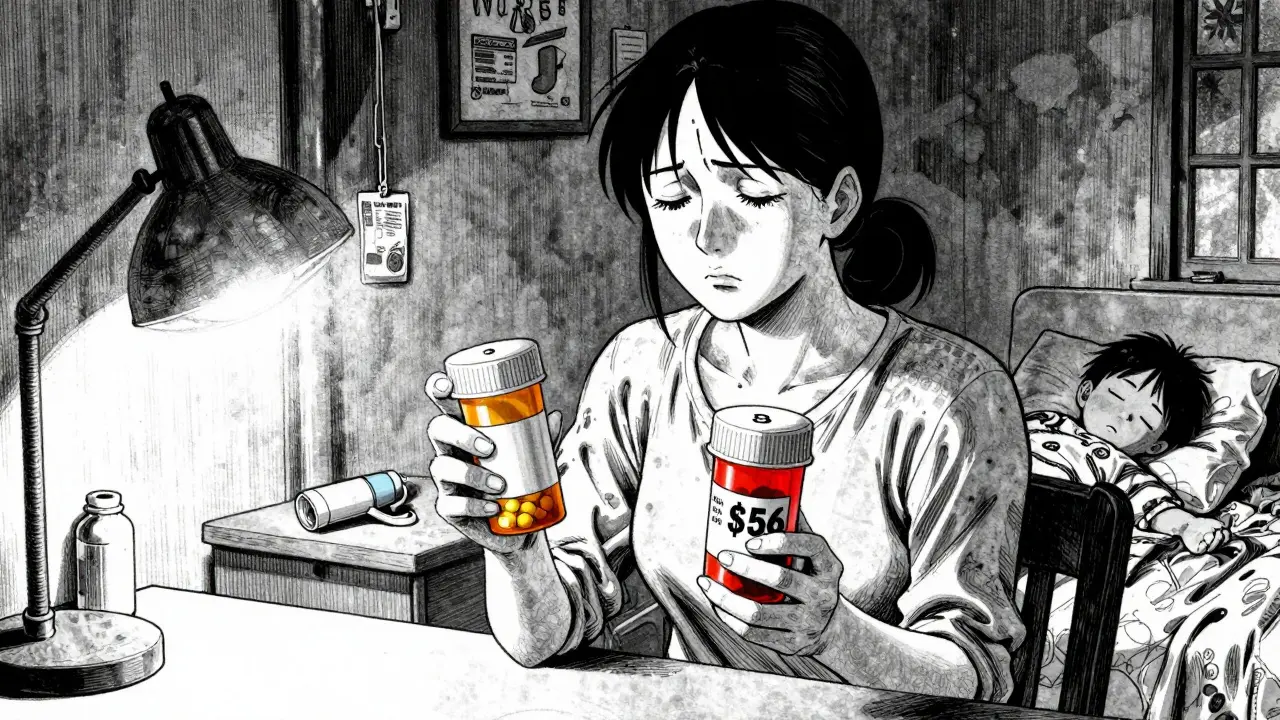
For millions of low-income Americans, Medicaid isn’t just health insurance-it’s the difference between taking a life-saving medication and skipping it altogether. And the biggest reason most people on Medicaid can afford their prescriptions? Generics.
Here’s the simple truth: 90% of all prescriptions filled through Medicaid are for generic drugs. That’s not a coincidence. It’s by design. And it’s saving patients and states billions every year.
How Generics Cut Medicaid Costs in Half
Generic drugs aren’t cheaper because they’re lower quality. They’re cheaper because they don’t need to pay for expensive research, marketing, or patent protection. Once a brand-name drug’s patent expires, other manufacturers can make the exact same medicine at a fraction of the cost.
In 2023, Medicaid spent $80.6 billion on prescription drugs before rebates. But thanks to the Medicaid Drug Rebate Program (MDRP), which forces drugmakers to pay back a portion of the price, the program collected $42.5 billion in rebates that year alone. That means net spending dropped to $38.1 billion. In 2024, net spending rose to $60 billion-but that’s mostly because of a small number of super expensive specialty drugs, not generics.
Generics make up 90-91% of all Medicaid prescriptions, but they only account for 17.5-18.2% of total drug spending. That’s the power of scale and competition. A single generic pill can cost as little as $0.10 to make. Even after distribution and pharmacy markups, most generics cost patients under $6 per prescription.
The Real Number: $6.16 vs. $56.12
Let’s talk about what matters most: what you pay at the pharmacy counter.
In 2023, the average copay for a generic drug under Medicaid was $6.16. For a brand-name drug? $56.12. That’s nearly nine times more. For someone living paycheck to paycheck, that difference is life-changing.
Think about it: $6 is less than a coffee. $56 is a week’s worth of bus fare, or half your grocery budget. That’s why 93% of generic prescriptions are dispensed for under $20 at the pharmacy. Only 59% of brand-name prescriptions are. Generics aren’t just cheaper-they’re accessible.
One mother in Ohio told her state Medicaid office: “My daughter’s asthma inhaler switched from brand to generic. My copay dropped from $25 to $3. I didn’t even notice until I saw my receipt.” That’s the kind of change that keeps kids breathing.
How Medicaid Gets Such Low Prices
Medicaid doesn’t just rely on competition. It has leverage.
The Medicaid Drug Rebate Program requires drugmakers to give states rebates to get their drugs on the formulary. For non-specialty generics, those rebates average 86% of the retail price. That means if a generic costs $10 at the pharmacy, Medicaid might only pay $1.40 after the rebate.
Compared to other programs, Medicaid gets the best deal. A 2021 Congressional Budget Office study found Medicaid gets higher rebates than Medicare Part D, the VA, and even private insurers. For brand-name drugs, Medicaid’s average rebate is 77% of the retail price. Medicare Part D? Around 50%.
And it’s not just the government negotiating. States pool their buying power. When 50 states all demand lower prices, manufacturers have to respond-or lose access to 80 million patients.
Why Some Patients Still Pay Too Much
It’s not all perfect.
Even though generic drug prices have dropped over the last decade, some Medicaid patients are still paying more than they should. Why? Because copays haven’t kept pace. In some states, the copay for generics went from $1 to $5, then $10-even as the actual drug price fell to $2.
Then there’s prior authorization. Medicaid doesn’t automatically approve every drug. If your doctor prescribes a generic that’s not on your state’s formulary, you might need to wait weeks for approval. One Reddit user wrote: “My generic ADHD med was approved, but it took three calls and two weeks. I went without for a month.”
And here’s a hidden problem: Pharmacy Benefit Managers (PBMs). These middlemen handle claims, negotiate prices, and distribute drugs. But in Ohio, a 2025 audit found PBMs took 31% of the cost on $208 million in generic drug sales. That’s $64 million in fees. Some of that comes out of Medicaid’s pocket. Some might be passed on to patients.
Generics vs. Brand-Name: The Real Comparison
Let’s be clear: generics are not “almost the same.” They are identical in active ingredients, dosage, safety, and effectiveness. The FDA requires them to perform the same way as brand-name drugs.
Here’s what changes:
- Price: 80-90% lower
- Appearance: Different color, shape, or filler (harmless)
- Brand name: No marketing, no ads, no logo
There’s no clinical reason to choose a brand-name drug over a generic unless your doctor says so. And even then, it’s rare.
Medicaid’s formulary system automatically substitutes generics unless a medical exception is made. That’s not a loophole-it’s a feature. It keeps costs down and access up.
The Bigger Picture: Generics Saved $2.9 Trillion
Since 2009, generic drugs have saved the U.S. healthcare system $2.9 trillion. That’s not a guess. It’s from the Association for Accessible Medicines, which tracks this data yearly.
In 2022 alone, generics and biosimilars saved $408 billion. That’s more than the entire annual budget of the Department of Education.
For Medicaid, that means more money stays in the system. More people get coverage. More prescriptions get filled. More lives are protected.
Dr. Douglas Hough from Johns Hopkins put it simply: “Generics represent only 1.5% of all U.S. health care spending despite filling 90% of prescriptions. That’s extraordinary value.”
What’s Next? The GENEROUS Model and Beyond
Medicaid’s net drug spending jumped $10 billion from 2022 to 2024. Why? Not because of generics. Because of specialty drugs-expensive treatments for cancer, rare diseases, and autoimmune conditions.
Less than 2% of prescriptions cost over $1,000 each. But they account for more than half of Medicaid’s total drug spending.
To fix this, the Centers for Medicare & Medicaid Services (CMS) launched the GENEROUS Model in 2024. It’s designed to reduce waste, improve formulary management, and push for better pricing on high-cost drugs. It won’t change how generics work-it will protect them.
Looking ahead, biosimilars (generic versions of biologic drugs) could save another $100 billion a year by 2027. That’s the next frontier. But for now, the real hero is still the little white pill with no brand name on it.
What Low-Income Patients Should Do
If you’re on Medicaid, here’s what you need to know:
- Always ask if a generic is available-even if your doctor prescribes a brand.
- Know your state’s copay rules. Some states cap generic copays at $1-$3.
- If you’re denied a generic, appeal. You have rights.
- Check your formulary online. Most states publish them.
- Don’t assume a brand is better. Generics are FDA-approved and just as safe.
And if you’re helping someone else-parent, grandparent, friend-ask them: “Did you get the generic?” That simple question could save them $50 a month.
Final Thought: The Quiet Revolution
Generics aren’t flashy. They don’t have commercials. They don’t get headlines. But they’re the backbone of Medicaid’s ability to deliver care.
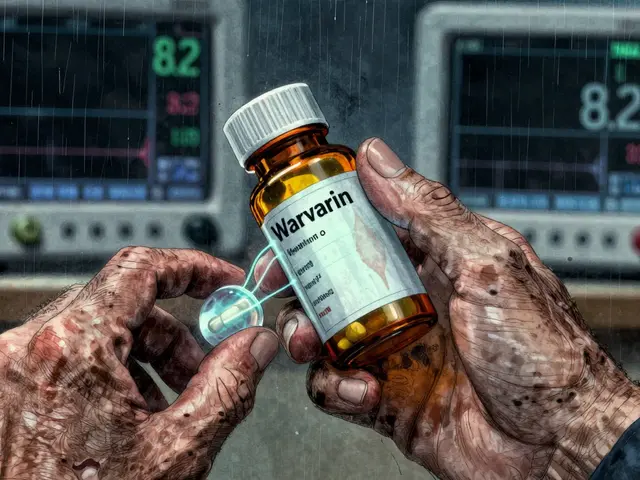
For low-income patients, they’re not just medicine. They’re dignity. They’re stability. They’re the reason someone can take their blood pressure pill every day instead of choosing between food and refills.
Every time a Medicaid patient picks up a $6 generic instead of a $56 brand, the system wins. The patient wins. And the country saves.
Are generic drugs as effective as brand-name drugs?
Yes. The FDA requires generic drugs to have the same active ingredients, strength, dosage form, and route of administration as the brand-name version. They must also prove they work the same way in the body. There is no clinical difference in effectiveness or safety between FDA-approved generics and brand-name drugs.
Why do some Medicaid patients pay more for generics than others?
Copays vary by state and whether the patient is in fee-for-service Medicaid or a managed care plan. Some states have increased copays even as drug prices dropped. Others cap generic copays at $1-$3. If you’re paying more than $10 for a generic, check your state’s Medicaid website-you may qualify for a lower copay or waiver.
Can I switch from a brand-name drug to a generic on Medicaid?
Yes. Pharmacists are required to substitute generics unless the prescriber marks “dispense as written” or there’s a medical reason not to. If your doctor hasn’t specified otherwise, the pharmacy will automatically give you the generic. You can also ask your doctor to write a prescription specifically for the generic version.
Do PBMs (Pharmacy Benefit Managers) raise the cost of generics?
Some do. PBMs take fees on every transaction, and in some states, those fees are as high as 30% of the drug’s cost. A 2025 Ohio audit found PBMs collected $64 million in fees on $208 million in generic drug sales. These fees don’t always go to the patient or the state-some are kept by the PBM. This is why some experts are calling for more transparency and regulation.
Why is Medicaid spending rising if generics are so cheap?
Because a small number of very expensive drugs are driving costs up. Less than 2% of prescriptions cost over $1,000 each, but they make up more than half of Medicaid’s total drug spending. These are usually specialty drugs for rare diseases or cancer. Generics still make up 90% of prescriptions, but they’re not the reason spending is rising.




Laura B
February 19, 2026 at 10:00
Just had to share this-my mom’s on Medicaid, and her blood pressure med went from $45 to $3 overnight when they switched to generic. She cried. Not because she was sad, but because she finally didn’t have to skip doses to afford groceries. This isn’t policy-it’s survival.