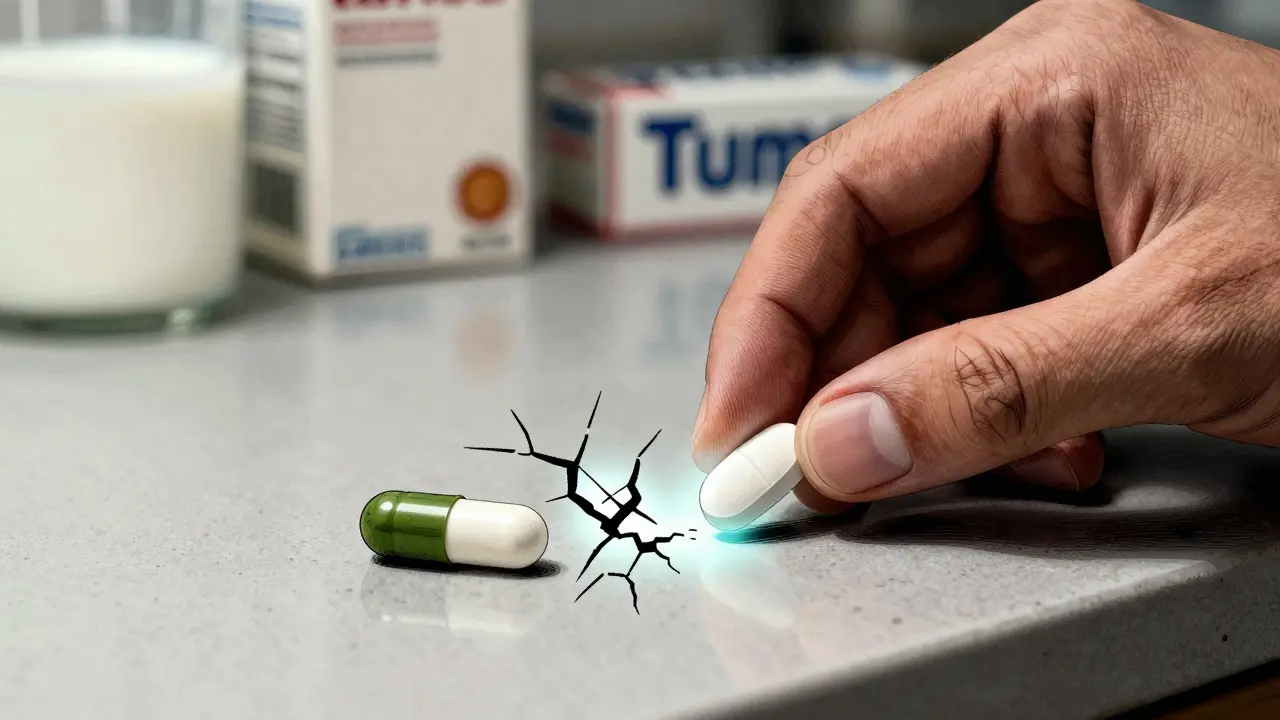
Millions of people take calcium and iron supplements every day-often without realizing they could be making their medications less effective. If you’re on antibiotics, thyroid medicine, or even heartburn pills, those pills you swallow for bone health or anemia might be working against you. It’s not hype. It’s chemistry. And it’s happening right now in kitchens, medicine cabinets, and pharmacies across the country.
How Calcium Blocks Antibiotics
Calcium doesn’t just build bones. It also binds to certain antibiotics like tetracycline, doxycycline, and ciprofloxacin, forming a hard, insoluble complex that your body can’t absorb. Think of it like Velcro: the calcium sticks to the antibiotic and pulls it out of circulation before it can do its job. Research from U.S. Pharmacist shows calcium carbonate can cut the absorption of ciprofloxacin by 40%. That’s not a small drop-it’s enough to turn a treatment that should clear an infection into one that leaves bacteria thriving.That’s why doctors and pharmacists tell you to take these antibiotics on an empty stomach. But if you’re also taking a calcium supplement-whether it’s a pill, a chewable, or even a high-calcium antacid like Tums-you’re undoing that advice. The same goes for dairy. A glass of milk with your antibiotic might taste comforting, but it’s doing more harm than good. The recommendation? Wait at least 2 hours after taking the antibiotic before you take calcium. For extra safety, some experts suggest waiting 4 to 6 hours.
Iron and Antibiotics: A Similar Battle
Iron supplements, especially ferrous fumarate or ferrous sulfate, act the same way. They bind tightly to tetracycline-class antibiotics and fluoroquinolones like levofloxacin. The result? Your antibiotic doesn’t get absorbed. Your infection doesn’t get treated. And you might end up back at the doctor’s office with worse symptoms.GoodRx’s medical team recommends spacing iron and these antibiotics by at least 2 hours before or 4 hours after taking the antibiotic. That’s not just a suggestion-it’s based on clinical data showing absorption drops sharply when they’re taken together. And if you’re taking iron for anemia, you’re probably already feeling tired. The last thing you need is a lingering infection making it worse.
Levothyroxine and Calcium: The Silent Saboteur
If you’re on levothyroxine for hypothyroidism, calcium is one of your biggest hidden enemies. Thyroid hormone needs to be absorbed cleanly and consistently. Calcium interferes with that process, reducing how much of the hormone actually reaches your bloodstream. A study in the South Medical Journal showed that when calcium was taken within four hours of levothyroxine, thyroid hormone levels dropped significantly. Patients ended up with symptoms like fatigue, weight gain, and brain fog-not because their dose was wrong, but because the calcium blocked it.The fix? Take levothyroxine on an empty stomach, first thing in the morning, with a full glass of water. Then wait at least four hours before taking any calcium supplement, multivitamin with calcium, or even an antacid. Many people take their calcium at night to avoid stomach upset, which actually works well here-just keep it away from your thyroid med.

Iron and Heartburn Medications: The pH Problem
Iron needs acid to be absorbed. That’s why it’s often recommended to take it with orange juice-the vitamin C helps, but the mild acidity does the real work. Now, what happens when you take a proton pump inhibitor (PPI) like omeprazole or pantoprazole? These drugs shut down stomach acid production. No acid? No iron absorption. Same goes for H2 blockers like famotidine (Pepcid) and antacids like Tums.Studies show that people on long-term heartburn meds can develop iron deficiency-even if they’re taking supplements. The fix isn’t to stop your heartburn treatment. It’s to adjust timing. Take your iron supplement at least 2 hours before your PPI or antacid. That way, your stomach still has enough acid to absorb the iron. If you take your heartburn medicine at night, take your iron in the morning. Simple. Effective.
Why Milk Is the Enemy of Iron (and Why Orange Juice Helps)
Parents of kids with anemia often get confused. They’re told to give iron with food to avoid stomach upset. But milk? That’s the worst choice. Milk contains calcium, which binds to iron just like it binds to antibiotics. HealthyChildren.org points out that giving iron with milk can cut absorption by up to 50%. Instead, pair it with orange juice, strawberries, or tomato juice. The vitamin C doesn’t just help-it actively boosts iron uptake by keeping it in a form your body can use.And it’s not just kids. Adults with iron deficiency should do the same. Skip the dairy with your supplement. Grab an orange. Or toss a handful of bell peppers into your salad. Small changes. Big impact.
What About Multivitamins and Calcium-Fortified Foods?
Here’s where things get messy. Most multivitamins contain iron, calcium, or both. And many foods-cereals, plant milks, even some orange juices-are fortified with calcium. If you’re taking a multivitamin with your antibiotic or thyroid med, you’re risking the same interactions. Same with fortified almond milk at breakfast.Check labels. If your supplement says “with calcium” or “with iron,” treat it like a standalone mineral. Don’t take it within 2-6 hours of your critical meds. If you need a multivitamin, ask your pharmacist for one without calcium or iron. Or take it at a completely different time of day-say, lunchtime if your thyroid med is morning and your antibiotic is evening.

Real-Life Scenarios: What Goes Wrong
A 68-year-old woman takes levothyroxine every morning. She also takes a calcium pill at night for osteoporosis. She feels fine-until she starts getting dizzy and fatigued. Her doctor increases her thyroid dose. Still no improvement. Turns out, she was taking her calcium with dinner, but the calcium was still lingering in her system when she took her thyroid med the next morning. Four-hour gap? Not happening.A 12-year-old boy gets prescribed doxycycline for acne. His mom gives him iron because he’s anemic. He stops responding to the antibiotic. His acne gets worse. The pediatrician finds out the iron and antibiotic were taken together at breakfast. Two hours apart? No. They were swallowed at the same time.
A man on omeprazole for chronic heartburn takes iron for low ferritin. His levels don’t rise. His doctor assumes he’s noncompliant. But he’s taking the iron exactly as told-just with his heartburn pill. No acid. No absorption.
These aren’t rare cases. They’re common. And they’re preventable.
What Should You Do?
Here’s a simple, practical checklist:- Write down all your meds and supplements. Include over-the-counter pills, vitamins, and even fortified foods you eat daily.
- Identify your critical meds: Levothyroxine, tetracyclines, fluoroquinolones, and heartburn drugs (PPIs/H2 blockers).
- Separate calcium and iron from these meds: Minimum 2 hours. Better: 4-6 hours.
- Take iron with vitamin C. Orange juice, strawberries, or a 250mg vitamin C tablet.
- Avoid dairy with iron and antibiotics. Milk, yogurt, cheese-all contain calcium that blocks absorption.
- Ask your pharmacist. They have interaction checkers built into their systems. Don’t assume your doctor knows every supplement you take.
Most people don’t tell their doctors about their supplements. They think, “It’s just calcium.” Or “It’s just iron.” But these aren’t harmless. They’re powerful chemicals that change how your body handles medicine.
When to Call Your Doctor
If you’ve been taking supplements and meds together and notice:- Your thyroid symptoms returning (fatigue, weight gain, cold intolerance)
- Your infection isn’t clearing up despite antibiotics
- Your iron levels aren’t improving even with supplements
- You’re taking more than three medications or supplements daily
It’s time to talk. Bring your pill bottles or a list to your next appointment. Don’t wait for symptoms to get worse.
Can I take calcium and iron together?
No. Calcium and iron compete for the same absorption pathways in your gut. Taking them together reduces how much of each your body absorbs. Space them at least 2-4 hours apart. If you need both, take one in the morning and the other at night.
Is it safe to take calcium with levothyroxine if I wait a few hours?
Yes-but you need to wait at least four hours. Studies show that even a three-hour gap can still reduce thyroid hormone absorption. Four hours is the minimum backed by clinical evidence. Take your thyroid med first thing in the morning on an empty stomach, and don’t touch calcium until after lunch or later.
Do all antibiotics interact with calcium and iron?
No. Only tetracyclines (like doxycycline) and fluoroquinolones (like ciprofloxacin) are affected. Penicillin, amoxicillin, azithromycin, and most other antibiotics don’t interact with calcium or iron. But if you’re unsure, always check the label or ask your pharmacist.
Can I take iron with food to avoid stomach upset?
Yes-but not with dairy, coffee, tea, or calcium-fortified foods. Take it with a small meal that’s low in calcium and high in vitamin C. Think: chicken stir-fry with bell peppers and brown rice. Avoid eggs, whole grains, and spinach at the same time-they contain compounds that also block iron absorption.
What if I forget and take my calcium with my antibiotic?
Don’t panic. One mistake won’t ruin your treatment. But don’t repeat it. If you realize right away, wait at least two hours and take another dose of your antibiotic if it’s safe to do so (check with your pharmacist). If it’s been longer than that, just take your next scheduled dose as normal. The key is consistency going forward.
Are there calcium or iron supplements that don’t interact with medications?
Not really. All forms of calcium (carbonate, citrate, gluconate) and iron (ferrous sulfate, fumarate, gluconate) can bind to antibiotics and thyroid meds. Some forms are better absorbed overall, but none avoid the interaction. The only reliable solution is timing-separating them by hours, not hoping for a “safe” brand.
Mineral supplements aren’t the enemy. But treating them like harmless vitamins is dangerous. They’re active compounds with real chemical effects on your body’s ability to absorb medicine. A simple change in timing-waiting a few hours-can mean the difference between a treatment that works and one that fails. Don’t guess. Don’t assume. Ask your pharmacist. Keep a log. And protect your health one hour at a time.





Aditya Kumar
December 15, 2025 at 07:27
Yeah, I knew calcium messed with my antibiotics but I had no idea about the thyroid stuff. I take Tums for heartburn and levothyroxine in the morning. Guess I’m doing it wrong. Time to rearrange my whole damn routine.
Also, why does no one talk about this in drug ads? They just show happy people swallowing pills like candy.