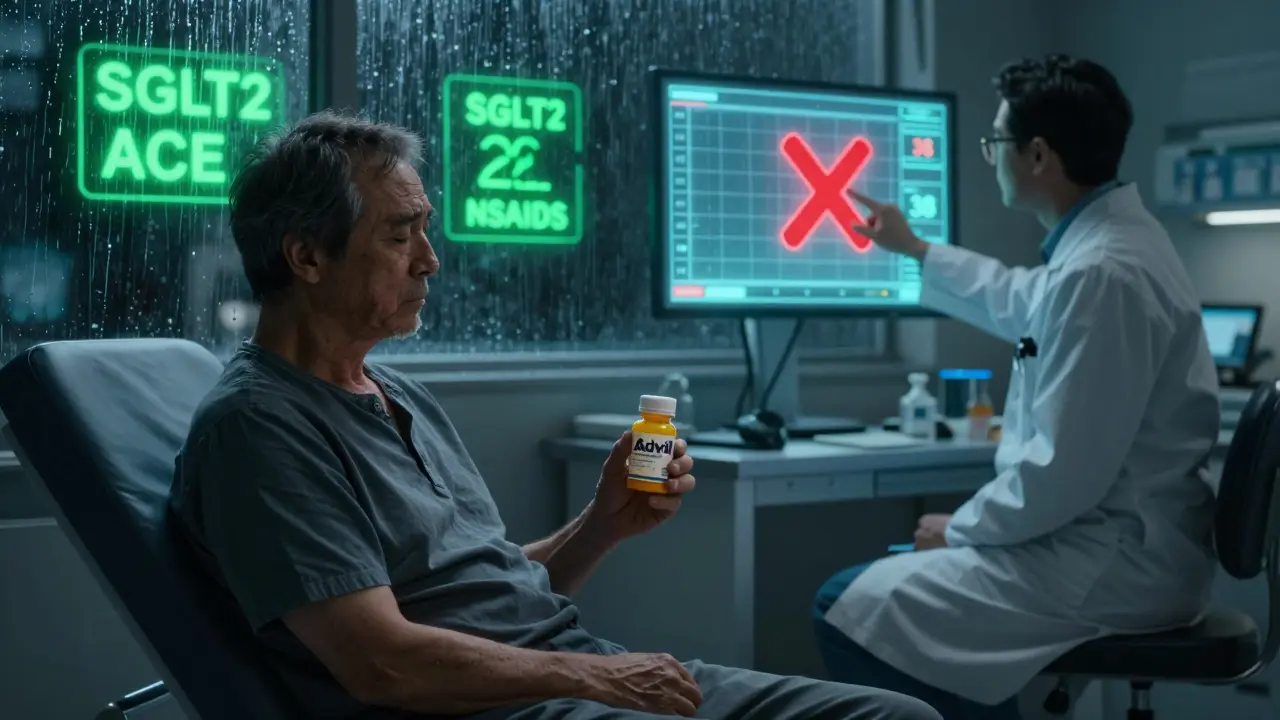
When your kidneys aren’t working right, the meds you take can turn dangerous-even if they’re perfectly safe for someone with healthy kidneys. It’s not just about taking less. It’s about knowing which drugs to avoid, when to adjust the dose, and how to spot trouble before it hits.
Why Kidney Disease Changes Everything About Medications
Your kidneys don’t just make urine. They filter out waste, including leftover drugs. When kidney function drops, those drugs stick around longer. That means higher levels in your blood, more side effects, and a bigger risk of poisoning-even with pills you’ve taken for years.Think of it like a clogged sink. Water (or in this case, medicine) keeps flowing in, but the drain is half blocked. It backs up. That’s what happens with drugs like metformin, vancomycin, or ibuprofen when your eGFR falls below 60 mL/min/1.73 m². The standard dose becomes too much.
And it’s not just prescription drugs. Over-the-counter painkillers like ibuprofen or naproxen are common culprits. One patient in Sydney, diagnosed with stage 3 CKD, took two Advil for a headache. Within 48 hours, his creatinine spiked from 3.2 to 5.7. He ended up in the hospital with acute kidney injury. That’s not rare. Around 68% of people with kidney disease say they’re confused about what OTC meds are safe.
eGFR Is Your Guide-Not Just a Number
You’ll hear your doctor talk about eGFR. That’s estimated glomerular filtration rate. It’s the best way to measure how well your kidneys are filtering. It’s not a one-time test. It changes. And your meds need to change with it.Here’s what matters:
- eGFR ≥60: Most drugs can be given at standard doses.
- eGFR 30-59: Many drugs need dose reductions. This is where most mistakes happen.
- eGFR 15-29: High risk. Many drugs require major adjustments or should be stopped.
- eGFR <15: Kidney failure. Dosing becomes highly individualized. Therapeutic drug monitoring is often needed.
Don’t rely on serum creatinine alone. It can stay normal even when kidney function is dropping. eGFR, calculated using your age, sex, race, and creatinine, gives the real picture. The KDIGO 2024 guidelines say this is the standard for all clinical decisions.
Drugs That Are Dangerous (and What to Use Instead)
Some drugs are outright risky in kidney disease. Others can be used safely-if you know how.Avoid or use extreme caution with:
- NSAIDs (ibuprofen, naproxen, diclofenac): These reduce blood flow to the kidneys. Even short-term use can cause sudden kidney injury. Use acetaminophen instead for pain.
- Metformin: Contraindicated if eGFR is below 30. Use with caution between 30-45. Many doctors still prescribe it too freely. A 2022 JAMA study found nearly 24% of CKD patients got inappropriate metformin doses.
- Aminoglycosides (gentamicin, tobramycin): These are toxic to kidneys. If you need them, dosing must be extended-once daily instead of every 8 hours. Trough levels need monitoring.
- Sodium phosphate bowel prep: Used before colonoscopies. Can cause acute kidney injury. Switch to polyethylene glycol (PEG) instead.
Safe and even protective options:
- ACE inhibitors and ARBs: These are now recommended at maximum tolerated doses, even if your eGFR is below 30. Many doctors used to lower the dose out of fear of creatinine rise. But KDIGO 2024 calls that suboptimal care. These drugs protect your kidneys, especially if you have albuminuria.
- SGLT2 inhibitors (dapagliflozin, empagliflozin): These are game-changers. They work the same no matter how bad your kidney function is. No dose adjustment needed-even at eGFR <25. They cut the risk of kidney failure by nearly 40% in trials like CREDENCE.
- Finerenone: A newer drug for people with diabetes and high urine albumin, even after max ACE/ARB therapy. It reduces kidney and heart risks.
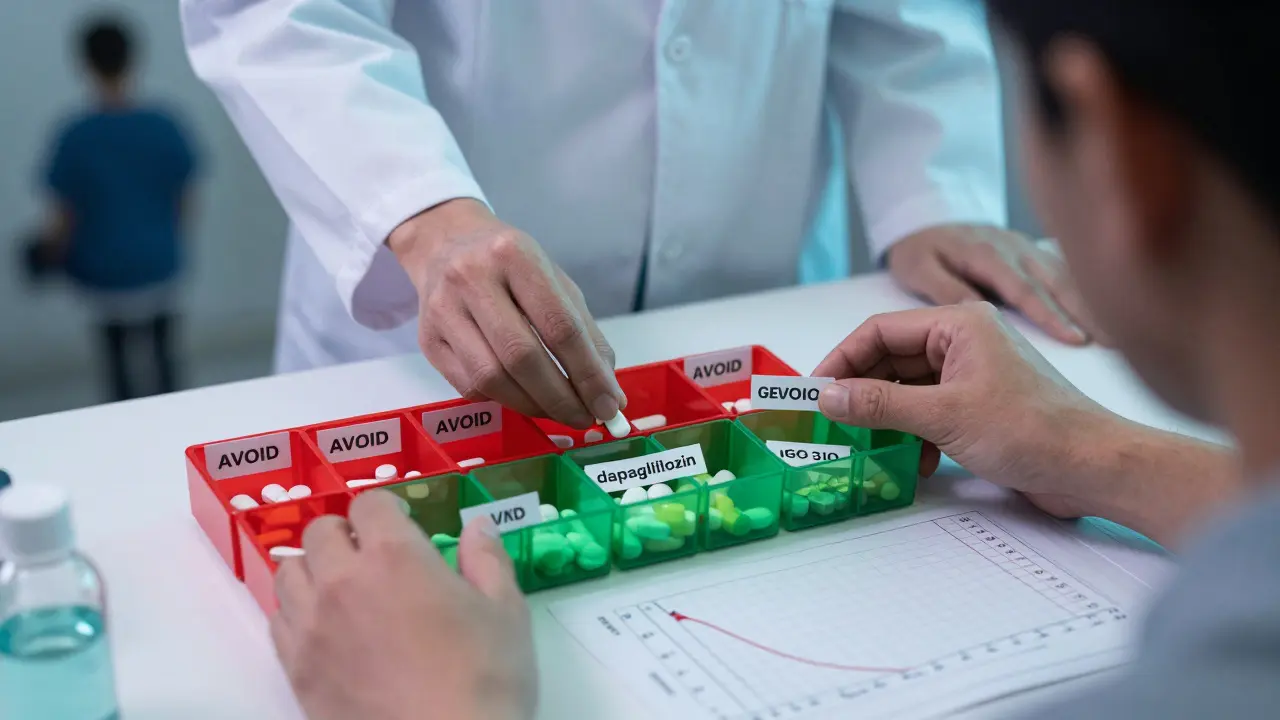
How to Stay Safe: Practical Steps
You don’t need to be a doctor to protect yourself. Here’s what works:- Get a medication review every 3 months. If your eGFR drops, your meds should be rechecked. The KDIGO 2024 guidelines say this is essential for stages 3-5 CKD.
- Use one pharmacy. Pharmacists can catch interactions and dosing errors. The NIDDK found a 42% drop in medication-related kidney injury when patients used a single pharmacy.
- Know your eGFR number. Write it down. Ask for it at every visit. If it’s changed, ask if your meds need adjusting.
- Use a renal dosing app. Apps like Epocrates Renal Dosing are used by 63% of U.S. nephrologists. They’re not perfect, but they’re better than guessing.
- Never take NSAIDs without asking. Even if you’ve taken them for years. Kidneys don’t warn you until it’s too late.
What’s New in 2025-2026
Guidelines keep evolving. The big shift? SGLT2 inhibitors are now recommended for kidney protection even if you don’t have diabetes. That’s huge. It means more people can benefit.Also, the FDA is updating its guidance in 2026 to use real-world data from electronic health records. That means dosing recommendations will get smarter, faster.
And a new KDIGO medication safety checklist is coming in Q2 2026. It’s designed to be used in clinics, hospitals, and pharmacies to prevent errors before they happen.

What Doesn’t Work
Many systems still fail patients. A 2023 study found 41% of hospitals don’t have protocols for adjusting meds during acute kidney injury. Electronic health records often don’t auto-alert doctors when a patient’s eGFR drops. That’s why 24% of CKD patients still get wrong doses.And here’s the truth: You can’t rely on your primary care doctor to know every renal dosing rule. That’s why nephrologists and clinical pharmacists are key. If you’re in stage 3 or worse, ask for a referral to a kidney specialist or a medication therapy management program.
Real Stories, Real Lessons
One patient on DaVita.com, 'CKDSurvivor,' says: 'My nephrologist used the KDIGO checklist. When my eGFR dropped to 38, they caught my metformin dose was too high. They switched me to a safer drug. I avoided lactic acidosis.'Another, 'DialysisDave,' says: 'I took two Advil for a headache. Within two days, I was in the ER. My kidneys shut down. I learned the hard way: no NSAIDs.'
These aren’t outliers. They’re examples of what happens when safety isn’t built into the system.
Final Thought: Your Kidneys Can’t Speak. You Have To.
Medication safety in kidney disease isn’t about memorizing charts. It’s about asking the right questions:- Is this drug safe for my kidney function?
- Has my dose been checked since my last eGFR test?
- Are there safer alternatives?
- Who’s tracking my meds?
If you’re on multiple medications and have kidney disease, you’re at risk. But you’re not powerless. With the right info, the right tools, and the right team, you can take your meds safely-for years to come.
Can I still take ibuprofen if I have kidney disease?
No. Ibuprofen and other NSAIDs can cause sudden kidney injury, even in small doses. They reduce blood flow to the kidneys, which can trigger acute kidney injury-especially if your eGFR is below 60. Use acetaminophen (Tylenol) instead for pain relief, and always check with your doctor before taking any OTC painkiller.
Does metformin need to be stopped if my eGFR drops below 45?
Not necessarily, but caution is needed. Metformin is contraindicated if eGFR is below 30. Between 30 and 45, it can be used but at a reduced dose and with close monitoring for lactic acidosis. Many doctors now switch patients to SGLT2 inhibitors or GLP-1 agonists at this stage because they’re safer and offer kidney protection.
Are SGLT2 inhibitors safe if I don’t have diabetes?
Yes. The KDIGO 2024 guidelines now recommend SGLT2 inhibitors like dapagliflozin for kidney protection even in people without diabetes, as long as they have albuminuria and eGFR above 25. These drugs reduce the risk of kidney failure and heart disease regardless of diabetes status.
Why do some doctors lower ACE inhibitor doses when creatinine rises?
Some doctors do this out of habit, thinking a rising creatinine means kidney damage. But in reality, it’s often a sign the drug is working-ACE inhibitors reduce pressure in the kidneys, which can cause a harmless, temporary creatinine rise. KDIGO 2024 says this is suboptimal care. You should keep the dose at the maximum tolerated level, even if creatinine goes up by up to 30%, unless you see signs of true kidney injury.
How often should my kidney function be checked if I’m on long-term meds?
At least every 3 months if you have stage 3 or worse CKD. If you’re sick, hospitalized, or starting a new medication, check it sooner. Your eGFR can drop quickly during infections, dehydration, or heart failure. Regular monitoring lets your team adjust your meds before harm occurs.
What should I do if I’m admitted to the hospital?
Tell every nurse and doctor you have kidney disease. Ask if your medications are being adjusted for your eGFR. Many hospitals don’t have protocols for this. Bring a list of your meds, your latest eGFR, and any recent changes. If possible, ask for a pharmacist to review your regimen.
Are there apps or tools to help me track my meds and kidney function?
Yes. Epocrates Renal Dosing is widely used by clinicians and shows correct dosing based on eGFR. MyTherapy and Medisafe can help you track your meds and set reminders. Some apps also let you log your eGFR over time. But always double-check with your doctor-apps are tools, not replacements for professional advice.
Can I take herbal supplements or vitamins if I have kidney disease?
Many are risky. Supplements like St. John’s Wort, licorice root, and high-dose vitamin C can harm kidneys or interfere with meds. Potassium supplements are dangerous if you’re on ACE inhibitors. Always tell your doctor or pharmacist about everything you take-even ‘natural’ products. There’s no such thing as a completely safe supplement in kidney disease.
Medication safety in kidney disease isn’t a one-time fix. It’s a lifelong habit of asking questions, staying informed, and partnering with your care team. The tools are there. The guidelines are clear. What’s left is for you to use them.





Vicki Yuan
January 4, 2026 at 15:33
Just had my nephrologist redo my med list last week-turned out I was still on metformin despite an eGFR of 41. They switched me to SGLT2 inhibitor and I feel like a new person. Seriously, if you have CKD, get a full med review every 6 months. No excuses.