Bempedoic Acid Side Effect Risk Calculator
This calculator helps you understand your personal risk of gout and tendon complications while taking bempedoic acid (Nexletol), based on the article's clinical data. Remember: Always consult your doctor before making treatment decisions.
Gout Risk Assessment
Tendon Injury Risk Assessment
Results
Gout Risk
0.5%
This is your estimated risk of gout attacks while taking bempedoic acid.
Tendon Injury Risk
0.1%
This is your estimated risk of tendon injuries or ruptures while taking bempedoic acid.
- Baseline uric acid testing is recommended before starting bempedoic acid
- Allopurinol can reduce gout risk by about 65% if uric acid levels rise
- Tendon injuries can be permanent if not treated promptly
- Do not take fluoroquinolone antibiotics while on bempedoic acid
When you can't take statins because of muscle pain or weakness, bempedoic acid (sold as Nexletol a prescription cholesterol-lowering drug that works by inhibiting ATP-citrate lyase in the liver bempedoic acid) becomes a go-to option. But it's not without its own set of risks. While it lowers LDL cholesterol just as well as ezetimibe, it brings unique side effects that many patients - and even some doctors - aren’t fully prepared for. If you're considering bempedoic acid as a statin alternative, you need to know about the real dangers: gout flares, tendon tears, and how these risks stack up when combined with other meds.
Why Bempedoic Acid Is Used
Bempedoic acid isn't meant for everyone. It's approved for people with heterozygous familial hypercholesterolemia or those with established heart disease who can't tolerate statins. About 5 to 10% of statin users report muscle pain severe enough to stop taking them. For these patients, bempedoic acid offers a different path. Unlike statins that block HMG-CoA reductase, bempedoic acid works upstream in the cholesterol-making pathway. It doesn't enter muscle tissue, which is why it rarely causes the muscle damage that makes statins hard to tolerate. In clinical trials, only 5.8% of people on bempedoic acid reported muscle spasms - compared to 10-15% on statins.
But here's the catch: lowering cholesterol doesn't mean avoiding all side effects. The same liver-focused action that spares your muscles can mess with other systems - especially uric acid and tendon health.
The Gout Risk: More Than Just a Flare
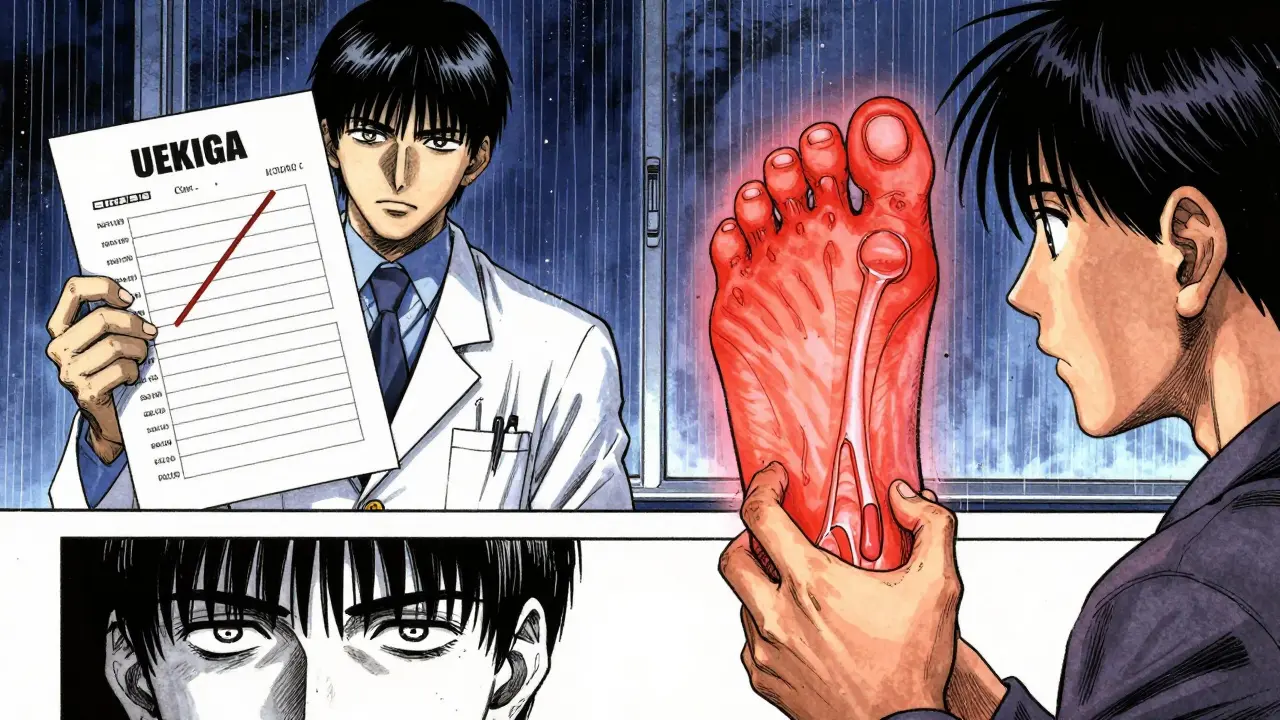
One of the biggest surprises with bempedoic acid is how often it triggers gout. In clinical trials, 1.5% of people taking it had a gout attack - compared to just 0.5% on placebo. That might sound small, but gout isn't just a painful toe. It's inflammation that can wreck joints, limit mobility, and require long-term treatment.
The reason? Bempedoic acid raises uric acid levels. In trials, 2.1% of users developed hyperuricemia - double the rate of placebo. For someone who's never had gout before, this might mean their first attack. For someone with a history of gout? The risk jumps to 2.3%. That's more than twice the rate in people without prior gout.
Doctors now recommend checking uric acid levels before starting bempedoic acid and again at four weeks. If levels climb above 8 mg/dL, many will prescribe allopurinol - a low-dose, daily medication that cuts gout risk by about 65%. Skipping this step is a common mistake. Patients often blame the gout on diet or alcohol, not realizing it started the moment they began the new pill.
Tendon Rupture: A Silent but Serious Threat
If gout is loud and painful, tendon rupture is quiet and devastating. In trials, 0.7% of bempedoic acid users experienced tendon injuries - including ruptures in the Achilles, rotator cuff, or biceps. That's seven times higher than the placebo group (0.1%).
What makes this worse? The risk skyrockets when bempedoic acid is combined with statins. One study found tendon rupture risk increased 3.5 times in patients taking both drugs. The FDA warns that this combination should be used only if absolutely necessary. And if you're already on a fluoroquinolone antibiotic - like ciprofloxacin or levofloxacin - you're at even greater risk. The European Atherosclerosis Society says you should avoid bempedoic acid entirely if you're on these antibiotics or have a history of tendon problems.
Signs to watch for: a sudden snap or pop in a tendon, sharp pain, bruising, or being unable to move a joint normally. If you feel any of these, stop the medication and get to an emergency room. Tendon ruptures don't heal on their own. Delayed treatment can mean permanent weakness or surgery.
Other Side Effects You Can't Ignore
While gout and tendon issues are the big red flags, other side effects are common enough to matter:
- Back pain - reported by nearly 5% of users
- Pain in hands or feet - 3.4% of patients
- Upper respiratory infections - 7.7%, more than double placebo
- Elevated liver enzymes - ALT or AST levels over three times normal in 1.6% of users
- Anemia - hemoglobin drops slightly in about 1.8%, but rarely enough to stop treatment
Most of these are mild and stabilize over time. Muscle spasms, for example, usually fade within 2-4 weeks. But liver enzyme spikes need monitoring. Your doctor should check liver function at baseline, then again at 12 weeks. If enzymes keep climbing, the drug may need to be stopped.
How It Compares to Other Cholesterol Drugs
Let’s put bempedoic acid in context:
| Medication | LDL Reduction | Common Side Effects | Key Risks |
|---|---|---|---|
| Statin (e.g., atorvastatin) | 30-50% | Muscle pain (10-15%), liver enzyme rise | Muscle damage (rhabdomyolysis rare) |
| Bempedoic acid (Nexletol) | 17-22% | Muscle spasms (5.8%), gout (1.5%), tendon injury (0.7%) | Gout, tendon rupture, liver enzyme rise |
| Ezetimibe | 15-20% | Diarrhea, fatigue, upper respiratory infection | Minimal tendon or gout risk |
| Nexlizet (bempedoic acid + ezetimibe) | 30-35% | Combines both drug side effects | Higher gout and tendon risk than ezetimibe alone |
Bottom line: Bempedoic acid isn't better than statins at lowering cholesterol. But for people who can't take statins, it's one of the few effective options. Still, it trades one set of risks for another - and those new risks are serious.

Who Should Avoid It
Not everyone is a candidate. Avoid bempedoic acid if you:
- Have a history of gout or high uric acid levels
- Have had tendon injuries or ruptures in the past
- Are taking fluoroquinolone antibiotics (cipro, Levaquin, etc.)
- Have liver disease or unexplained liver enzyme elevations
- Are already on a statin - unless your doctor has carefully weighed the risks
If you're unsure, ask for a baseline uric acid test and a tendon health check before starting. Many patients start bempedoic acid without any screening - and end up in the ER with a ruptured Achilles tendon.
What to Do If You're Already on It
If you're taking bempedoic acid right now:
- Keep track of joint pain - especially in your big toe, knees, or wrists
- Notice any sudden pain, popping, or weakness in tendons
- Get your uric acid and liver enzymes checked every 3 months
- Don't take fluoroquinolones unless absolutely necessary
- Report any new symptoms to your doctor - even if they seem minor
Most side effects are manageable. But ignoring early warning signs can lead to permanent damage. The CLEAR Outcomes trial showed bempedoic acid reduces heart attacks and strokes by 13%. That’s huge. But that benefit only matters if you don't end up in a wheelchair from a tendon rupture or stuck in chronic gout pain.
The Future: Once-Weekly Formulations
Esperion Therapeutics is testing a once-weekly version of bempedoic acid. Early results show it works just as well - and cuts gout-related side effects by 22%. That could change the game. If approved, it might mean fewer flares, less monitoring, and better adherence. But until then, the daily pill comes with real, documented risks that demand attention.
Can bempedoic acid cause permanent tendon damage?
Yes. Tendon rupture can lead to permanent weakness, reduced mobility, or require surgery. The risk is low - about 0.7% - but once a tendon tears, it rarely heals fully without intervention. Early recognition and stopping the drug are critical.
Is gout from bempedoic acid reversible?
In most cases, yes. If you stop bempedoic acid and start allopurinol, gout attacks usually stop within weeks. But if you keep taking the drug while having repeated flares, joint damage can become chronic. Prevention is better than treatment.
Should I stop bempedoic acid if I get gout?
Not necessarily. Many patients continue bempedoic acid while taking allopurinol to prevent flares. But if you have multiple gout attacks despite treatment, or if your uric acid stays high, your doctor may recommend switching to another cholesterol-lowering option.
Can I take bempedoic acid with a statin?
It's possible, but only under close supervision. The risk of tendon rupture triples when combined. Most doctors avoid this combo unless LDL remains dangerously high despite other treatments. Always get regular tendon and liver checks if you're on both.
How often should I get blood tests while on bempedoic acid?
Baseline testing is required before starting. After that, check uric acid and liver enzymes at 4 weeks, then every 3 months. If levels are normal and you have no symptoms, testing can be extended to every 6 months. But if you develop pain, swelling, or fatigue, get tested immediately.




David Robinson
March 18, 2026 at 12:01
Look, I've been on Nexletol for 8 months. Gout hit me hard-big toe felt like it was stuffed with glass. Doc said 'just up the allopurinol.' Fine. But then my Achilles started screaming during walks. No pop, no crash-just this dull, deep ache that wouldn't quit. I stopped the drug. Two weeks later? Pain gone. No surgery. No PT. Just stopped taking the damn thing. Why didn't anyone warn me about tendon pain being silent? They talk about gout like it's the only thing. Tendon rupture is a silent killer.