
Steroid Hyperglycemia Insulin Calculator
How Steroids Affect Your Insulin Needs
Based on clinical guidelines: Basal insulin typically increases 20-30% and mealtime insulin 50-100% during steroid therapy.
Key Insight: Steroid-induced hyperglycemia peaks 4-8 hours after dosing, with the most significant impact on breakfast and lunch blood sugars.
Adjusted Insulin Recommendations
Target: Increase by 20-30% for steroid-induced insulin resistance
Target: Increase by 50-100% (focus on breakfast/lunch doses)
What Is Steroid Hyperglycemia?
When you take steroids-like prednisone or hydrocortisone-for inflammation, asthma, or after an organ transplant, your blood sugar can spike. This isn’t just a coincidence. It’s called steroid hyperglycemia, or steroid-induced diabetes. It happens because these drugs mess with how your body uses insulin. Even if you’ve never had diabetes before, high-dose steroids can push your blood glucose into dangerous territory. And if you already have diabetes, your usual meds might not cut it anymore.
Up to 86% of patients on high-dose steroids experience at least one episode of high blood sugar. For those on 100 mg or more of prednisone equivalent daily, the chance of needing insulin jumps to over 10 times higher than someone not on steroids. The problem? Most people don’t realize this is happening until their glucose readings are sky-high. And because steroids cause spikes mostly after meals-not when fasting-checking your sugar only in the morning can miss the real issue by 15-20%.
Why Steroids Raise Blood Sugar
Steroids don’t just make you retain water or gain weight. They directly attack your body’s ability to control glucose. Here’s how:
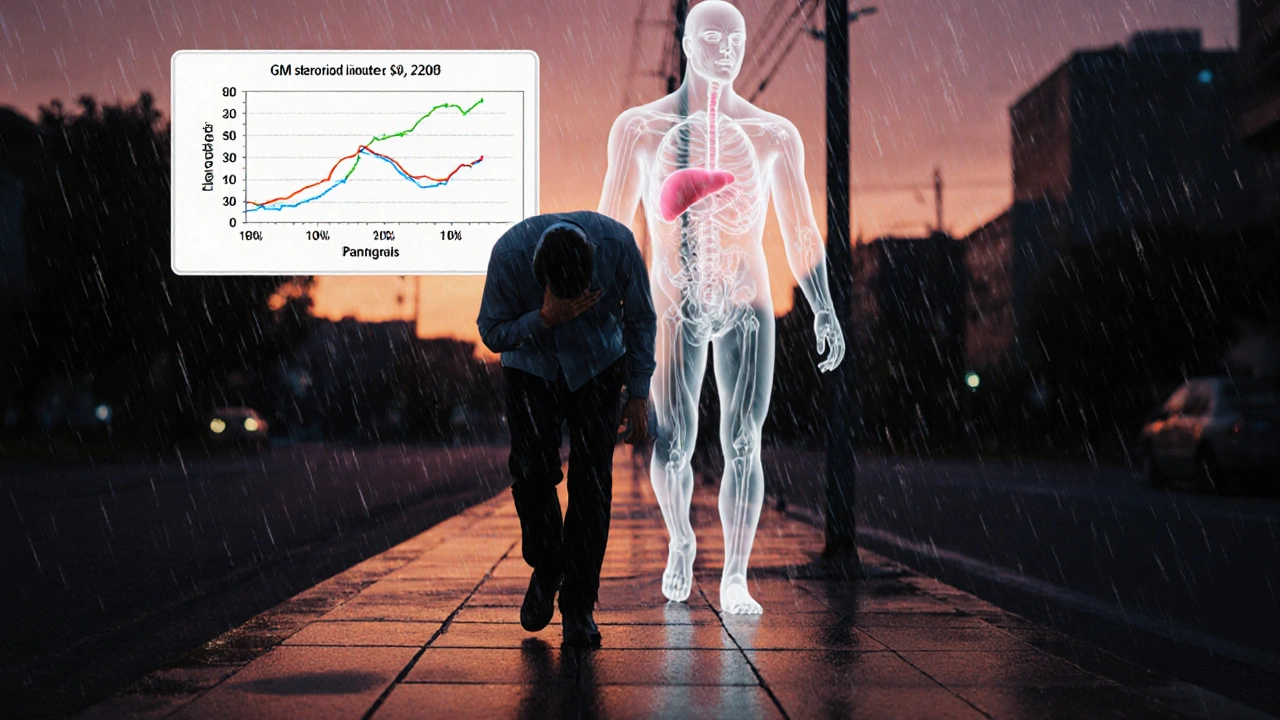
- They block insulin: Steroids interfere with insulin’s ability to tell muscle and fat cells to absorb sugar from the blood. This is called insulin resistance.
- They tell your liver to dump more sugar: Your liver starts producing extra glucose, even when you don’t need it.
- They reduce insulin production: The beta cells in your pancreas that make insulin get suppressed. Less insulin = higher blood sugar.
- They boost stress hormones: Glucagon, epinephrine, and cortisol all rise, which further pushes glucose into your bloodstream.
This isn’t just a temporary glitch. It’s a full-on metabolic disruption. And it’s worse if you’re older, overweight, have a family history of diabetes, or are taking other immunosuppressants like tacrolimus. Those drugs make insulin resistance even worse.
Who’s at Highest Risk?
Not everyone on steroids gets high blood sugar-but some people are way more likely to. These are the biggest risk factors:
- Pre-existing diabetes: If you already have type 2 diabetes, your blood sugar will likely spike harder and faster.
- High steroid dose: 20 mg of prednisone daily or more? Your risk jumps significantly. At 100 mg, nearly 6 in 10 people need insulin.
- Older age: People over 65 are more vulnerable because their pancreas doesn’t bounce back as easily.
- Obesity: A BMI over 30 doubles your risk.
- Other meds: Tacrolimus (used in transplant patients) cuts insulin production by 35-45%. Mycophenolate can also stress your beta cells.
- Low magnesium: For every 0.1 mg/dL drop in magnesium, your risk of hyperglycemia goes up 10-15%.
Even chronic hepatitis C increases your risk by over 2 times. If you have any of these, your doctor should be checking your glucose before, during, and after steroid treatment.
How to Adjust Insulin for Steroid Use
If you’re on insulin and start steroids, your dose will almost certainly need to go up. But not all insulin works the same way under steroid pressure.
Here’s what works based on real clinical data:
- Basal insulin: Increase by 20-30%. This covers the background glucose your liver keeps pumping out.
- Mealtime insulin: Increase by 50-100%. This is the biggest change. Steroids hit hardest after breakfast and lunch, so focus your extra dose there.
- Use rapid-acting analogs: Insulin aspart, lispro, or glulisine work better than regular insulin because they act faster and clear quicker-perfect for matching steroid spikes.
For example: If you were taking 30 units of basal insulin and 20 units of mealtime insulin per day before steroids, you might need 40 units basal and 35-40 units mealtime after starting 40 mg of prednisone daily. Always adjust under medical supervision.
Timing matters too. If you take prednisone in the morning, your blood sugar will peak between 4 and 8 hours later. That means your breakfast and lunch insulin needs the biggest boost. Dinner insulin? Often stays the same.
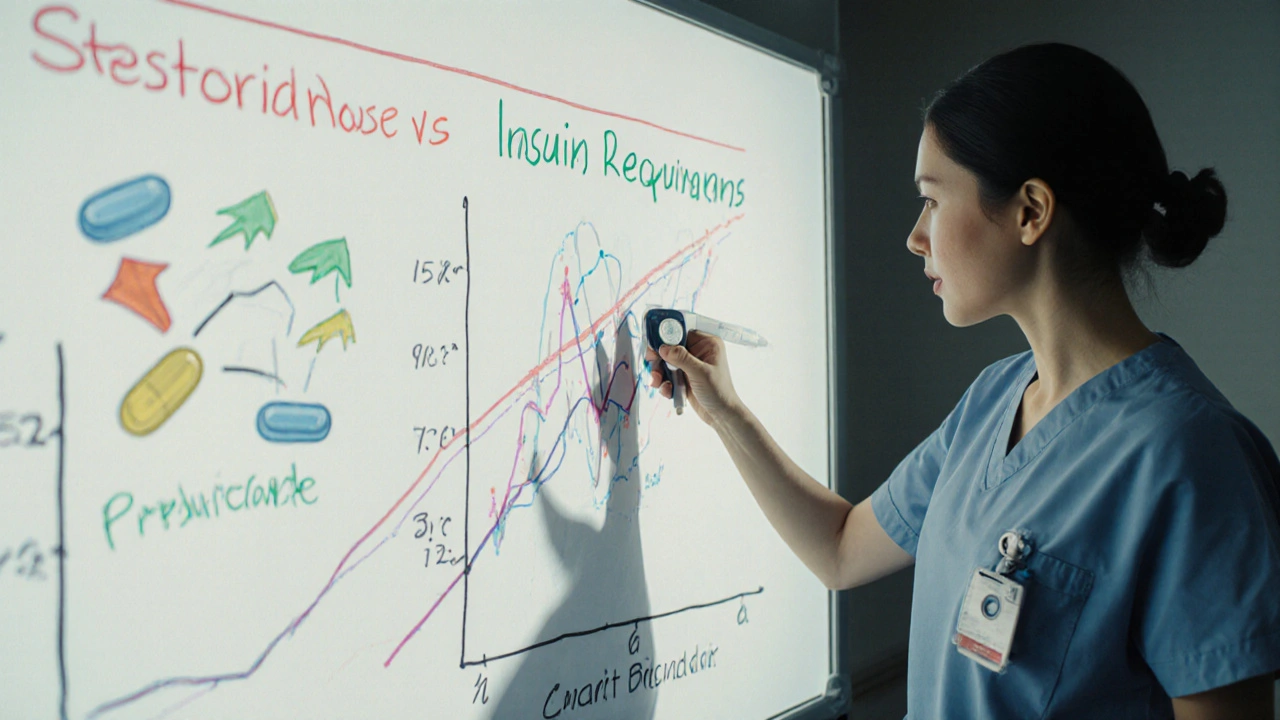
Monitoring: What to Check and When
Guessing won’t cut it. You need hard numbers.
The standard advice from endocrinologists:
- Check your blood sugar at least four times a day: fasting, before lunch, before dinner, and 2 hours after each meal.
- If glucose is over 140 mg/dL after meals, bump up to 6-8 checks daily.
- Don’t rely on fasting numbers. They can look normal while your post-meal sugar is 250+.
- Use continuous glucose monitoring (CGM). Studies show CGM users adjust insulin 37% more accurately than those using fingersticks. Real-time trends tell you exactly when your sugar is rising-and how fast.
At hospitals, they use protocols like the Umpierrez method: for every 50 mg of hydrocortisone equivalent, increase basal insulin by 10-20% and mealtime insulin by 20-40%. Outside the hospital, you can use apps like Glytec’s eGlucose System, which adjusts insulin recommendations based on your steroid dose and glucose patterns.
The Tapering Trap: Why Stopping Steroids Is Dangerous Too
This is where most people get hurt. When the steroid dose goes down, your insulin doesn’t. And that’s a recipe for low blood sugar.
Studies show that 22% of patients who don’t reduce their insulin during steroid tapering end up in the ER with hypoglycemia. At Johns Hopkins, 18% of hospital readmissions within 30 days of stopping steroids were due to unchanged insulin doses.
Here’s how to avoid it:
- Start reducing insulin when the steroid dose drops below 20 mg prednisone equivalent.
- For every 10 mg reduction in prednisone, cut total daily insulin by 10-20%.
- Reduce mealtime insulin first. Basal insulin can stay higher longer.
- Monitor glucose more frequently during tapering-even if you feel fine.
One patient on Reddit said: “I cut my prednisone from 60 mg to 20 mg over two weeks. My insulin stayed the same. I passed out at work on day 10. Never again.”
What About Oral Diabetes Meds?
Most oral diabetes drugs aren’t enough when steroids are in play. Metformin? It helps a little with insulin resistance, but won’t stop a steroid spike. SGLT2 inhibitors? Risky-steroids can cause dehydration, and these drugs increase that risk. DPP-4 inhibitors? Too weak.
Insulin is the gold standard for steroid hyperglycemia. It’s predictable, adjustable, and works fast. If you’re on pills and start steroids, your doctor will likely switch you to insulin-even if you’ve resisted it before.
One exception: GLP-1 agonists like semaglutide. Some newer data shows they can help with steroid-induced weight gain and glucose control. But they’re not first-line for acute cases. Stick with insulin during active steroid therapy.
Real-World Tips from People Who’ve Been There
Over 140 patients on r/diabetes shared their steroid experiences in 2023. Here’s what worked:
- “I kept a log: steroid dose, insulin dose, meals, glucose. It showed me the pattern. I could predict my spikes.”
- “I used my CGM to set alerts for above 180 after meals. I’d take half a unit of rapid insulin if it started climbing.”
- “I told my endocrinologist I was on 40 mg prednisone. She doubled my insulin right away. Saved me from a hospital stay.”
- “When they cut my steroid dose, I cut my insulin by 25% the same day. I didn’t wait. I didn’t assume it’d take time.”
Common mistakes? Waiting too long to adjust. Skipping meals because you’re scared of spikes. Not telling your doctor you’re on steroids. All of these lead to preventable complications.
What’s New in 2025?
Technology is catching up. In 2023, a machine learning model trained on steroid dose, BMI, and HbA1c predicted insulin needs with 85% accuracy. Hospitals like Mayo Clinic are now testing systems that auto-adjust insulin recommendations based on real-time steroid administration data from electronic health records.
By 2027, the American Diabetes Association expects 75% of U.S. hospitals to have formal steroid hyperglycemia protocols. But outside the hospital? Most primary care doctors still don’t know what to do. If you’re managing this at home, be your own advocate. Bring the guidelines. Ask for insulin. Demand CGM.
Final Takeaway
Steroid hyperglycemia isn’t a side effect-it’s a medical event. It demands action. If you’re on steroids and have diabetes, your insulin plan isn’t set in stone. It has to change. Track your glucose like your life depends on it-because it does. Adjust insulin early. Reduce it slowly during tapering. And never assume your old routine still works. The science is clear: insulin, timing, and monitoring are your best tools. Use them.





Stephanie Deschenes
November 25, 2025 at 23:16
Just wanted to say this is one of the clearest, most practical guides I’ve seen on steroid hyperglycemia. I’m an endo nurse and I’ve seen too many patients get blindsided by this. The insulin adjustment ratios? Spot on. Especially the part about mealtime insulin needing a 50-100% bump-most docs just say ‘increase basal’ and call it a day. Thank you for the specificity.