
Statin Exercise Safety Calculator
How Safe Is Your Workout?
This calculator helps you determine if your exercise intensity is safe while taking statins. Based on your inputs, it will provide personalized recommendations.
Your Safety Results
Many people on statins worry that working out might hurt their muscles. It’s a real concern-especially if you’ve felt sore, weak, or stiff after a walk or bike ride. But here’s the truth: statins and exercise can absolutely go together safely. The key isn’t stopping movement-it’s moving the right way.
Why Do Statins and Exercise Cause Muscle Concerns?
Statins work by blocking an enzyme in your liver that makes cholesterol. But that same enzyme is also involved in making coenzyme Q10 (CoQ10), a compound your muscles need for energy. When CoQ10 drops, some people notice muscle fatigue, soreness, or cramps, especially after physical activity. This isn’t a side effect everyone gets, but it’s common enough that about 27% of statin users say they’re afraid to exercise because of it. Research shows that muscle injury markers like creatine kinase (CK) can rise after intense workouts in statin users. One study of Boston Marathon runners found statin users had 42% higher CK levels than non-users after the race. But here’s the twist: higher CK doesn’t always mean worse function. In the same study, many runners still finished strong. Their muscles were stressed, but not broken.Not All Exercise Is the Same
The big mistake people make is treating all physical activity the same. High-intensity workouts-like HIIT, heavy weightlifting, or long-distance running-are the main triggers. But moderate, steady exercise? That’s not just safe-it’s protective. A 2023 study from Radboud University followed 100 adults aged 55 to 73 who cycled at 60% of their maximum heart rate for 45 minutes. That’s about the pace of a brisk walk or easy bike ride. Results? No drop in strength. No worsening of muscle pain. Even people who’d complained of muscle issues before the study felt no worse afterward. The takeaway? If you’re on statins, avoid pushing to exhaustion. Stick to what you can sustain without gasping. Aim for a 5 or 6 on a 10-point effort scale. You should be able to talk, but not sing.What You Should Do: 7 Proven Prevention Tips
1. Stick to Moderate Intensity
Walk, swim, cycle at a steady pace, or do light gardening. These activities don’t spike muscle damage markers. The American Heart Association recommends 150 minutes per week of this kind of activity. Spread it out-30 minutes, five days a week. That’s it.2. Start Slow and Build Gradually
If you’ve been inactive, don’t jump into jogging. Start with 10-minute walks. Add five minutes every week. A 2010 mouse study showed that animals trained slowly over weeks didn’t lose muscle strength when given statins. The same applies to humans. Your muscles adapt. Give them time.3. Time Your Workouts
Most statins peak in your blood 2 to 4 hours after you take them. That’s when muscle exposure is highest. Try exercising in the evening if you take your pill in the morning. Or take your statin at night and work out in the afternoon. It’s not a magic fix, but it reduces overlap. No study proves this works yet-but it’s low-risk and makes biological sense.4. Check Your Vitamin D
Low vitamin D is linked to worse statin muscle symptoms. If you’re over 50, live in a northern climate, or don’t get much sun, get tested. Aim for a level above 30 ng/mL. If you’re low, take 1,000-2,000 IU daily. It’s cheap, safe, and often makes a noticeable difference in how your muscles feel.5. Avoid Fibrates and Other Drug Interactions
If you’re taking gemfibrozil or fenofibrate for triglycerides, talk to your doctor. These drugs can raise your risk of muscle damage by 3 to 5 times when combined with statins. The FDA warns about this. Many people don’t know they’re at risk because they’re focused on cholesterol alone.6. Try a Different Statin
Not all statins are the same. Hydrophilic statins like pravastatin and rosuvastatin are less likely to enter muscle tissue. Lipophilic ones like simvastatin and atorvastatin penetrate deeper. If you’re having trouble, switching to rosuvastatin 10 mg every other day might help. One study showed people on this schedule still lowered cholesterol and improved fitness without muscle pain.7. Know the Red Flags
Most muscle soreness from statins fades in 2-3 days. If it lasts longer than 72 hours, or you notice dark, tea-colored urine, stop exercising and call your doctor. That could mean rhabdomyolysis-a rare but serious breakdown of muscle tissue. It’s extremely uncommon, but it’s the one thing you can’t ignore.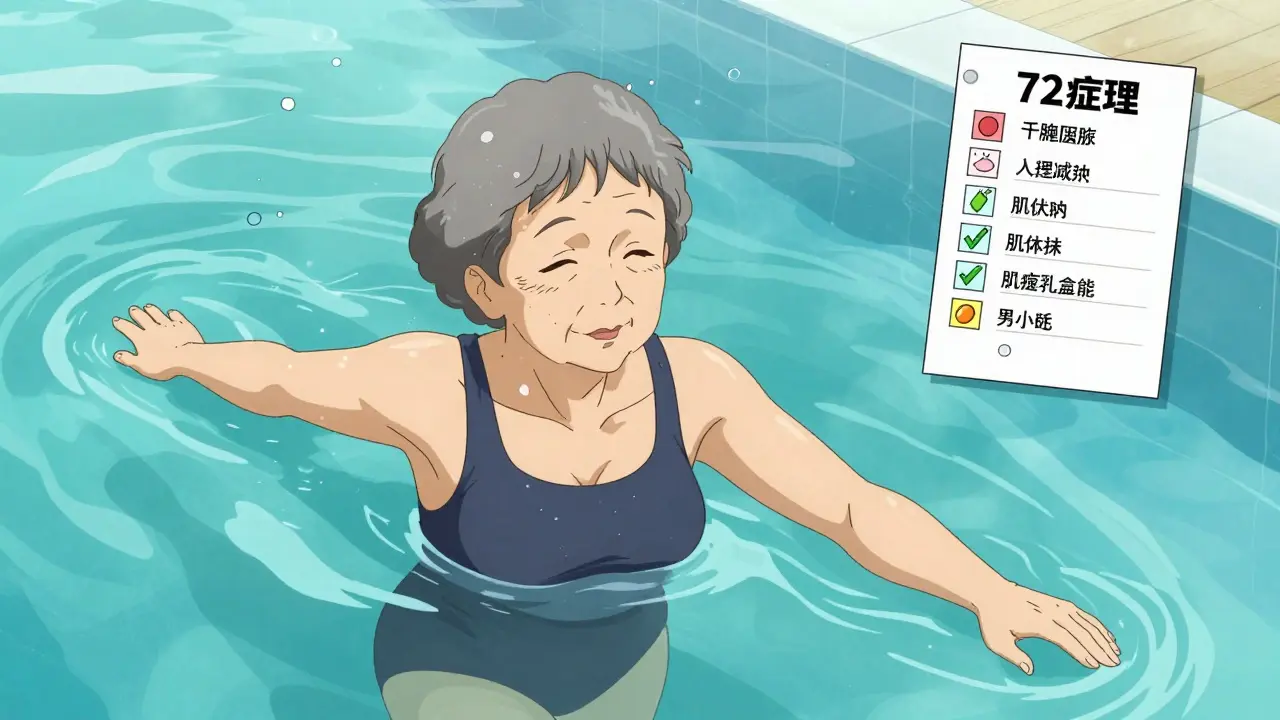
Real People, Real Results
Online forums are full of stories. One man in Sydney, 68, stopped running after his statin prescription because of cramps. He switched to daily walking and light resistance bands. Six months later, he said his muscles felt stronger than they had in years. Another woman, 72, swapped her morning HIIT class for water aerobics. Her pain dropped by 60%, and she now swims three times a week. The pattern is clear: people who adapt their routine don’t quit statins. They keep moving. And that’s the point.Why Staying Active Matters More Than You Think
Statins reduce heart attack risk by 25-35%. Regular exercise cuts it by 20-30%. Together, they’re a powerhouse. Discontinuing either one because of muscle worry puts you at greater risk than the side effects ever did. A 2022 JAMA editorial put it bluntly: “Discontinuing exercise would be more harmful than continuing statin therapy.” The benefits of movement-better sleep, lower blood pressure, improved mood, stronger bones-don’t disappear just because you’re on a cholesterol pill.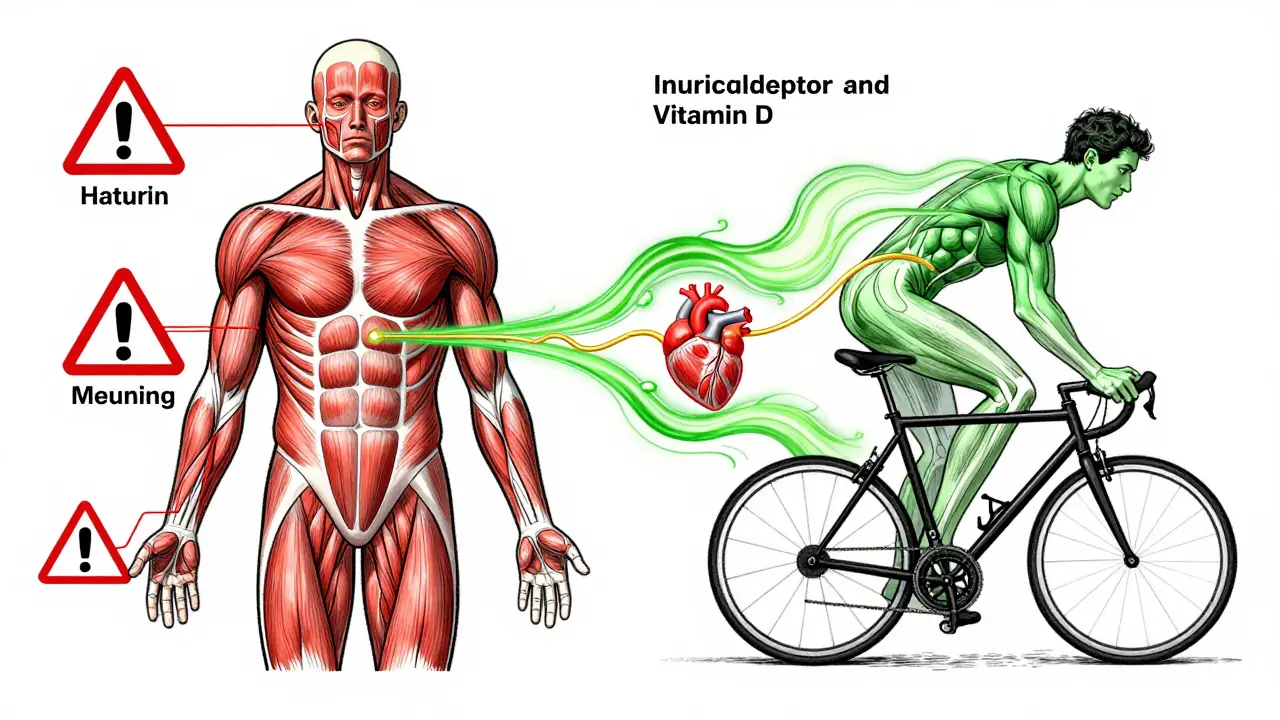
What’s Next? Research Is Evolving
Scientists are now looking at genetics. Some people have a gene variant (SLCO1B1) that makes them more likely to have muscle issues with statins. Testing for it isn’t routine yet, but it’s coming. In the meantime, if you’ve had problems before, assume you might be sensitive-and adjust accordingly. The NIH is running a major trial called STATIN-EX, tracking 300 statin users doing different types of exercise. Results are due in late 2025. But even without those answers, the evidence we have now is strong enough to act on.You Don’t Have to Choose Between Health and Movement
You don’t have to give up your favorite activities. You just have to rethink them. Skip the sprints. Swap the heavy weights for resistance bands. Walk instead of run. Swim instead of cycle. The goal isn’t to be the fastest or strongest-it’s to stay alive, mobile, and independent for decades to come. Your statin is there to protect your heart. Your movement is there to protect your whole body. They’re not enemies. They’re teammates.Can I still lift weights if I’m on statins?
Yes, but avoid heavy lifting or max-effort sets. Stick to lighter weights with higher reps-think 12-15 reps per set, not 3-5. Focus on control, not power. If your muscles ache for more than 72 hours after lifting, dial it back. Light resistance training is safe and helps preserve muscle mass as you age.
Does taking CoQ10 supplements help with statin muscle pain?
Some people report feeling better, but studies haven’t proven it consistently. The American Heart Association doesn’t recommend CoQ10 as a standard treatment. If you want to try it, 100-200 mg daily is common. Don’t expect miracles, but it’s low-risk. Better to focus on proven strategies like moderate exercise and vitamin D first.
Should I stop statins if my muscles hurt during exercise?
No-not without talking to your doctor. Muscle pain doesn’t always mean statins are the cause. It could be from overtraining, dehydration, or another condition. Stopping statins without medical advice increases your risk of heart attack or stroke. Work with your doctor to adjust your dose, switch statins, or change your routine before quitting.
Is it safe to exercise if I’ve had muscle pain before?
Yes, if you adjust your approach. Many people who once had pain find it disappears when they switch from high-intensity to moderate exercise. Start very gently. Walk 10 minutes a day for a week. Then add 5 minutes. Track how you feel. Most people see improvement within 4-8 weeks. Don’t rush. Your muscles need time to adapt.
Can statins cause permanent muscle damage?
No. Statin-related muscle symptoms are almost always reversible. Once you lower the dose, switch statins, or reduce exercise intensity, muscle pain typically fades within weeks. Permanent damage is extremely rare and usually only happens if rhabdomyolysis goes untreated. That’s why recognizing dark urine or extreme weakness is critical-get help fast if you see those signs.
What’s the best time of day to exercise if I take statins?
There’s no perfect time, but timing matters. Most statins peak in your blood 2-4 hours after you take them. If you take your pill in the morning, exercise in the afternoon or evening. If you take it at night, try working out in the morning. This reduces the chance that your muscles are exposed to the highest drug levels during your workout. It’s a simple tweak with potential benefit.
Do all statins affect muscles the same way?
No. Hydrophilic statins like pravastatin and rosuvastatin are less likely to enter muscle cells, so they cause fewer muscle symptoms. Lipophilic statins like simvastatin and atorvastatin penetrate muscle tissue more easily. If you’re having trouble, switching to rosuvastatin or pravastatin may help-sometimes dramatically. Talk to your doctor about alternatives.



Rajni Jain
December 26, 2025 at 22:58
i was scared to move after starting statins... thought i was dying every time my legs cramped. but i just started walking 10 mins a day and now i do 45. no more pain. your body adapts if you don’t bully it. 🙌