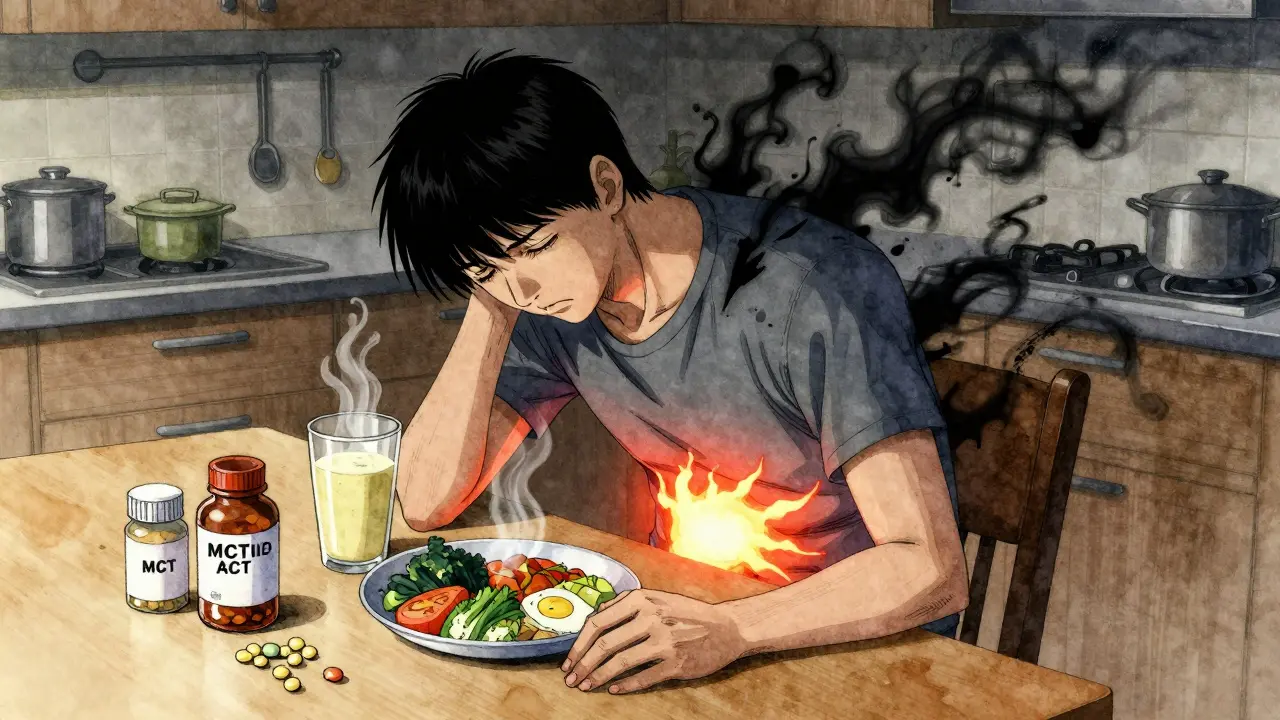
Chronic pancreatitis isn’t just about occasional stomach upset. It’s a relentless condition where the pancreas slowly destroys itself through ongoing inflammation, leading to permanent damage. For many, it means daily pain that doesn’t go away, trouble digesting food, and a constant battle to stay nourished. Unlike acute pancreatitis, which can resolve after a few days, chronic pancreatitis sticks around - and gets worse over time. By the time most people are diagnosed, the damage is already done. But that doesn’t mean there’s nothing you can do. With the right mix of pain control, enzyme therapy, and smart nutrition, many people find real relief - even if the disease can’t be reversed.
Pain Is the Main Enemy
Eight out of ten people with chronic pancreatitis live with persistent abdominal pain. It’s not just a dull ache. For many, it’s sharp, burning, or crushing - often radiating to the back. This pain doesn’t come and go like a stomach bug. It’s there in the morning, during meals, and sometimes all night. And it’s not just physical. It wears you down mentally, making it hard to work, sleep, or even enjoy time with family.
Doctors don’t have one magic pill for this pain. Instead, they use a step-by-step approach called the WHO pain ladder. It starts simple: acetaminophen (up to 4,000 mg a day) is often the first try. It’s safe for most people and helps about 30-40% of those with mild pain. If that doesn’t cut it, the next step is usually a nerve-targeting drug like gabapentin or pregabalin. These aren’t painkillers in the traditional sense - they calm overactive nerves. Studies show they reduce pain by 40-50% in people whose pain has a nerve component.
For some, amitriptyline, an old-school antidepressant, works surprisingly well. At low doses (10-75 mg), it doesn’t lift mood - it blocks pain signals. About half of patients see improvement. When those options aren’t enough, doctors may turn to tramadol, a mild opioid. It’s more effective than stronger opioids like oxycodone for this condition, and it has fewer side effects like constipation. Still, opioids are used carefully. About 30% of patients eventually need them, but long-term use carries a real risk of dependence. That’s why most specialists avoid them unless absolutely necessary.
Enzyme Therapy: Digestion on Life Support
When the pancreas is damaged, it stops making the enzymes needed to break down fat, protein, and carbs. Without them, food passes through undigested. You might notice greasy, foul-smelling stools, unexplained weight loss, or bloating after meals. That’s where pancreatic enzyme replacement therapy (PERT) comes in.
PERT isn’t optional - it’s essential. The standard dose is 25,000 to 80,000 lipase units per meal. That sounds like a lot, but it’s what your body needs to absorb nutrients. You take these capsules right before or with your first bite of food. If you take them too early or too late, they won’t work. Most people need 6 to 12 pills a day, spread across meals and snacks. That’s a lot to remember - and it’s expensive. Monthly costs can run from $300 to over $1,200, depending on your dose and insurance.
Not all enzyme products are the same. Brands like Creon, Zenpep, and Pancreaze are the most common. They’re enteric-coated, meaning they’re designed to survive stomach acid and release enzymes in the small intestine. Some older, uncoated forms require you to also take a proton pump inhibitor like omeprazole to protect the enzymes. Studies show PERT reduces pain in about 45% of patients - not because it treats the pain directly, but because better digestion reduces pressure and inflammation in the pancreas.
But here’s the catch: many people stop taking their enzymes. Why? Cost, pill burden, or just forgetting. A 2022 survey found 35% of patients admit they don’t take them consistently. That’s a big problem. Without enzymes, malnutrition sets in fast - especially with fat-soluble vitamins like A, D, E, and K. Regular blood tests to check these levels are part of standard care.
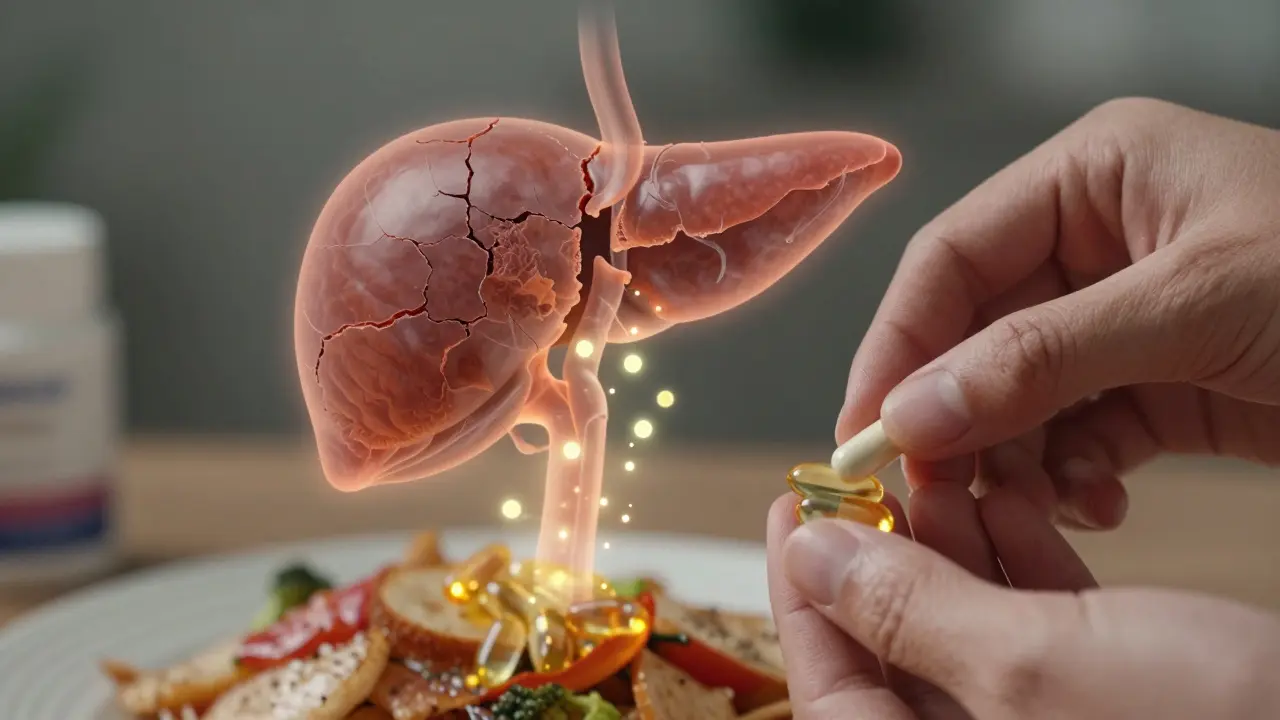
Nutrition: What to Eat - and What to Avoid
For years, doctors told everyone with chronic pancreatitis to go on a low-fat diet. The idea was simple: less fat = less work for the pancreas = less pain. But the evidence isn’t as clear-cut as it seems. While 60-70% of patients say high-fat meals trigger pain, there’s no solid proof that cutting fat alone improves long-term outcomes. Still, most dietitians recommend keeping fat intake under 50 grams a day - not because it cures anything, but because it reduces flare-ups.
That’s where medium-chain triglycerides (MCTs) come in. Unlike regular fats, MCTs don’t need pancreatic enzymes to be absorbed. They go straight from your gut into your bloodstream. Foods and supplements like Peptamen contain MCTs and are often used when standard diets fail. One small study showed patients drinking three cans a day for 10 weeks cut their pain scores by 30%. It’s not a cure, but for some, it’s a game-changer.
Another surprising tool is antioxidants. A 2013 study gave patients a daily mix of selenium, vitamin C, vitamin E, beta-carotene, and methionine. After six months, 52% of them had less pain - compared to just 23% in the placebo group. It’s not a miracle, but it’s one of the few non-drug treatments with real data behind it.
And then there’s alcohol and smoking. These aren’t just risk factors - they’re accelerants. If you keep drinking, your pancreas keeps getting worse. Quitting doesn’t reverse damage, but it stops the decline. The NHS reports that 40-50% of patients see better pain control within six months of quitting alcohol and tobacco. That’s more than most medications can promise.
When Medications and Diet Aren’t Enough
For some, the pain becomes unbearable. Pills stop working. Enzymes aren’t enough. That’s when doctors consider procedures.
ERCP - a procedure where a scope is inserted to open blocked pancreatic ducts - helps about 60-70% of patients. But the relief often lasts less than a year. Celiac plexus blocks involve injecting alcohol or steroids near the nerves that carry pain signals from the pancreas. Many patients report 3 to 6 months of significant relief. One person on a patient forum said it gave them nine months of near-pain-free living after years of agony.
For those with severe, unrelenting pain, surgery might be the only option. The Frey procedure removes part of the pancreas and opens the main duct. It works for 70-80% of patients five years out. The most extreme option is total pancreatectomy with islet autotransplantation (TPIAT). The entire pancreas is removed - but before it’s taken out, insulin-producing cells are harvested and injected back into the liver. This stops the pain in 85-90% of cases. The downside? You’ll need lifelong insulin injections. It’s not for everyone - but for some, it’s the only path back to a normal life.
The Real Challenges: Cost, Access, and Mental Health
Getting care for chronic pancreatitis isn’t easy. Most people wait 2 to 3 years before getting a proper diagnosis. By then, the damage is done. Even after diagnosis, many struggle to find specialists. Only 25% of community hospitals have dedicated pancreas teams. Academic centers do better - but they’re often far away.
Insurance fights over enzyme therapy are common. Some insurers require you to try cheaper brands first, even if they don’t work. Others cap the dose you can get. That forces people to choose between paying for food or paying for enzymes.
And then there’s the mental toll. Chronic pain doesn’t just hurt your body - it eats away at your spirit. Depression and anxiety are common. That’s why many experts now include yoga and counseling as part of treatment. A University of Pittsburgh study found that patients doing biweekly yoga for 12 weeks improved their quality-of-life scores by 35%.
The future is looking a little brighter. A new enzyme formula called LipiGesic™ is showing 20% better fat absorption in trials. The NIH is investing $15 million into pain research. And researchers are exploring nerve stimulation devices and genetic markers to predict who will develop severe pain. But for now, the best tools we have are the ones we already know: careful pain control, consistent enzyme use, smart eating, and quitting alcohol and tobacco.
What Works - and What Doesn’t
There’s a lot of misinformation out there. Some people swear by herbal supplements or detoxes. But there’s zero evidence they help. Others avoid all fat completely. That’s dangerous - you still need some fat to absorb vitamins and stay healthy. The goal isn’t to eliminate fat - it’s to manage it.
Here’s what actually works, based on real data:
- Take enzymes with every meal - timing matters.
- Use acetaminophen first, then gabapentin or amitriptyline if needed.
- Try MCT oil or supplements if high-fat meals trigger pain.
- Take antioxidants (vitamin C, E, selenium, etc.) daily - they’ve been shown to reduce pain.
- Quit alcohol and smoking - no exceptions.
- Get your vitamin levels checked every 6 months.
- Consider a pain specialist or dietitian if you’re not improving.
What doesn’t work? Ignoring symptoms. Waiting too long to seek help. Skipping enzymes because they’re expensive or inconvenient. Thinking pain is just "part of the condition" - it’s not. You deserve relief.
Can chronic pancreatitis be cured?
No, chronic pancreatitis cannot be cured. The damage to the pancreas is permanent. But with proper management - including enzyme therapy, pain control, and nutrition - most people can reduce symptoms, prevent complications, and live a full life. The goal isn’t to reverse the disease, but to control it.
Do I need to take enzymes for life?
Yes, if your pancreas can no longer produce enough enzymes - which is common in chronic pancreatitis - you’ll need to take them for life. Stopping them leads to malnutrition, weight loss, and worsening symptoms. Even if you feel fine, continuing enzymes helps your body absorb nutrients and reduces strain on the pancreas.
Why does my pain get worse after eating?
After you eat, your pancreas normally releases enzymes to digest food. But if it’s damaged, it can’t respond properly. This causes pressure buildup and inflammation, which triggers pain. High-fat meals make this worse because they demand more enzyme activity. That’s why many people feel pain after fatty meals - not because fat causes damage, but because it forces the pancreas to work harder.
Can I drink alcohol occasionally?
No. Even small amounts of alcohol can trigger flare-ups and speed up pancreatic damage. Studies show that continuing to drink after diagnosis leads to faster disease progression and worse pain. Complete abstinence is the only proven way to slow the disease and improve pain control.
Are there alternatives to expensive enzyme pills?
There are no true alternatives - enzymes are essential. But you can reduce costs by working with a pharmacist or social worker to find patient assistance programs. Some manufacturers offer discounts or free samples. Generic versions may be available in some countries. Also, ask your doctor if you can start with a lower dose and adjust based on symptoms - sometimes you don’t need the highest dose right away.
How do I know if my enzyme dose is right?
You’ll know your dose is right if you’re not having greasy stools, unexplained weight loss, or bloating after meals. Your doctor may also check your stool for fat content or your blood for vitamin levels (A, D, E, K). If you’re still having symptoms, your dose may need to be increased - especially if you’re eating high-fat meals. Always adjust under medical supervision.
If you’re struggling with chronic pancreatitis, you’re not alone. The road is long, and it’s messy. But progress is possible - one pill, one meal, one smoke-free day at a time. The key is consistency. Don’t wait for the perfect plan. Start with what you can do today.



LIZETH DE PACHECO
January 2, 2026 at 01:18
Just wanted to say this post saved my life. I was skipping enzymes because they cost too much, and I was losing weight like crazy. After reading this, I called my doctor and got on a patient assistance program. I’m not cured, but I can eat dinner with my kids again. Thank you.