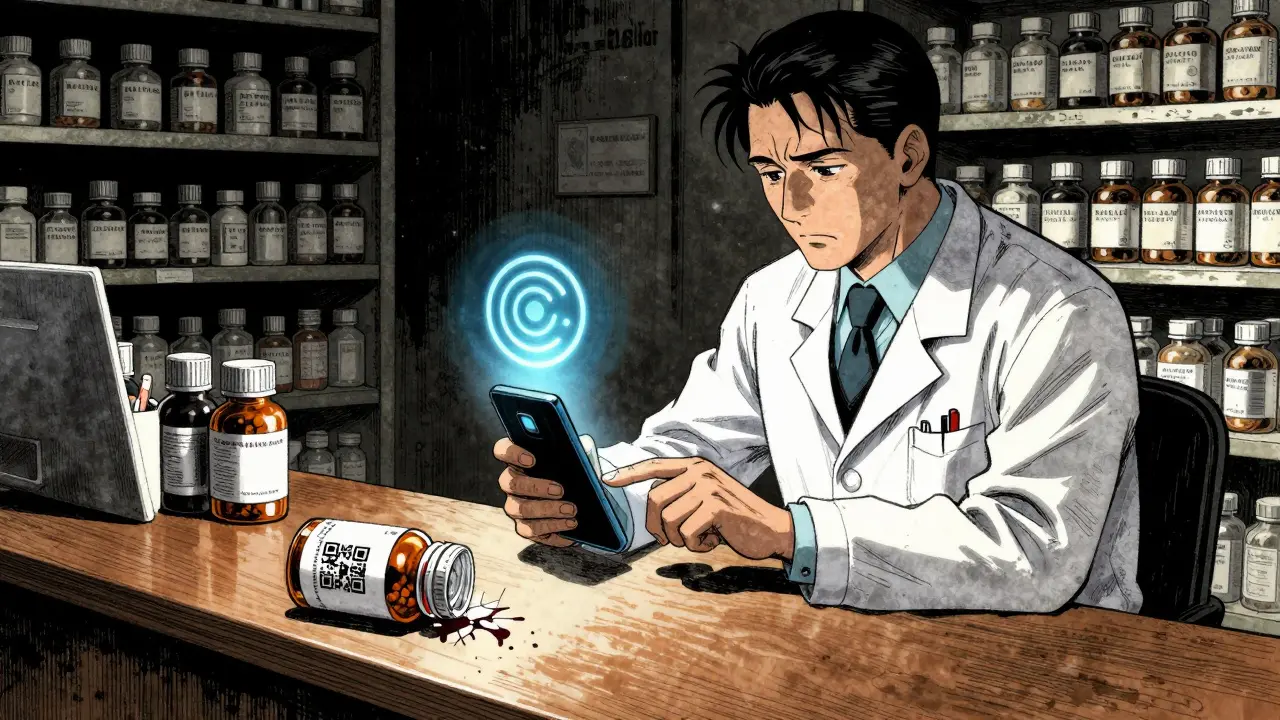
Every year, millions of people around the world take pills that don’t contain the right medicine-or worse, contain toxic substances. Counterfeit drugs are no longer a problem confined to shady street vendors. They’re slipping into legitimate supply chains, ending up in pharmacies, hospitals, and home medicine cabinets. The World Health Organization estimates that 1 in 10 medical products in low- and middle-income countries is fake or substandard. And even in wealthier nations, the risk is growing. In 2025, a major U.S. drug recall cost $147 million after counterfeiters copied QR codes on packaging. The stakes couldn’t be higher: fake drugs don’t just waste money-they kill.
Why Traditional Security Isn’t Enough Anymore
For years, the pharmaceutical industry relied on simple packaging tricks: holograms, color-shifting inks, and tamper-evident seals. These worked well enough when counterfeiters used basic printers and glue. But today’s fraudsters have access to high-resolution scanners, 3D printers, and AI tools that can replicate even complex designs in hours. A QR code on a pill bottle? Easy to copy. A barcode? Can be cloned with a smartphone app. A shrink wrap seal? Re-sealed with heat guns. These aren’t theoretical risks-they’re documented failures. In 2025, ForgeStop’s audit of 200 pharmaceutical brands found that 78% of QR-based authentication systems were vulnerable to replication. That’s because most QR codes are just images. They don’t store encrypted data. They don’t connect to a live database. They’re static. And static things can be copied. When a fake drug with a perfect QR code reaches a pharmacy, the scanner says “verified,” the pharmacist dispenses it, and the patient gets poisoned with no warning.Serialization: The Baseline That Changed Everything
The biggest shift came with unit-level serialization. Instead of just marking a box of 100 pills, every single pill bottle, blister pack, or vial now gets a unique serial number. Think of it like a license plate for each medicine unit. This isn’t optional anymore. In the U.S., the Drug Supply Chain Security Act (DSCSA) requires all prescription drugs to be serialized by November 2025. The EU’s Falsified Medicines Directive (FMD) has already been enforcing this since 2019. Non-compliance means fines, supply halts, and criminal liability. Serialization systems use GS1 standards to generate these unique codes, usually in the form of 2D barcodes. Each code links to a digital record that tracks the product from the factory to the pharmacy. When a pharmacist scans the code at the point of sale, the system checks if the item is legitimate, hasn’t been recalled, and hasn’t been diverted from the supply chain. This has cut recall times by nearly 60% and made it far harder for counterfeiters to mix fake drugs into the system. But serialization alone isn’t foolproof. It requires massive infrastructure: servers with at least 16GB RAM, 1Gbps network connections, and integration with warehouse and ERP systems. Small manufacturers still struggle. Only 43% of mid-sized pharma companies have fully implemented serialization as of early 2026. The cost? A European distributor reported spending €2.3 million and 14 months just to get their systems talking to each other.NFC: The Smartphone That Stops Counterfeiters
The most promising leap forward is Near Field Communication (NFC). You’ve used NFC to pay with your phone. Now, it’s being built into medicine packaging. An NFC chip, smaller than a grain of rice, is embedded into the label or cap. When you tap your smartphone on the package, the chip sends an encrypted signal to a secure server. The phone instantly verifies the product’s authenticity-no app needed, no scanning required. Unlike QR codes, NFC chips can’t be copied. They contain cryptographic keys that change with every interaction. ForgeStop’s 2025 field tests showed NFC verification is 37% faster than barcode scanning and reduces false positives by 92%. In Latin America, a chain of 120 pharmacies saw counterfeit incidents drop by 98% within six months of switching to NFC. Pharmacists now verify 1,200+ packages daily, adding just 3-5 seconds to each transaction. The tech works on 89% of smartphones shipped in 2025-Android 8.0+ and iOS 11+ support NFC out of the box. No special hardware. No extra cost to the consumer. And because it’s digital, the system can also check if the drug has been exposed to unsafe temperatures during shipping. If the cold chain was broken, the phone shows a warning before the pill is even opened.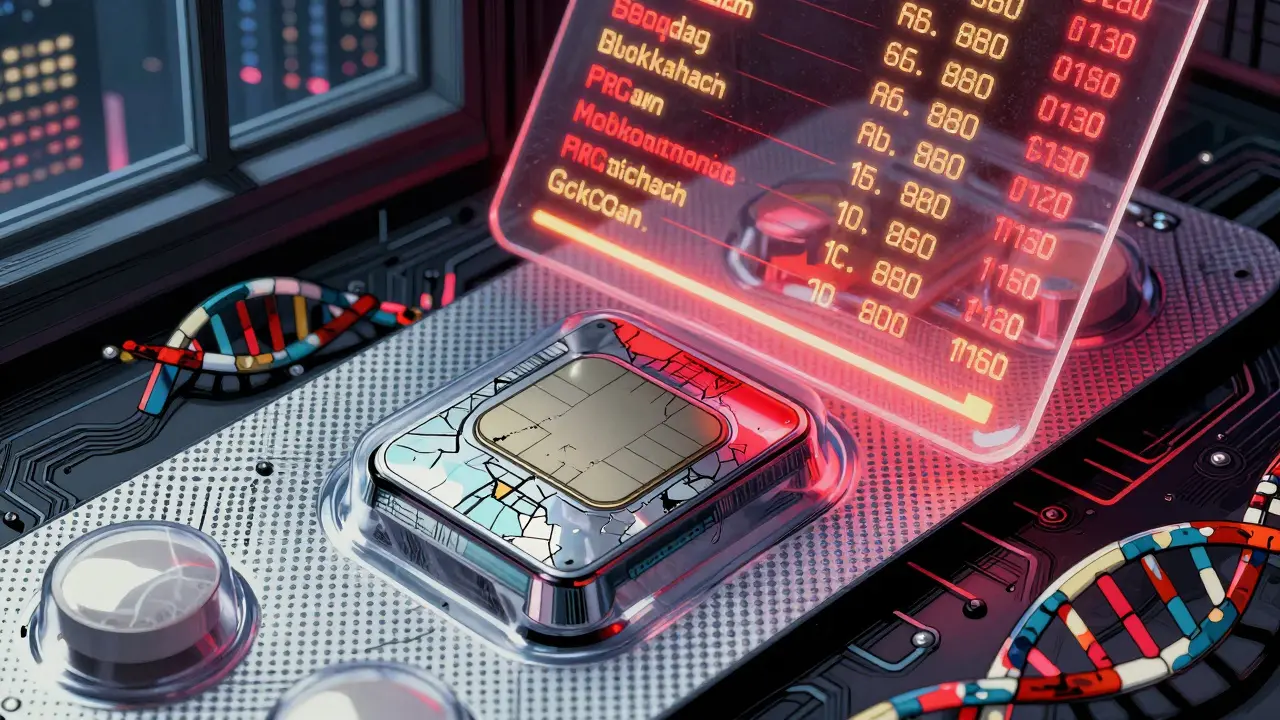
Blockchain: The Unbreakable Ledger
Blockchain isn’t just for cryptocurrency. In pharma, it’s becoming the backbone of supply chain transparency. Each time a drug moves-from manufacturer to distributor to wholesaler to pharmacy-it’s recorded as a block on a shared, tamper-proof digital ledger. No one can alter the record without everyone else knowing. Companies like De Beers used blockchain to track diamonds. Now, pharma giants are doing the same with medicines. The system links serialization data with IoT sensors that monitor temperature, humidity, and shock. If a shipment of insulin was left in a hot truck for six hours, the blockchain logs it. The pharmacy sees the alert before dispensing it. The catch? Blockchain integration is slow. Gartner estimates it takes 18-24 months to fully deploy, compared to 6-12 months for serialization. It’s complex, expensive, and requires cooperation across dozens of companies. But for global supply chains, it’s becoming unavoidable. The EU’s new Digital Product Passport rule, coming in 2027, will require every drug to have a digital twin on a blockchain. That means every pill will carry a full history of its journey.DNA and Forensic Markers: The Unclonable Secret
The most advanced layer of protection isn’t digital at all-it’s biological. DNA-based authentication embeds synthetic DNA strands into ink or adhesive labels. These strands are unique to each batch, like a genetic fingerprint. To verify, you need a handheld reader that analyzes the DNA sequence. It’s impossible to replicate without access to the original biological code. The upside? Near-perfect security. The downside? Cost. Each DNA tag adds $0.15-$0.25 to the price of a single unit. For a $100 drug, that’s negligible. For a $2 generic antibiotic, it’s prohibitive. Right now, only high-value biologics and cancer drugs use this tech. But as the cost drops-researchers are working on cheaper DNA synthesis methods-it could become standard for all critical medicines. Other forensic methods include thermochromic inks (change color with heat), UV-reactive patterns only visible under special light, and microtext so fine it requires 100x magnification to read. These aren’t standalone solutions-they’re layered on top of serialization and NFC. The goal isn’t one perfect barrier. It’s a maze of obstacles that make counterfeiting too slow, too expensive, and too risky to bother with.AI and Smart Packaging: The Next Frontier
Artificial intelligence is stepping in to catch what humans and machines miss. Companies like Cognitivemarket Research have trained AI systems to spot fake packaging by analyzing texture, color gradients, font spacing, and even microscopic imperfections. In controlled labs, these systems now detect counterfeits with 99.2% accuracy. Real-world testing is harder-lighting changes, packaging damage, and reflections throw off the algorithms. But accuracy has jumped from 89.7% in 2024 to 94.3% in mid-2025. Smart packaging is also going green. Over 60% of new anti-counterfeit solutions now use recyclable materials. Some labels even include plant-based inks that degrade safely. The future isn’t just about stopping fakes-it’s about doing it sustainably.
What’s Holding Back Widespread Adoption?
The tech exists. The regulations are clear. So why aren’t all drugs protected? Cost is the biggest barrier. Small manufacturers can’t afford $2 million serialization systems. Many still use outdated printers and manual processes. Regulatory confusion adds to the problem. The U.S. DSCSA and EU FMD don’t fully align. A drug made in Germany and sold in the U.S. might need two different codes. And now, new tariffs-like the U.S. “Liberation Day Tariffs” imposed in April 2025-have raised production costs by 12-18% on drugs and packaging from China and India. Supply chains are stretched thin. Training is another issue. A pharmacist in rural Nigeria might never have used an NFC scanner. A warehouse worker in Brazil needs to learn new software. Support varies wildly: ForgeStop offers 24/7 help with 8-minute response times. Other vendors offer Chinese-only manuals and 48-hour wait times.What You Can Do
If you’re a patient: Always check your medicine. Don’t assume it’s safe just because it came from a pharmacy. Look for tamper-evident seals. If your pharmacy offers a verification app, use it. Tap the package with your phone if it has an NFC logo. If you’re a pharmacist or provider: Push for NFC and blockchain integration. Don’t settle for QR codes unless they’re cryptographically secured. Demand vendor support with clear documentation and training. Join communities like the Pharmaceutical Serialization Community on LinkedIn-over 12,500 professionals share tips, tools, and warnings every week. If you’re in policy or supply chain: Push for global standardization. Harmonize serialization rules across borders. Fund small manufacturers so they don’t get left behind. And never underestimate the human factor: training, awareness, and vigilance still matter more than any chip or code.The Bottom Line
Fake drugs are a growing crisis. But the tools to stop them are here-and they’re getting smarter, faster, and more secure. Serialization is the foundation. NFC is the game-changer. Blockchain is the future. DNA and AI are the final layers of defense. The industry isn’t just reacting to counterfeiting anymore. It’s building a system where fakes can’t survive. The question isn’t whether these technologies will become standard. It’s how fast we can make them universal. Because every pill that’s verified is one more life saved.How can I tell if my medicine is fake?
Check for tamper-evident seals like induction caps or shrink bands. If your medication has an NFC chip, tap it with your smartphone-authentic products will verify instantly. Look for a unique serial number on the box or label and verify it through your pharmacy’s official app or website. Avoid buying medicine from unknown online sellers or street vendors. If the packaging looks blurry, misaligned, or has spelling errors, it could be fake.
Are QR codes on medicine packaging safe?
Most are not. A 2025 ForgeStop audit found that 78% of pharmaceutical QR codes can be easily copied because they lack encryption. A fake product can have a perfect-looking QR code that leads to a fake verification page. Only QR codes linked to cryptographically secured databases-like those using digital signatures-are trustworthy. Always prefer NFC or blockchain-based verification when available.
What’s the difference between serialization and blockchain in drug tracking?
Serialization assigns a unique code to each unit, like a serial number. It tracks where the product is, but doesn’t record what happened to it along the way. Blockchain adds a digital ledger that records every movement, temperature change, and handler along the supply chain. It’s like comparing a single license plate (serialization) to a full GPS log showing every stop, speed, and condition of the vehicle (blockchain). Blockchain is more secure and detailed, but harder to implement.
Is NFC verification reliable on older smartphones?
NFC requires smartphones with NFC hardware and software support. Android 8.0+ and iOS 11+ are the minimums. These versions cover 89% of all smartphones shipped in 2025, so most users can verify medicines with their existing phones. If your phone doesn’t have NFC, you can still check serial numbers via pharmacy apps or websites. But NFC is the fastest, most secure method-and it’s becoming standard on new devices.
Why aren’t all drugs using DNA-based security?
DNA-based authentication is extremely secure but expensive, adding $0.15-$0.25 per unit. For high-value drugs like cancer treatments or biologics, that’s acceptable. For generic antibiotics or pain relievers, it’s not feasible. Manufacturers are working to reduce costs, but for now, it’s reserved for critical medicines. Serialization and NFC remain the practical standard for most drugs.
What’s being done to help small pharmacies and clinics afford these technologies?
Some governments and NGOs are funding pilot programs for low-resource settings. Brazil and Nigeria launched mandatory serialization in 2025 with subsidies for small distributors. Cloud-based verification platforms are also emerging, allowing pharmacies to use shared systems without buying expensive servers. Open-source verification tools are being developed by academic groups, and some vendors offer tiered pricing based on volume. The goal is to make security accessible, not just for big corporations.



Vanessa Barber
January 23, 2026 at 18:58
Yeah, sure. NFC is great until your phone dies or the server goes down. Then what? You’re holding a bottle with a chip that can’t verify anything. Meanwhile, people in rural areas still use flip phones. This whole system assumes everyone has a $1000 smartphone and 5G. Reality check: most of the world doesn’t.