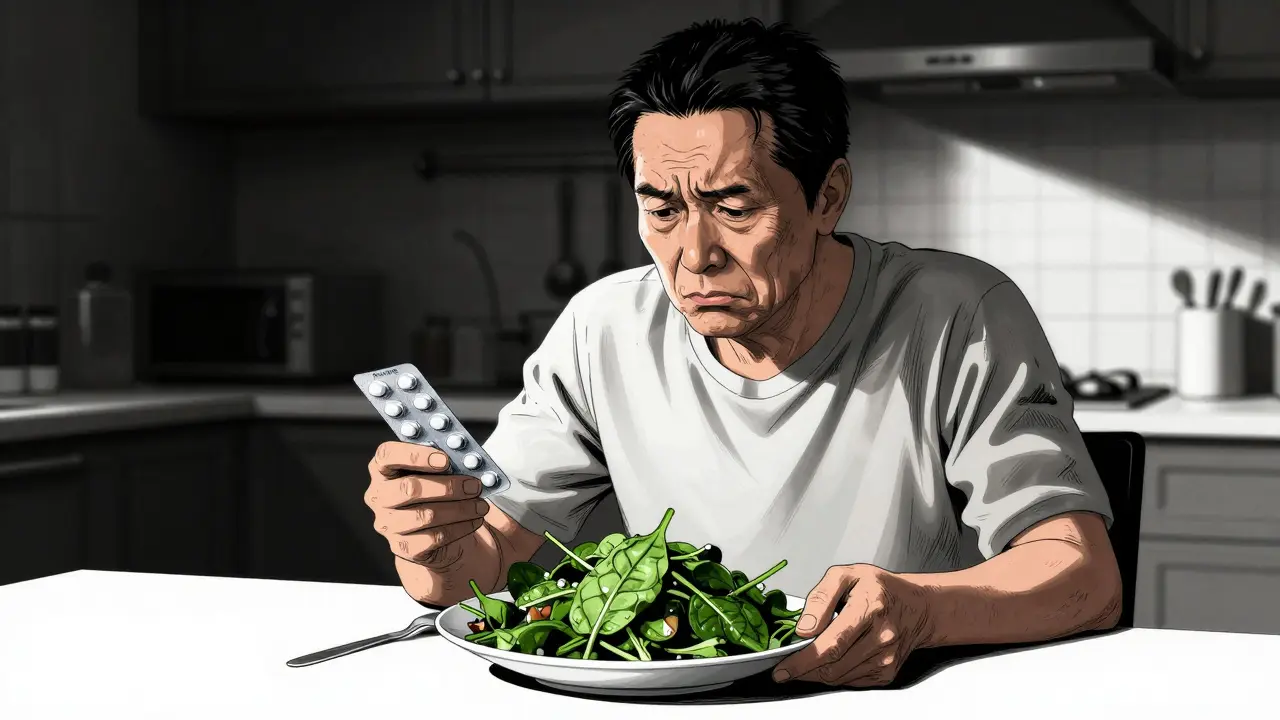
Many patients living with heart conditions hear a scary piece of advice: stop eating salad. If you are prescribed Warfarin, also known by brand names like Coumadin or Jantoven, the relationship between your diet and your medication can feel complicated. You might worry that one bowl of spinach will undo all your medical progress. That fear drives a lot of people to completely cut out nutrient-rich greens from their plate. However, modern medical guidelines strongly suggest a different approach. The goal isn't total elimination; it is maintaining stability.
The core issue lies in how Vitamin Kplays a critical role in blood clotting mechanisms interacts with your prescription. Warfarin works by blocking an enzyme that activates Vitamin K. Since green vegetables are dense sources of this vitamin, sudden spikes or drops in consumption can throw off your blood's ability to clot properly. A clinical study published by the National Institutes of Health in March 2024 specifically looked at spinach consumption. It found that patients could safely include spinach in their diet, provided the portion size stayed under 100 grams per day. The key takeaway here is simple: eating the same amount every day matters more than the absolute amount itself.
Understanding the Mechanism of Interaction
To manage this interaction effectively, you need to understand what is happening inside your body. Warfarin is an anticoagulant medication approved by the FDA in 1954 designed to prevent dangerous blood clots. It does not "thin" your blood in the way water thins paint; rather, it reduces the production of clotting factors. Vitamin K is the fuel that helps produce those factors. When you take Warfarin, you are essentially slowing down the engine that uses that fuel.
If you suddenly eat a massive serving of kale when you normally don't, you flood the system with fuel, overcoming the brake Warfarin puts on the process. Conversely, if you starve yourself of greens, the effect of the medication becomes too strong, raising your risk of bleeding. This balance is measured using the International Normalized Ratio, commonly known as INR. Your doctor aims for a therapeutic range, typically between 2.0 and 3.0 for most conditions. A stable diet keeps that number in the target zone.
Nutritional Data for Common Greens
Trying to guess how much Vitamin K is in your food isn't reliable enough. Different greens contain vastly different amounts. Understanding the density of these nutrients helps you plan meals that won't cause a spike. For instance, a cup of cooked kale contains approximately 547 micrograms of Vitamin K. In comparison, the recommended daily intake for an adult woman is only 90 micrograms. One serving of kale can exceed your entire daily requirement.
This data highlights why precise tracking is useful. While some older advice suggested limiting these foods, current consensus emphasizes consistency. You can enjoy them, but you need to treat them like a part of your regimen. Below is a breakdown of common greens and their approximate Vitamin K content per cup cooked, based on aggregated medical nutritional data.
| Vegetable | Vitamin K Content (Approx.) | Daily Limit Suggestion |
|---|---|---|
| Kale | 547 mcg per cup cooked | Maintain consistent weekly average |
| Spinach | 889 mcg per cup cooked | Avoid exceeding 100g daily portion |
| Collard Greens | 772 mcg per cup cooked | Keep intake stable week to week |
| Broccoli | 220 mcg per cup cooked | Safer option for larger servings |
| Lettuce | Variable (lower than greens) | Generally safe in unlimited amounts |
Notice how spinach sits higher on the scale compared to broccoli. This distinction helps you swap ingredients without drastically altering your chemistry. If you love broccoli but find it boring, switching to collards requires a smaller portion size to maintain that same chemical equilibrium.
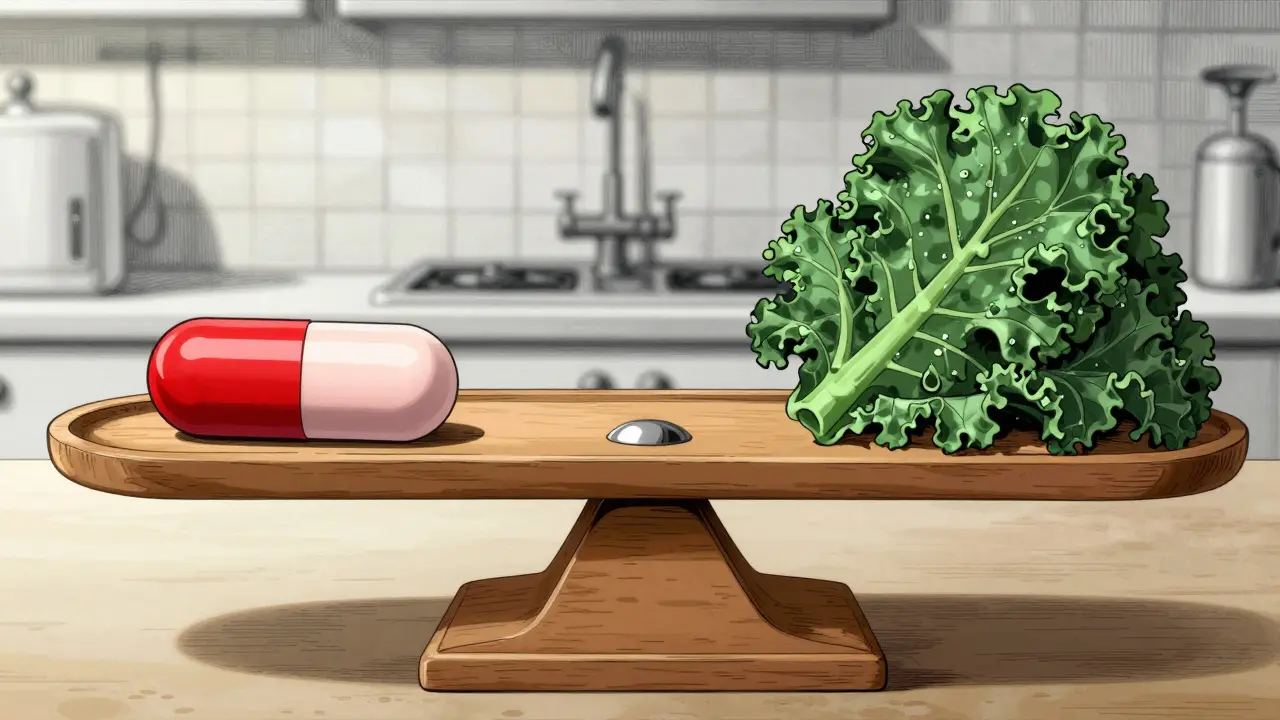
Monitoring and Managing INR Levels
Your healthcare provider monitors your progress through regular blood tests called coagulation profiles. This gives us your INR score. Think of this score as a speedometer for your blood's clotting time. If your diet changes, that needle moves. Research indicates that a sudden 50% increase in daily Vitamin K intake can lower your INR by 0.5 to 1.0 points within just three to five days. That shift can move you from a safe protective zone into a high-risk area for clot formation.
Conversely, eating significantly less Vitamin K raises the INR, pushing you toward excessive bleeding risks. These fluctuations aren't just theoretical; they represent real health hazards. Patients who experience gastrointestinal issues, like fever or diarrhea, should alert their medical team immediately. These conditions alter absorption rates and can mimic dietary spikes even if you haven't changed your eating habits.
When you are stable, testing frequency usually settles to every two to four weeks. However, whenever you make a dietary adjustment, you may need more frequent checks. Some clinics now offer patient education programs that teach you how to log your food alongside your INR results. This proactive logging allows your doctor to adjust dosages before an extreme reaction occurs.
Comparing Options: Warfarin vs. Newer Alternatives
You might wonder why this complexity exists when newer drugs seem easier to manage. There are indeed Direct Oral Anticoagulants (DOACs) available today, such as apixaban (Eliquis), rivaroxaban (Xarelto), and dabigatran (Pradaxa). Unlike Warfarin, these medications do not interact clinically with Vitamin K. You can eat whatever you want without worrying about interfering with the drug's action.
In fact, a 2022 meta-analysis noted that nearly 70% of patients who switched to DOACs cited dietary freedom as a major reason for the change. However, Warfarin remains the gold standard for specific high-risk groups. It is generally required for patients with mechanical heart valves in the mitral position and those with severe kidney impairment. Additionally, cost plays a huge factor. Warfarin typically costs between $4 and $10 per month, whereas branded alternatives can range from $500 to $600 monthly. For many people, managing a consistent diet is a far cheaper and more accessible strategy than paying for expensive name-brand alternatives.

Practical Strategies for Daily Living
Living with this management plan doesn't require perfection, just consistency. The Mayo Clinic advises getting about the same amount of Vitamin K every day. This doesn't mean counting every microgram, but rather keeping habits steady. If you ate a side of spinach every Monday last month, aim to do the same this month. If you usually skip greens, don't decide to eat a large Caesar salad suddenly.
There are specific foods listed by health authorities that are considered low-Vitamin K and can be eaten freely. Examples include cauliflower, courgettes, and mushrooms. Portion guidance suggests roughly eight florets of cauliflower or three to four dessert spoons of mushrooms are acceptable unlimited quantities. These can form the base of your meals while high-greens serve as occasional, controlled additions.
Avoid certain supplements that interact dangerously. St John's Wort, Ginkgo Biloba, Danshen, and cod liver oil are among the substances you should steer clear of entirely. Grapefruit juice is another potential trigger that affects liver enzymes processing the drug. Stick to water or tea unless your doctor clears other beverages.
Frequently Asked Questions
Can I ever stop eating green vegetables?
You do not need to stop eating green vegetables. Completely avoiding them can lead to malnutrition and lower your Vitamin K too much, which increases bleeding risk. The goal is consistency.
What happens if I accidentally eat a large salad?
A single large meal likely won't cause immediate harm. However, if you keep doing this irregularly, your INR will become unstable. Contact your clinic to check your levels if you notice significant changes.
Is frozen spinach different from fresh?
Frozen spinach generally contains similar Vitamin K levels to fresh. Treat it the same way-keep your weekly consumption volume steady regardless of whether it is fresh or frozen.
Do multivitamins affect Warfarin?
Yes, many multivitamins contain Vitamin K. Always show your supplement list to your pharmacist or doctor to ensure there are no hidden interactions affecting your dosage needs.
Why do doctors still prescribe Warfarin?
It remains the most effective option for mechanical heart valves and offers the lowest cost. Despite dietary rules, it is highly reliable when managed with consistent habits.







Divine Manna
April 1, 2026 at 22:27
Many patients misunderstand the biochemistry involved here. The interaction between warfarin and vitamin k is fundamental to coagulation cascades. One cannot simply eat salad without considering the molecular implications. Spinach contains coumarins that might interfere with metabolic pathways. However the primary issue remains the enzyme inhibition process described. Medical guidelines have evolved significantly since the early two thousand years. We must adhere to data rather than anecdotal evidence found online. Stability is the single most important metric for patient safety. A sudden dietary change introduces unnecessary variables into clinical management. This applies regardless of the specific vegetable selected for consumption. Monitoring international normalized ratio provides the necessary feedback loop for adjustment. Clinicians often underestimate the psychological burden placed on patients regarding diet. It is essential to maintain consistent habits over extended periods. Random fluctuations lead to unpredictable therapeutic outcomes in practice. Adherence to the protocol ensures safety for everyone involved in care. Therefore precision in daily intake outweighs total quantity consumed by far.