When a brand-name drug loses its patent, the race is on. Not just to make a copy - but to be the first to market. In the world of generic pharmaceuticals, being first isn’t just an edge. It’s the difference between capturing 80% of the market or fighting over scraps. This isn’t theory. It’s how the system actually works - and why some companies walk away with millions while others barely break even.
Why Being First Matters More Than You Think
The Hatch-Waxman Act of 1984 changed everything. Before this law, generic drug makers had no legal path to challenge patents or get to market quickly. After? The first company to file a challenge and prove their generic version was safe and effective got 180 days of exclusive rights to sell it. No competition. No price wars. Just pure market control. That 180-day window isn’t just a temporary perk. It’s the launchpad for long-term dominance. During those six months, the first generic manufacturer captures 70-80% of the entire generic market. That’s not a small slice. That’s nearly all of it. And here’s the kicker: even after those 180 days expire, that lead doesn’t vanish. Pharmacies don’t stock every version of a drug. They pick one - usually the first one they got, the one pharmacists already know, the one patients have been prescribed for months. Switching to a new generic? That means retraining staff, updating systems, explaining changes to doctors. It’s easier to just keep stocking the same one. That’s called inventory inertia. And it’s a massive barrier for anyone who comes after.The Real Money: Premium Pricing Before the Freefall
You’d think once a generic hits the market, prices drop straight to the floor. Not quite. The first generic often sells at a price that’s still 20-30% higher than what later entrants charge. Why? Because prescribers trust it. Pharmacies rely on it. Patients have been using it for months. There’s no reason to switch. So the first mover gets to charge a little more - not as much as the brand, but enough to make serious profits before the price collapse hits. McKinsey found that first-movers in the generic space average a 6-percentage-point market-share advantage over later entrants. In some cases - especially with injectables or specialty drugs - that gap balloons to 13 points. That’s not just a few extra sales. That’s tens of millions in revenue over the first year alone. And it sticks. Even after five or six other generics enter the market, the first one still holds 30-40% of sales. The second entrant? Maybe 15%. The third? 8%. It’s not a level playing field. It’s a steep hill - and the first mover’s already at the top.Who Wins? It’s Not Who You Think
Not every company that files first actually wins. Size matters. Experience matters. And timing? It’s everything. Large pharmaceutical companies with dedicated generic divisions - like Teva, Sandoz, or Mylan - dominate the first-mover space. They have the resources to file patent challenges early, the manufacturing capacity to scale fast, and the regulatory teams to handle FDA paperwork without delays. McKinsey’s data shows these players gain over 10 market-share points more than smaller companies that file first. Smaller generics? They often get outmaneuvered. Even if they’re first to file, they might not be ready to ship. Or their API supplier falls through. Or they don’t have the relationships with distributors to get their product into major pharmacy chains. The result? A patent challenge win - and zero market share. Even more telling: companies with experience in a specific therapeutic area - say, diabetes or heart disease - capture nearly twice the advantage of newcomers. Why? Because they understand how doctors think, how pharmacies order, and how patients respond. That’s not something you can buy. It’s built over years.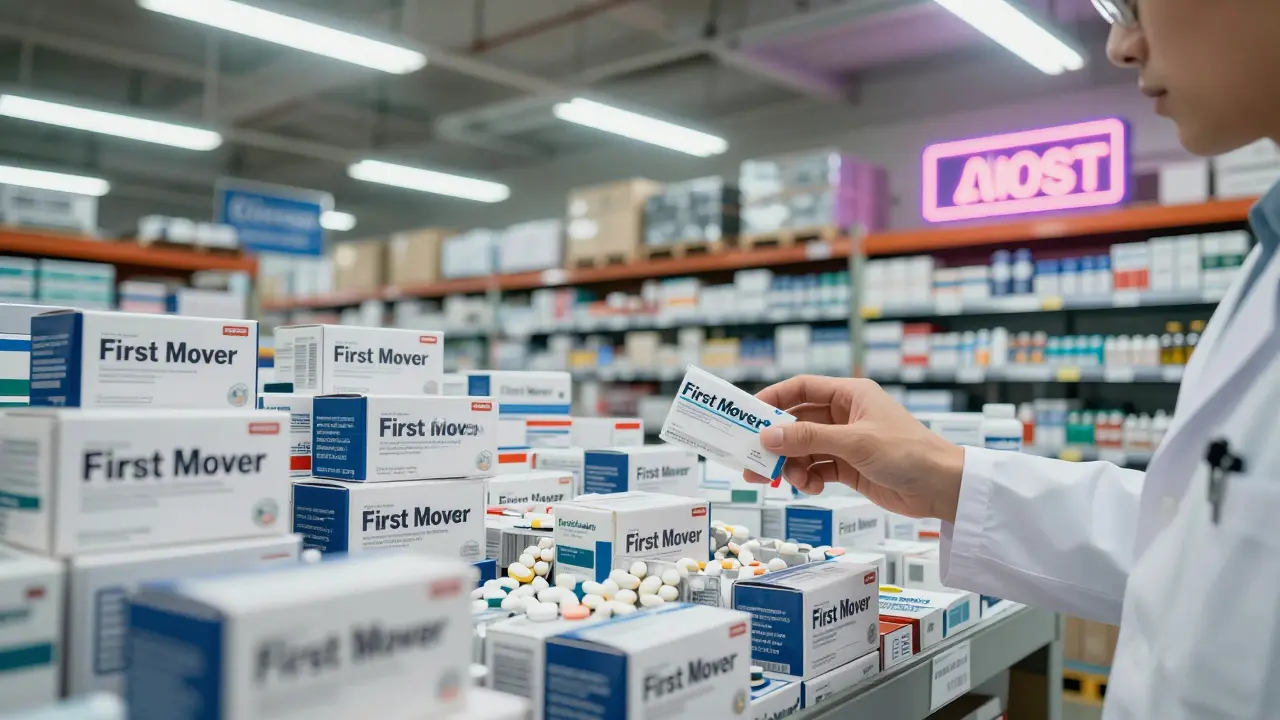
The Hidden Threat: Authorized Generics
Here’s the twist no one talks about enough: the brand company isn’t sitting idle. While the first generic is enjoying its 180-day exclusivity, the original drug maker can launch an Authorized Generic - a version of their own drug, sold under a different label, at a lower price. Suddenly, instead of facing one competitor, the first generic faces two: the brand and the brand’s own generic. The Federal Trade Commission found this slashes first-filer revenue by 4-8% at retail and 7-14% at wholesale. That’s not a small dent. It’s a strategic strike. And it’s legal. And it’s common. The smartest generic manufacturers plan for this. They lock in multiple API suppliers to cut costs by 12-15%. They build relationships with distributors before launch. They even negotiate with the brand company in advance - sometimes agreeing to delay entry in exchange for a cut of the Authorized Generic profits. It’s not ideal, but it’s how the game is played.What Makes the Advantage Stronger?
Not all drugs are created equal. The first-mover advantage is way bigger in some areas than others. - Injectables: 15-20 percentage point advantage. Why? Harder to make. Fewer manufacturers can do it. Higher barriers to entry.- Oral pills: 6-8 percentage point advantage. Easier to copy. More competitors.
- Specialty drugs (like for rare diseases): Advantage lasts years. Only a handful of prescribers. Fewer patients. Once you’re in, you’re stuck.
- Primary care drugs (like blood pressure meds): Advantage fades faster. More competition. More switching.
The gap between first and second entry matters too. If the second generic arrives within a year? The first mover’s edge evaporates. But if it takes three years? The first one owns the market. That’s because doctors don’t change prescriptions unless they have to. Patients don’t ask for a different generic. Pharmacies don’t reorder unless they run out.





Isaac Jules
January 6, 2026 at 18:04
This is why big pharma owns the game. First-mover advantage? More like first-mover monopoly. They rig the system so only the giants can play. Smaller companies? They file, they wait, they get crushed. And the FDA? They’re in the pocket. 😤