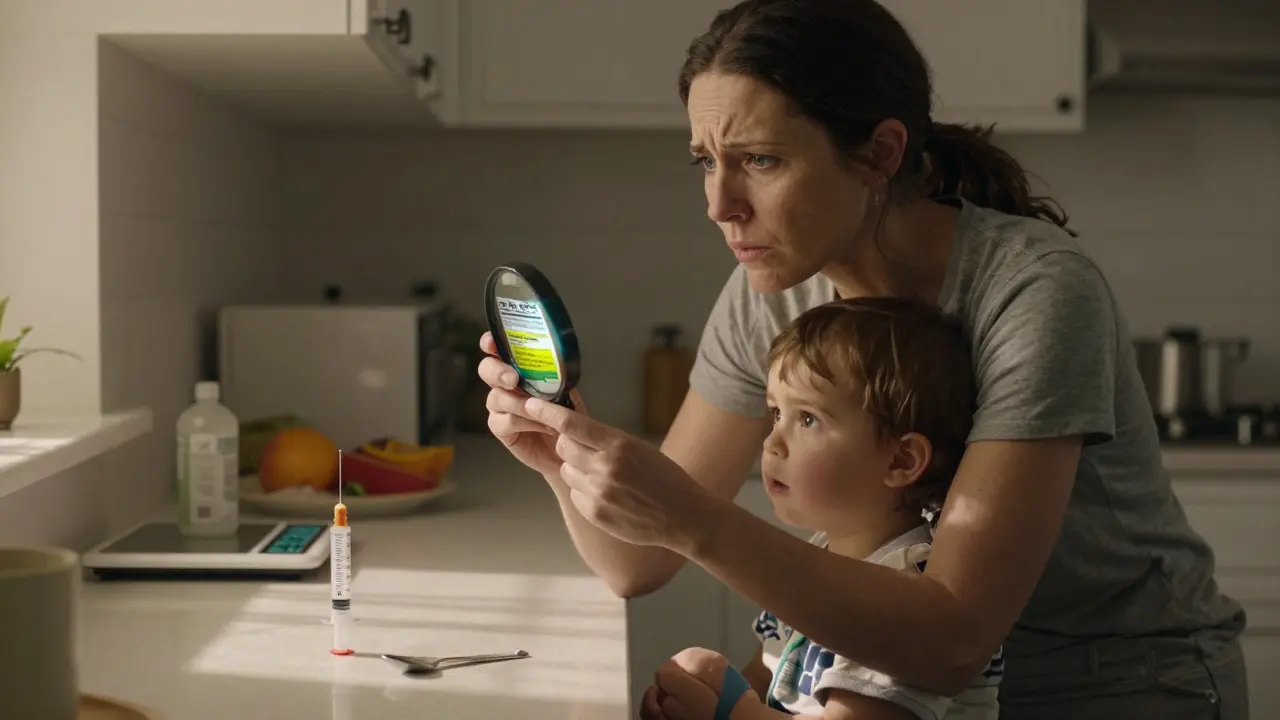
Every year, tens of thousands of children end up in emergency rooms because of medication errors. Most of these mistakes happen not because parents are careless, but because they’re confused by what’s on the label. A child’s body doesn’t process medicine the same way an adult’s does. Giving the same dose because they’re “about the same age” can be dangerous. The only safe way to dose a child is by using their weight-not just their age.
Why Weight Matters More Than Age
Age-based dosing is simple. It’s what you see on the front of the bottle: “For children 2-3 years: 1 teaspoon.” But here’s the problem: a 2-year-old who weighs 10 kg needs a completely different dose than a 2-year-old who weighs 18 kg. Age doesn’t tell you how much medicine their body can handle. Weight does.According to a 2023 study in JAMA Pediatrics, parents who used both weight and age instructions reduced dosing errors by over 50%. That’s not a small improvement-it’s life-saving. The American Academy of Pediatrics says weight-based dosing cuts the risk of overdose by nearly 23% and underdosing by nearly 30%. That’s why the FDA now requires all children’s medicine labels to include both age and weight ranges. If your bottle only has age, it might be outdated.
For example, acetaminophen (Tylenol) is the most common cause of pediatric poisoning. The standard dose is 10-15 mg per kilogram of body weight, every 4-6 hours. But if you don’t know how to calculate that, you’ll rely on the age chart. And that’s where things go wrong. A 4-year-old weighing 15 kg needs 150-225 mg total. A 4-year-old weighing 22 kg needs 220-330 mg. Same age. Very different doses.
Understanding the Drug Facts Label
Every over-the-counter children’s medicine in the U.S. and Australia must have a “Drug Facts” label. It’s not optional. It’s the law. Here’s what you need to look for, in order:- Active Ingredient: This tells you what medicine is in it. Look for “acetaminophen,” “ibuprofen,” or “diphenhydramine.” Never assume two different brands are the same. One might be acetaminophen, another might be ibuprofen. Mixing them accidentally is dangerous.
- Concentration: This is the most important part. It says how much medicine is in each milliliter (mL). For example: “160 mg per 5 mL.” That means each teaspoon (5 mL) has 160 mg. If you see “80 mg per 1 mL,” that’s a much stronger concentration. Confusing these two is the #1 cause of accidental overdose.
- Uses: What is this medicine for? Cough? Fever? Allergies? Don’t give a cold medicine for a fever if it doesn’t say it treats fever.
- Warnings: This tells you when NOT to give it. Look for phrases like “Do not give to children under 2 years” or “Do not use with other acetaminophen products.”
- Directions: This is where age and weight charts appear. If both are listed, use the weight one. If only age is listed, check the concentration and calculate the dose using weight.
- Inactive Ingredients: These are fillers, flavors, dyes. Some kids are allergic to red dye #40 or high-fructose corn syrup. If your child has allergies, check this section.
- Purpose: Why does this medicine exist? “Pain reliever/fever reducer” is clear. “Cough suppressant” is different. Don’t mix purposes unless a doctor says so.
How to Measure Liquid Medicine Correctly
Never use a kitchen spoon. Not even the “measuring spoon” you got in the cereal box. A 2019 FDA study found that 68% of dosing errors happened because parents used household spoons. A tablespoon can hold anywhere from 10 mL to 20 mL. That’s a 100% error range.Use the measuring device that came with the medicine. It’s usually a plastic oral syringe or a dosing cup. If it’s a syringe, hold it at eye level. Look at the bottom of the curved liquid line-the meniscus. If you look from above, you’ll read too low. From below, you’ll read too high. Both cause mistakes.
For babies under 1 year, use a syringe with 0.1 mL markings. For older kids, 0.5 mL markings are fine. If the dose is 2.3 mL, you can’t guess. You need to draw it exactly. Many parents don’t realize that 1 mL is about 1 drop from a dropper. That’s not accurate enough.
Converting Weight: Pounds to Kilograms
Most scales in homes show pounds. Medicine labels use kilograms. You need to convert. Here’s the math:1 kilogram = 2.2 pounds
So if your child weighs 33 pounds:
33 ÷ 2.2 = 15 kg
That’s it. No calculator needed. Just divide by 2.2. You can write it on the bottle or save it in your phone notes. Do this every time your child gains or loses weight-even a few pounds changes the dose.
For acetaminophen at 15 mg/kg:
15 kg × 15 mg = 225 mg total dose
If the concentration is 160 mg per 5 mL:
225 mg ÷ 160 mg = 1.4
1.4 × 5 mL = 7 mL
So you give 7 mL. Not 1 teaspoon. Not 2 teaspoons. 7 mL.
Common Mistakes Parents Make
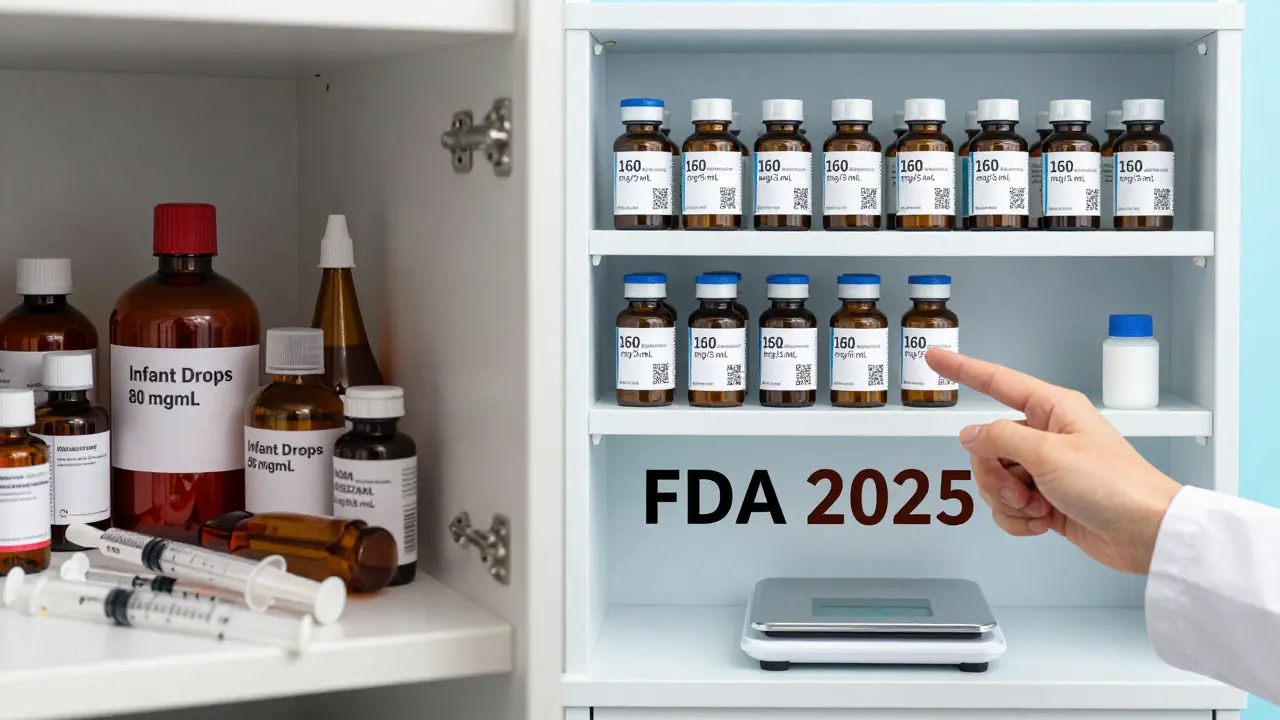
- Confusing infant drops with children’s liquid: Infant drops used to be 80 mg per 1 mL. Now, all children’s acetaminophen is 160 mg per 5 mL. If you’re still using old bottles or instructions, you’re giving 3x too much. The label now says: “Infant Concentrated Drops are no longer available.”
- Mixing medicines: Cold medicines often contain acetaminophen. If you give Tylenol on top of that, you’re doubling the dose. Always check the active ingredient.
- Using teaspoons and tablespoons: 1 teaspoon = 5 mL. 1 tablespoon = 15 mL. But most people don’t know that. A tablespoon is 3 times bigger than a teaspoon. Giving “1 tablespoon” when it says “1 teaspoon” is a 300% overdose.
- Ignoring expiration dates: Liquid medicines lose strength after 6-12 months. A weak dose won’t help. A degraded dose can be harmful.
- Not checking the prescription: If it’s a prescription, the pharmacist should have written the dose in mL, not teaspoons. If they didn’t, ask them to write it down. Most will.
What to Do for Infants Under 2 Years
Babies under 2 have immature livers and kidneys. Their bodies can’t clear medicine the same way older kids can. That’s why the AAP says: always talk to a doctor before giving any medicine to a baby under 2. Even acetaminophen. Even ibuprofen.There are no safe “over-the-counter” rules for babies under 2. The dose isn’t just smaller-it’s calculated differently. A 6-month-old weighing 8 kg might need 80 mg of acetaminophen. A 1-year-old weighing 10 kg might need 120 mg. You can’t guess. You need a doctor’s direction.
If your baby has a fever, call your pediatrician. Don’t reach for the medicine cabinet. If you’re in doubt, wait. Fever is a symptom, not a disease. It’s often harmless. Giving medicine too soon can mask something serious.
Tools That Help
- Oral syringe: Best tool for accuracy. Get one with 0.1 mL markings.
- Digital scale: If you have a baby or toddler, buy a baby scale. They cost under $30. Measure weight monthly.
- Free apps: The AAP’s “Safe Dosage Calculator” app lets you enter weight and medicine type, then shows the exact dose. It’s updated for 2025.
- Pharmacist help: When you pick up a prescription, ask the pharmacist to show you how to measure it. They’re trained to do this. 93% of pharmacists offer this help for free.
Five-Step Safety Checklist
Before you give any medicine to your child, ask yourself:- Is this medicine for my child? Check the name on the bottle. If it’s a prescription, is the child’s name printed?
- Do I know the active ingredient? Is it acetaminophen? Ibuprofen? Something else? Write it down.
- Do I know my child’s weight in kg? Convert pounds to kg. Divide by 2.2.
- Do I have the right measuring tool? Is it the syringe? Not a spoon? Not a cup?
- Is the medicine expired? Check the date. If it’s old, throw it out.
If you can’t answer yes to all five, don’t give it. Call your doctor. Call your pharmacist. Wait.
What’s Changing in 2025
The FDA just updated rules for 2025. By the end of this year, all children’s medicine labels must:- Include weight-based dosing in kilograms (kg) and pounds (lb)
- Use only one concentration for acetaminophen: 160 mg per 5 mL
- Include a QR code that links to a video showing how to measure the dose
- Remove all references to “teaspoon” and “tablespoon” - only use mL
This is a big deal. It means labels will be clearer. Less confusing. Fewer mistakes. If your medicine bottle doesn’t have these changes yet, it might be old. Ask your pharmacist for the latest version.
Final Thought: When in Doubt, Call
You don’t have to be a doctor to read a label. But you do need to be careful. Medicine isn’t candy. A wrong dose can send your child to the hospital. If you’re unsure, call your pediatrician. Call your pharmacist. Text a friend who’s done this before. Don’t guess. Don’t assume. Don’t rush.Medicine labels are designed to protect your child. But only if you know how to read them.
Can I use a kitchen spoon if I don’t have a measuring cup?
No. Kitchen spoons vary widely in size. A teaspoon from your kitchen might hold 3 mL or 7 mL. The FDA says 68% of dosing errors happen because parents use household spoons. Always use the syringe or cup that came with the medicine. If you lost it, buy a new one at the pharmacy-they’re free or under $5.
Why do some medicine labels say “infant drops” and others say “children’s liquid”?
In 2011, the FDA required all children’s acetaminophen to use the same concentration: 160 mg per 5 mL. The old “infant drops” were 80 mg per 1 mL, which was much stronger. Today, all products are standardized. If you still have old bottles labeled “infant drops,” throw them away. They’re unsafe. New labels now say “Children’s Liquid” or just “Acetaminophen Oral Suspension.”
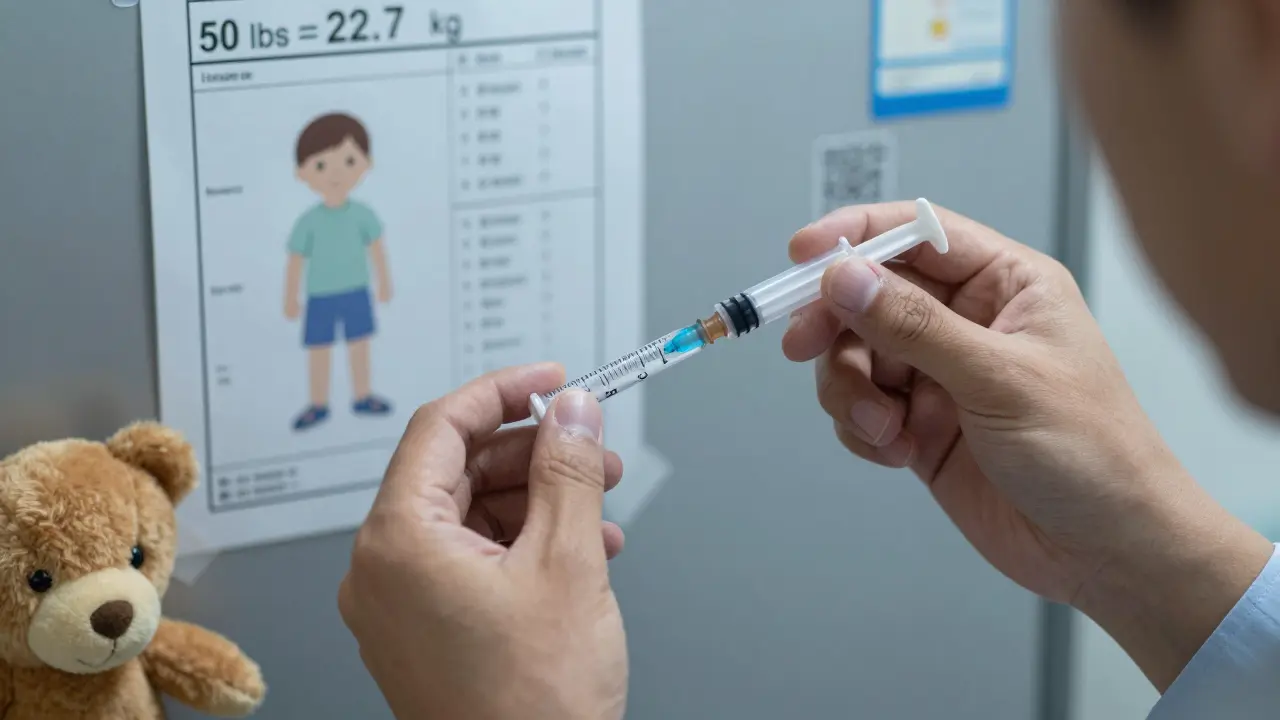
My child is 4 years old and weighs 50 pounds. Should I give the 4-5 year dose or the 12+ year dose?
Go by weight. 50 pounds is 22.7 kg. The 4-5 year dose is for kids around 16-20 kg. The 12+ dose is for 40+ kg. Your child falls between. The safest approach is to calculate the dose using weight: 10-15 mg per kg for acetaminophen. That’s 227-340 mg total. Check the concentration on the bottle (usually 160 mg per 5 mL) and calculate the mL. Never assume age equals weight.
How do I know if I gave too much medicine?
Signs of acetaminophen overdose include nausea, vomiting, loss of appetite, and tiredness. For ibuprofen, watch for stomach pain, dizziness, or trouble breathing. If you suspect an overdose, call Poison Control immediately (1-800-222-1222 in the U.S., 13 11 26 in Australia). Don’t wait for symptoms. Don’t try to make your child vomit. Get help right away.
Can I give my child medicine that’s meant for adults?
Never. Adult medicines are not designed for children. The concentration is too high, and the inactive ingredients may be harmful. Even if you cut a pill in half, you can’t guarantee the right dose. Always use medicine made specifically for children. If your child is too big for children’s medicine, ask your doctor for a prescription. There are safe options.





Alec Stewart Stewart
February 5, 2026 at 02:19
Just wanted to say this post saved my bacon last month. My 3-year-old had a fever and I was about to wing it with a spoon-thankfully I read this first. Used the syringe, did the weight math (28 lbs = 12.7 kg), gave exactly 190 mg. No panic, no ER. 🙌