Statin Muscle Pain Checker
Is your muscle pain likely from statins?
This tool helps you assess whether your symptoms align with statin-related muscle pain based on key characteristics and risk factors. Remember: Never stop your statin without consulting your doctor.
Symptom Assessment
Risk Factors
Your Risk Assessment
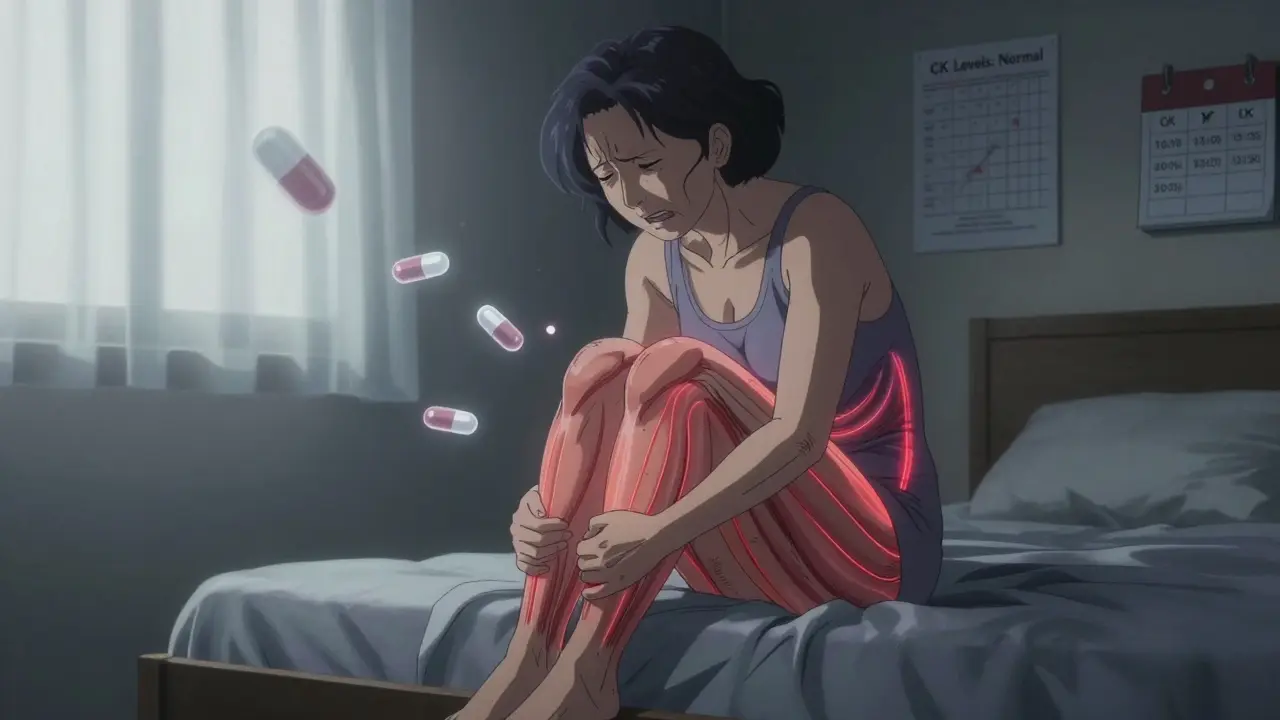
Many people start taking statins to lower their cholesterol and protect their heart - and then suddenly, their legs feel heavy, their thighs ache, or walking becomes a chore. It’s not just in their head. Muscle pain is the most common reason people stop taking statins. But here’s the twist: statin muscle pain might not always be caused by the drug itself.
How Common Is Muscle Pain from Statins?
You’ve probably heard that up to 30% of people on statins get muscle aches. That number sounds scary. But here’s what’s really going on. In clinical trials, where patients aren’t told about possible side effects, only about 5% report muscle pain - the same rate as those taking a sugar pill. In real life, though, that number jumps to 15-20%. Why? Because once you know statins can cause muscle pain, your brain starts noticing every little twinge. This is called the nocebo effect - the opposite of placebo. A 2017 study in The Lancet showed people who were warned about muscle side effects were 40% more likely to report them, even if they weren’t actually taking the drug.What Does Statin Muscle Pain Actually Feel Like?
It’s not the same as soreness after a workout. Statin-related muscle discomfort is usually:- Constant, not just after activity
- Affects both sides of your body equally
- Most common in shoulders, thighs, hips, or calves
- Feels like deep soreness, weakness, or stiffness
When It’s Serious: Rhabdomyolysis
Most muscle pain from statins is mild. But there’s a rare, dangerous condition called rhabdomyolysis - where muscle tissue breaks down and floods your bloodstream with toxins. This can damage your kidneys. The good news? It’s extremely rare: only 0.1 to 0.5 cases per 10,000 people per year. That’s less than 1 in 20,000 statin users. Doctors check a blood marker called creatine kinase (CK). If your CK level is more than 10 times the normal upper limit (usually over 1,900 U/L), that’s a red flag. You’ll need to stop the statin right away. But if your CK is normal and you’re just sore, it’s probably not rhabdomyolysis.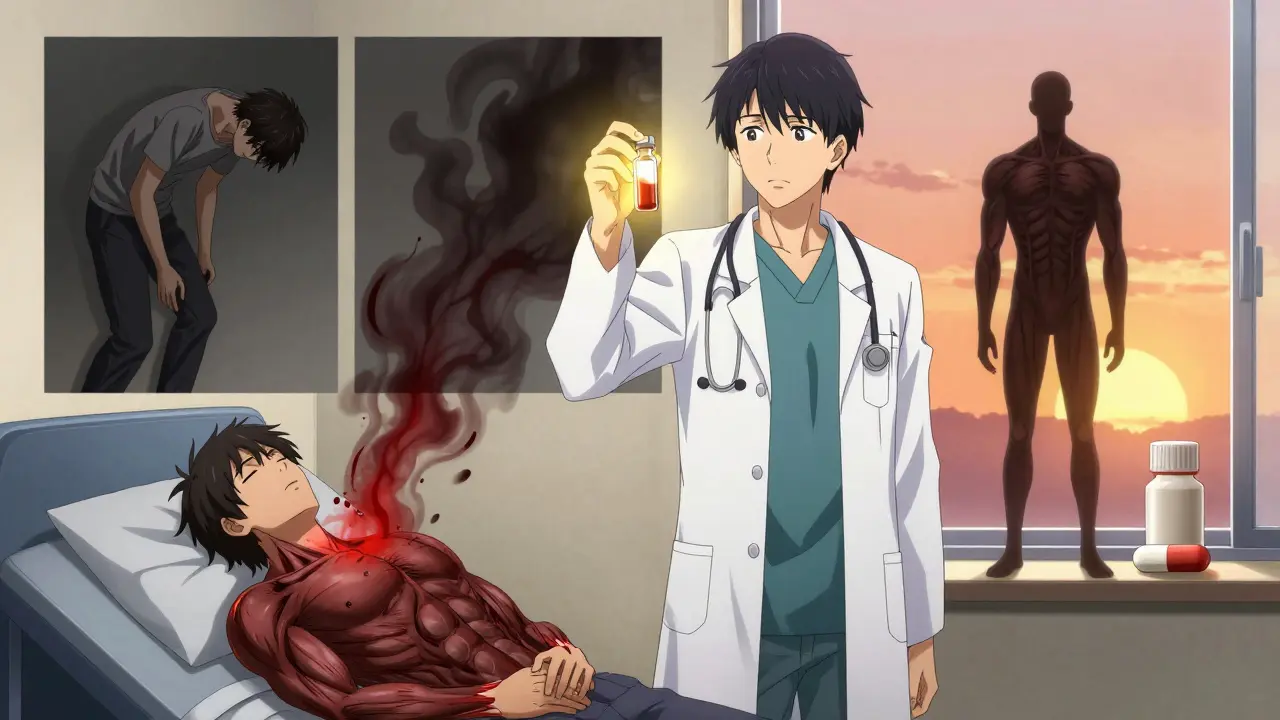
Who’s More Likely to Get Muscle Pain?
Some people are more at risk:- Women - especially older women with smaller body frames
- People over 80
- Those with thyroid problems, kidney disease, or liver issues
- People taking other meds like fibrates, cyclosporine, or certain antibiotics
- Those on high-dose statins (atorvastatin 40-80 mg, rosuvastatin 20-40 mg)
What Should You Do If You Have Muscle Pain?
Don’t just quit the statin. Stopping without talking to your doctor increases your risk of heart attack or stroke by 25-50% within two years. Here’s what to do instead:- Call your doctor. Don’t self-diagnose.
- Get a blood test for creatine kinase (CK). Normal levels mean your muscles aren’t breaking down.
- Stop the statin for 4-6 weeks. Many people feel better during this time.
- Restart at a lower dose. Often, the pain doesn’t come back.
- If it does, switch to a different statin. Pravastatin and fluvastatin are less likely to cause muscle issues.
What About Coenzyme Q10?
You’ve probably seen ads for CoQ10 supplements to “fix” statin muscle pain. The theory is that statins lower CoQ10, which your muscles need for energy. Sounds logical. But the science doesn’t back it up. A 2015 review in the Journal of the American College of Cardiology found no real benefit over placebo. Some small studies show a slight improvement, but nothing consistent. If you want to try it, fine - but don’t expect miracles. It’s not a substitute for proper medical evaluation.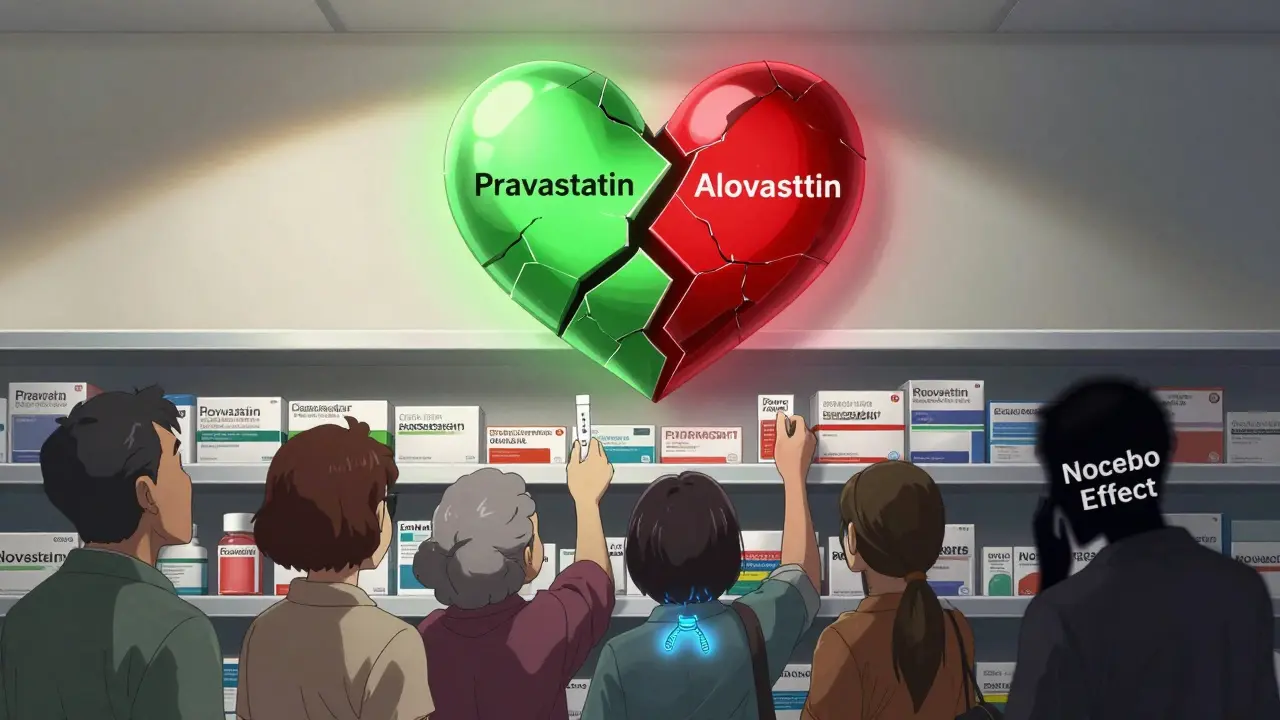
What Are the Alternatives?
If you truly can’t tolerate any statin, there are other options:- Ezetimibe: A pill that blocks cholesterol absorption in the gut. Works well with or without statins. Costs about $30 a month.
- PCSK9 inhibitors (alirocumab, evolocumab): Injectable drugs that lower LDL dramatically. They’re very effective but cost around $5,000 a year - unless you have insurance that covers them.
- Lifestyle changes: Diet, exercise, and weight loss can lower LDL by 10-20%. Not as powerful as statins, but still helpful.
Why So Many People Quit - And Why They Shouldn’t
A 2021 study in Circulation: Cardiovascular Quality and Outcomes found that 45% of people stop statins within a year - mostly because of muscle pain. But here’s the key: only 20-25% of those people actually have their pain return when they’re retested under blinded conditions (meaning they don’t know if they’re on the real drug or placebo). That means most people who think they’re sensitive to statins aren’t - their symptoms were likely caused by something else: aging, inactivity, another medication, or just the fear of side effects. The American Heart Association says the benefits of statins far outweigh the risks. For every 1 mmol/L drop in LDL, your risk of heart attack or stroke drops by 29%. That’s huge.The Bottom Line
Muscle pain from statins is real - but it’s often misunderstood. Most people who think they can’t take statins can. You don’t have to suffer. You don’t have to quit. You just need to work with your doctor to find the right approach. Start with a blood test. Try a break. Switch to a different statin. Lower the dose. Add ezetimibe. Don’t assume the worst. Statins save lives - and for most people, muscle pain is a manageable hurdle, not a dealbreaker.Can statins cause permanent muscle damage?
No, statins do not cause permanent muscle damage in the vast majority of cases. If muscle pain occurs and the statin is stopped, symptoms typically resolve within a few weeks. In rare cases of rhabdomyolysis, kidney damage can occur if not treated quickly, but muscle tissue itself usually recovers fully once the trigger is removed. Long-term muscle weakness from statins alone has not been proven in clinical studies.
Do all statins cause muscle pain equally?
No. Some statins are much less likely to cause muscle issues. Pravastatin and fluvastatin have the lowest risk, while atorvastatin and rosuvastatin carry a higher risk - especially at high doses. Switching from a high-intensity statin to a lower-risk one often resolves symptoms without losing cholesterol-lowering benefits.
Can I take a statin every other day to avoid muscle pain?
Yes, for many people, intermittent dosing (like every other day or three times a week) works well. The 2023 STRENGTH trial showed that this approach reduces muscle symptoms by 40% while still lowering LDL cholesterol by 35-45%. This isn’t for everyone - it depends on your baseline risk and cholesterol levels - but it’s a valid option to discuss with your doctor.
Should I get my thyroid checked before starting a statin?
Yes. Undiagnosed hypothyroidism increases the risk of statin muscle pain by 35%. Many people with mild thyroid issues don’t know they have them because symptoms like fatigue and muscle aches are easy to miss. A simple TSH blood test can rule this out - and treating thyroid problems often eliminates the muscle pain without needing to change the statin.
Is it safe to stop statins if I have muscle pain?
No, not without talking to your doctor. Stopping statins suddenly raises your risk of heart attack or stroke by 25-50% within two years, even if you feel fine. Muscle pain doesn’t mean the drug is dangerous - it means you need a better plan. Work with your doctor to test, adjust, or switch - don’t quit cold turkey.





Michael Patterson
January 11, 2026 at 03:23
statins are just another big pharma scam to keep people on pills forever. i got muscle pain after 2 weeks on atorvastatin, went to my doc and they just said 'it's in your head' lol. i stopped and felt better immediately. now i eat avocado, lift weights, and my ldl is 102. who needs a pill when you got common sense? also, coq10 is total bs, but i take it anyway because i'm paranoid now.