
Steroid-Induced Hyperglycemia Insulin Calculator
This calculator helps determine appropriate insulin adjustments for steroid-induced hyperglycemia based on article guidelines. Use it to calculate:
- Starting insulin dose based on body weight
- Basal vs bolus insulin split
- Correction doses for high blood sugar
- Tapering guidance when steroids decrease
What Is Steroid-Induced Hyperglycemia?
Steroid-induced hyperglycemia (SIHG) happens when people taking corticosteroids like prednisone or dexamethasone develop high blood sugar-even if they’ve never had diabetes before. This isn’t rare. About 40% of hospitalized patients on these drugs experience it, according to the American Diabetes Association. It’s not a side effect you can ignore. Left unchecked, it can lead to dehydration, infections, longer hospital stays, and even diabetic ketoacidosis.
The problem starts with how steroids work. They make your liver pump out more glucose, block insulin from doing its job, and reduce your pancreas’s ability to respond. The result? Blood sugar spikes, usually 4 to 8 hours after taking the steroid dose, peaking around 24 hours. This pattern repeats daily with each dose. If you’re already diabetic, your usual meds won’t cut it. If you’re not, you might suddenly need insulin.
Why Insulin Is Often the First Line of Treatment
Oral diabetes drugs like metformin or sulfonylureas don’t cut it when steroids are in play. Sulfonylureas, for example, force your pancreas to release insulin-but when steroids taper off, your body’s insulin sensitivity rebounds. That’s a recipe for dangerous low blood sugar. A Johns Hopkins study found that 27% of patients on sulfonylureas during steroid therapy ended up in the ER with hypoglycemia. That’s three times higher than those on insulin alone.
Insulin, on the other hand, is flexible. You can adjust it based on steroid dose, timing, and blood sugar trends. For most people on moderate to high-dose steroids, insulin becomes the go-to. The key? Matching the insulin schedule to the steroid’s timing.
Matching Insulin to Steroid Type: Prednisone vs. Dexamethasone
Not all steroids are the same. Their half-lives differ, and so should your insulin plan.
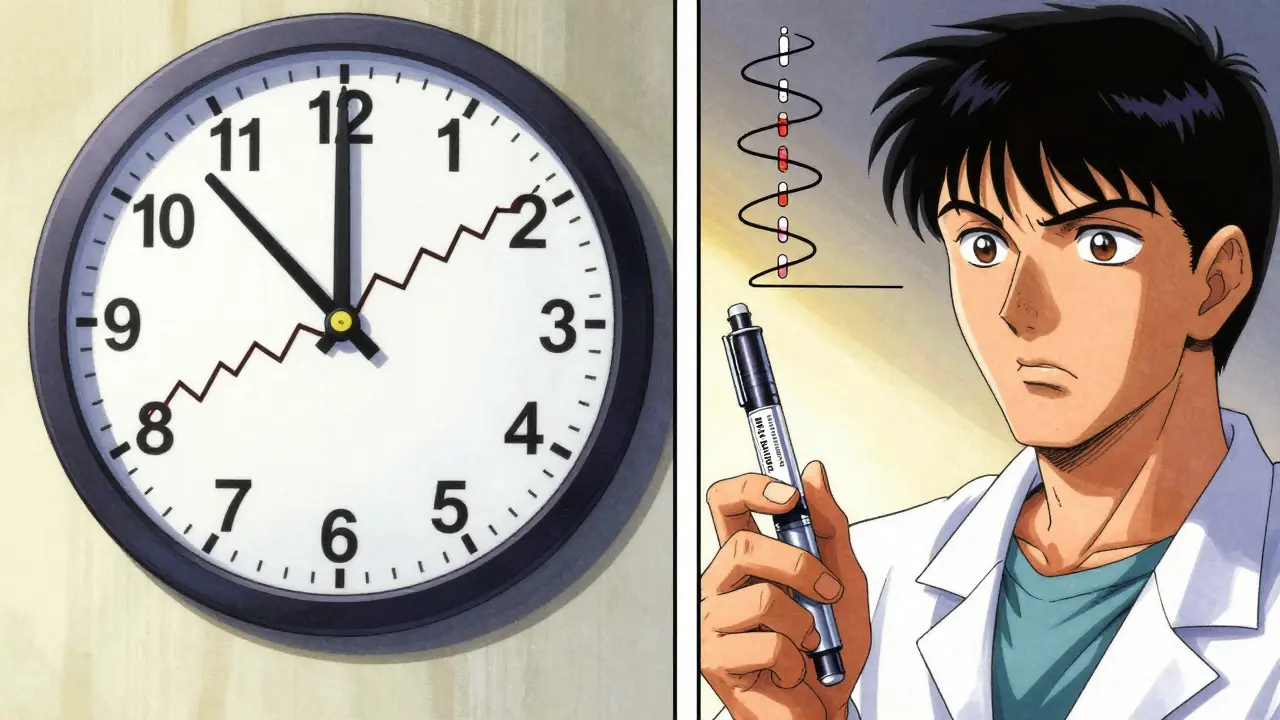
Prednisone lasts 18-36 hours. It’s usually taken in the morning. That means your blood sugar peaks in the afternoon and evening. The best match? NPH insulin in the morning. NPH peaks around 6-8 hours after injection and lasts up to 18 hours-perfect for covering the prednisone spike.
Dexamethasone is longer-acting, with a half-life of 36-72 hours. It causes blood sugar to stay high for days. For this, you need a long-acting insulin like glargine or detemir, also given in the morning. These provide steady coverage without peaks, matching the slow, sustained effect of dexamethasone.
Using the wrong insulin? You’ll either underdose (leading to high sugars) or overdose (leading to lows when the steroid tapers). A 2023 guideline from Waterloo Wellington Diabetes specifically warns against using evening NPH for prednisone-it misses the peak effect. Morning dosing is non-negotiable.
How Much Insulin Do You Actually Need?
There’s no one-size-fits-all dose. But there are solid starting points based on body weight and steroid dose.
- Start with 0.1 unit per kilogram of body weight as total daily insulin. For a 70kg person, that’s 7 units total.
- Give this as a mix: 50% basal (long-acting), 50% bolus (rapid-acting before meals).
- For correction doses:
- 11.1-16.7 mmol/L (200-300 mg/dL): 0.04 unit/kg
- ≥16.7 mmol/L (≥300 mg/dL): 0.08 unit/kg
If you’re already on insulin for diabetes, increase your total daily dose by 20-50%. Type 1 diabetics often need 30-50% more. Type 2 diabetics usually need 20-30% more. But don’t just guess. Monitor your blood sugar every 4-6 hours during the first 2-3 days. Adjust in small steps.
The Biggest Mistake: Not Tapering Insulin with Steroids
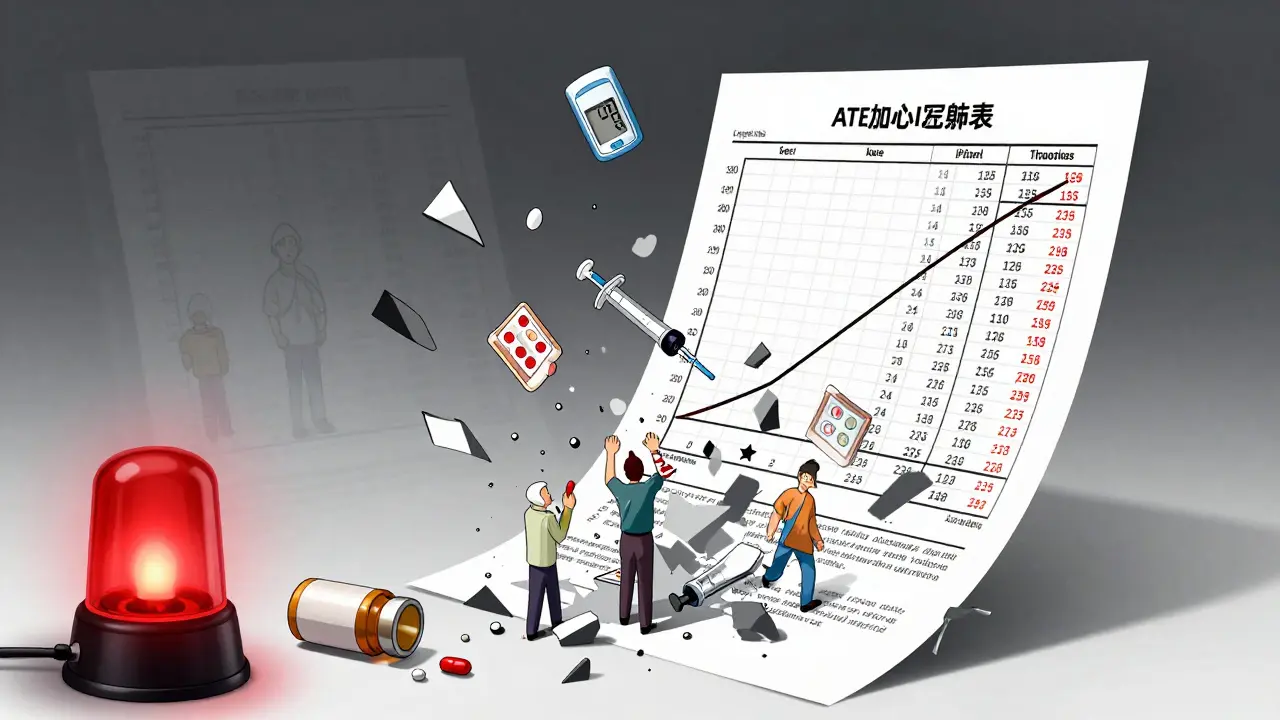
The most dangerous error? Keeping insulin doses the same as steroids are reduced. This happens all the time. A 2023 survey by the American Association of Clinical Endocrinology found that 42% of patients on SIHG had at least one hypoglycemic episode during steroid tapering. One Reddit user, @Type1Since99, shared: “I needed 50% more insulin on 40mg prednisone. When they cut it to 20mg, my doctor didn’t reduce my insulin fast enough. I had three lows in two days.”
Steroid effects fade 3-4 days after the last dose. Your insulin needs should drop just as fast. The Joint British Diabetes Societies (JBDS) calls this “glucovigilance”-actively watching for lows as steroids decrease. Here’s how to do it:
- Start reducing insulin when the steroid dose drops by 25% or more.
- Reduce basal insulin by 10-20% every 2-3 days.
- Hold off on reducing bolus insulin until blood sugars drop below 8.3 mmol/L (150 mg/dL) consistently.
- For patients who previously needed 20 units extra during a dexamethasone course, start with only 10 units next time. Titrate slowly.
Many patients don’t know this. They think once they’re on insulin, it’s permanent. It’s not. Steroid-induced diabetes is usually temporary. But only if insulin gets adjusted down.
Monitoring: More Than Just Fingersticks
Checking blood sugar 4 times a day (before meals and at bedtime) is the minimum. But for better control, use continuous glucose monitoring (CGM). A 2021 study showed that real-time CGM reduces time spent in hyperglycemia by 30% and cuts hypoglycemia risk by half.
Target time in range: 3.9-10.0 mmol/L (70-180 mg/dL) for at least 70% of the day. Avoid going below 3.9 mmol/L (70 mg/dL) more than 4% of the time. CGM alerts can warn you before a spike or crash-especially useful during steroid tapering when changes are unpredictable.
For patients on insulin pumps: Increase basal rates by 25-50% during peak steroid effect. But remember to lower them as the steroid dose drops. Pump users are at higher risk for delayed lows because the insulin is already in their system.
What About Non-Insulin Drugs?
Outside the hospital, if steroid doses are low (e.g., <10mg prednisone daily) and hyperglycemia is mild (fasting glucose <11.1 mmol/L), non-insulin options can work:
- Metformin: Helps with insulin resistance. Safe if kidney function is normal.
- GLP-1 agonists (like semaglutide): Lower glucose and help with weight. Slower onset, so not ideal for acute spikes.
- DPP-4 inhibitors (like sitagliptin): Mild effect. Good for outpatient maintenance.
- Thiazolidinediones (like pioglitazone): Improve insulin sensitivity but take weeks to work. Not useful for acute SIHG.
But here’s the catch: None of these are as fast or as predictable as insulin during high-dose steroid therapy. In the hospital, insulin is still king. Outpatient use? Talk to your endocrinologist. Don’t self-prescribe.
What’s New in 2026?
Machine learning is starting to help. A 2023 study built a model that predicts how much extra insulin someone will need based on their weight, steroid dose, and HbA1c. It was 85% accurate. Hospitals are starting to integrate this into electronic records.
Also, new guidelines are pushing for automatic insulin dosing algorithms. If you’re on prednisone, the system could auto-suggest a basal insulin increase based on your dose and time of day. This reduces human error-the #1 cause of complications.
And the numbers keep climbing. Over 10.5 million steroid prescriptions are filled in the U.S. each year. SIHG isn’t going away. Better protocols are the only way to keep patients safe.
Real-World Tips You Can Use Today
- Always tell your doctor you’re on steroids if you have diabetes-or even if you don’t.
- Keep a log: Steroid dose, insulin dose, blood sugar readings. Look for patterns.
- Don’t skip meals. Steroids + skipped meals = higher risk of lows later.
- Carry fast-acting glucose (glucose tabs, juice) at all times during steroid use and tapering.
- When steroid dose drops, ask: “Should I reduce my insulin today?” Don’t wait for your doctor to bring it up.
SIHG is predictable. It’s not random. With the right plan, you can avoid highs, avoid lows, and get through steroid therapy without a single emergency visit.






peter vencken
March 21, 2026 at 15:21
I've seen this a million times in the ER. Steroids hit like a freight train and everyone's like 'oh cool, just bump the metformin.' Nah. NPH in the AM for prednisone? Yes. Evening NPH? No. You'll be lucky if you don't end up in DKA. Trust me, I've cleaned up way too many messes like this.