Calcium Supplements: What They Do, Who Needs Them, and What to Watch For
When you take calcium supplements, a common dietary addition used to support bone density and prevent osteoporosis. Also known as calcium pills or calcium carbonate/citrate, they’re one of the most widely used supplements worldwide — but that doesn’t mean they’re right for everyone. Your body doesn’t make calcium on its own, so you have to get it from food or pills. If you’re not eating enough dairy, leafy greens, or fortified foods, a supplement might help. But taking too much — or the wrong kind — can cause problems like kidney stones, constipation, or even interfere with how other meds work.
Calcium doesn’t work alone. It needs vitamin D, a nutrient that helps your gut absorb calcium from the supplement. Without enough vitamin D, that calcium just passes through you, useless. That’s why many calcium supplements include vitamin D — but if you’re already taking a separate vitamin D pill, you could be overdoing it. And then there’s calcium absorption, how well your body actually takes in the mineral from the supplement. Calcium citrate is better absorbed on an empty stomach, while calcium carbonate needs food to work. If you’re on acid-reducing meds like proton pump inhibitors, your body might struggle to absorb calcium at all. Some people take calcium because they’re postmenopausal, older, or have osteoporosis. Others take it because they’re vegan, lactose intolerant, or just think it’s "good for you." But studies show that for healthy adults with decent diets, extra calcium doesn’t lower fracture risk — and might even raise heart risks in some cases.
It’s not just about bones. Calcium plays a role in muscle contractions, nerve signaling, and blood clotting. But if you’re on thyroid meds, antibiotics like tetracycline, or iron supplements, calcium can block their absorption. That’s why doctors tell you to take them hours apart. And if you’ve got kidney disease, high phosphate levels, or a history of kidney stones, extra calcium can make things worse. You don’t need to guess. A simple blood test can show if you’re deficient — and if you’re already getting enough from food, supplements might just be wasting your money.
What you’ll find below are real discussions about calcium supplements — not just "take 1000 mg daily" advice, but the messy, practical stuff: how they interact with other meds, why some people feel worse after starting them, what forms actually work, and when skipping them is the smarter move. These aren’t theoretical tips. They’re from people who’ve been there — and from the data that backs them up.
Health and Medicine
11
Comments
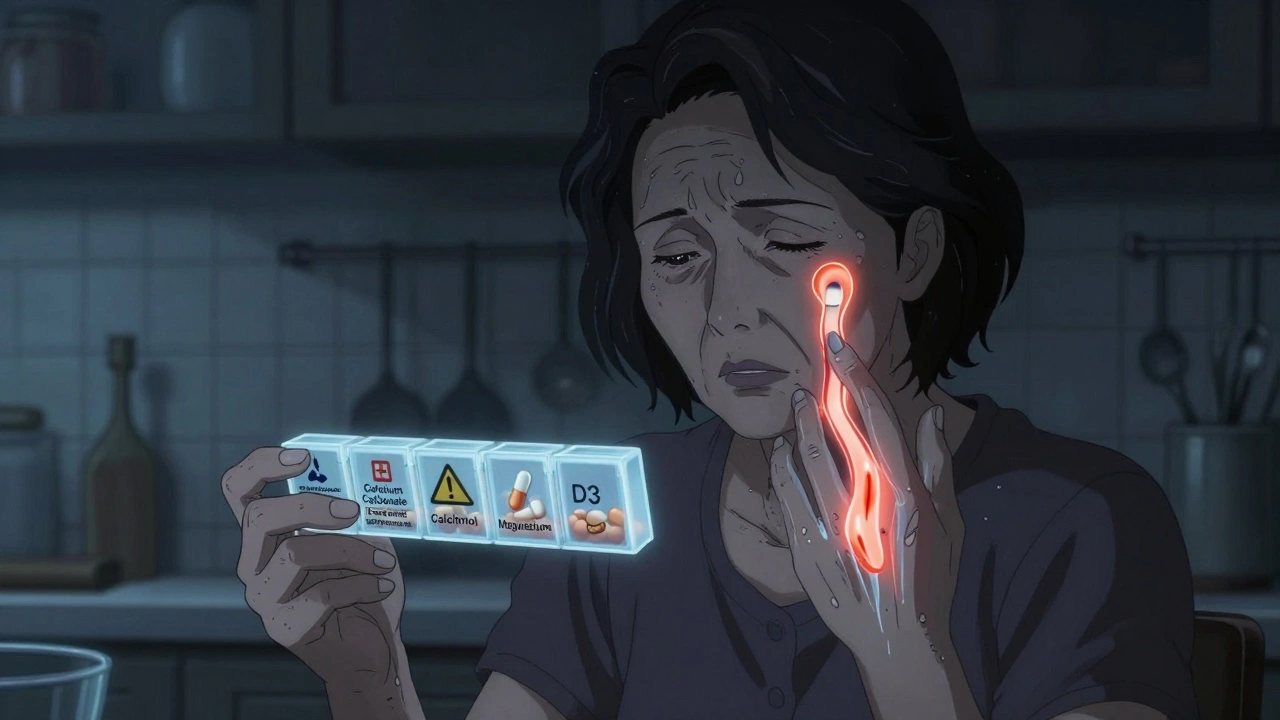
Hypoparathyroidism: How to Manage Low Calcium and Vitamin D Effectively
Learn how to manage low calcium and vitamin D in hypoparathyroidism with proven dosing, diet tips, and monitoring strategies to avoid kidney damage and stabilize symptoms long-term.
About
Health and Medicine
Latest Posts

Steroid-Induced Hyperglycemia: How to Adjust Diabetes Medications Safely
By Orion Kingsworth Mar 21, 2026

Pleural Effusion: Causes, Thoracentesis, and How to Prevent Recurrence
By Orion Kingsworth Jan 23, 2026

Pharmacy Margin Economics: How Generics Drive Profits in Today’s Drug Market
By Orion Kingsworth Jan 30, 2026