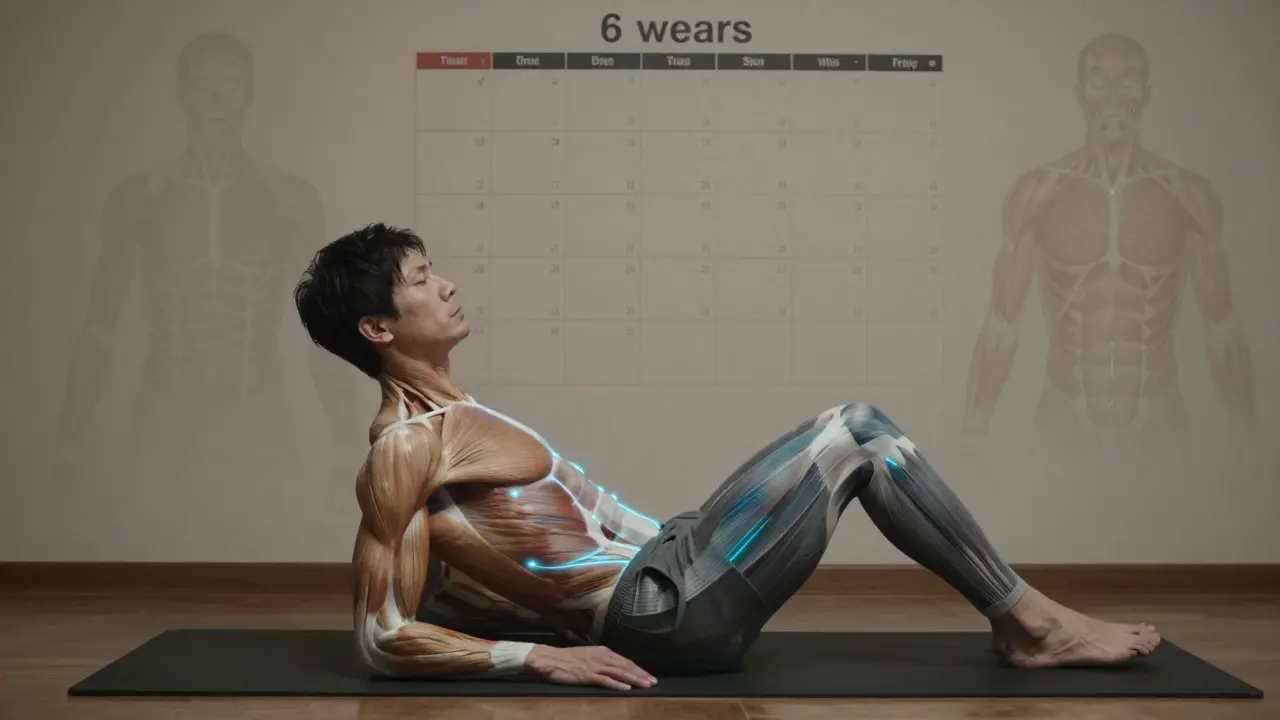
Chronic back pain isn’t just a sore back that won’t go away. It’s pain that lasts longer than 12 weeks-long after any injury should have healed. Around 8% of adults in the U.S. live with it, and many of them have tried everything: heat packs, rest, over-the-counter pills, even injections. But the real answer isn’t one magic fix. It’s a mix of physical therapy, smart medication use, and daily self-management habits that add up over time.
Physical Therapy Isn’t Just Stretching
Most people think physical therapy means lying on a table while someone massages your back. That’s not it. Real physical therapy for chronic back pain is a personalized training program built around your body’s weak spots. It’s not about fixing a broken spine-it’s about teaching your muscles to support it better.
Effective programs focus on five things: posture retraining, core strengthening, flexibility, aerobic conditioning, and pain tolerance building. Studies show that when patients stick with it, 78% see meaningful improvement. Why? Because therapy doesn’t just reduce pain-it restores movement. People who do core exercises targeting the transverse abdominis and multifidus muscles report 45-55% better function in daily tasks like bending, lifting, or standing for long periods.
But here’s the catch: it only works if you keep doing the exercises at home. The Orthopedic Institute of Pennsylvania found that 82% of patients who followed their home routine saw big gains. Only 45% did if they skipped them. That’s why therapists give you a simple, repeatable plan-not a 20-move routine you’ll forget by Tuesday. Most programs last 6 to 8 weeks, with two to three sessions a week. Each visit costs $75-$120, and insurance often limits you to 20 visits a year under Medicare. If you can’t afford it, ask your therapist for low-cost alternatives like video-guided sessions or community-based programs.
Medications: Less Is Often More
Doctors used to hand out opioids like candy for back pain. Now, they’re rare. In 2016, nearly half of chronic back pain patients got opioids. By 2024, that number dropped to 12%. Why? Because long-term opioid use doesn’t just risk addiction-it can make your pain worse. It’s called opioid-induced hyperalgesia: your nervous system gets so sensitized that even light touches feel painful.
Today’s guidelines start with NSAIDs-ibuprofen or naproxen. They work for about 65% of people, giving 30-40% pain relief. But they’re not harmless. Take them for more than three months, and you risk stomach ulcers, kidney damage, or heart issues. The American College of Physicians says they’re okay for short-term use, but not as a long-term solution.
If NSAIDs don’t cut it, doctors turn to muscle relaxants like cyclobenzaprine or nerve-targeting drugs like gabapentin. Gabapentin helps about half of patients, but it causes brain fog in many. One Reddit user said it gave her 50% relief-but she couldn’t work because she felt drunk all day. That’s why some switch to duloxetine, an SNRI originally for depression. It reduces pain by 50% in 45% of users, but 25% get nauseous, and 15% feel dizzy. It’s a trade-off: better long-term function, but side effects that make some quit.
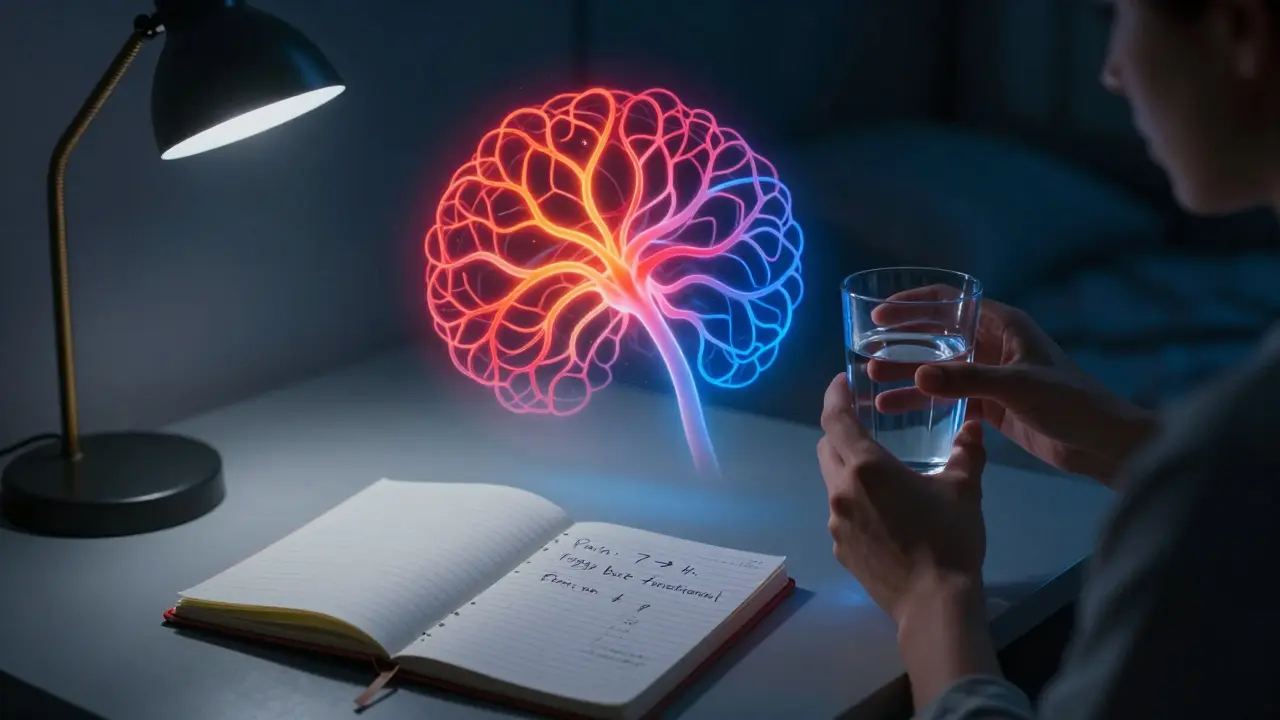
There’s no perfect pill. That’s why doctors often combine two or three. One patient might take naproxen in the morning and duloxetine at night. Another might use gabapentin for nighttime pain and stretch in the morning. The key is tracking what works-and what doesn’t. Keep a simple log: pain level (1-10), medication taken, side effects, and how you felt the next day. That data helps your doctor adjust things before you get stuck with something that makes you feel worse.
Self-Management: The Hidden Game-Changer
Here’s the truth: no therapist or doctor can be with you 24/7. That’s why self-management is the most powerful tool you have. It’s not about willpower. It’s about structure.
Harvard Health and UCSF both recommend a daily 20-30 minute routine that includes movement, mindfulness, and pacing. Movement doesn’t mean running a marathon. It means walking 10 minutes, doing two stretches, or using a foam roller. Mindfulness means noticing your pain without panicking-breathing through it, not fighting it. Pacing means breaking tasks into chunks. Instead of cleaning the whole house, do one room, rest, then move on.
Studies show that people who stick to a self-management plan for 8-12 weeks cut their pain by 40-50%. But only 63% stick with it. Why? Because it’s boring. It’s hard to measure progress. You don’t see a scar healing-you just feel less pain over time.
That’s where tools help. The UCSF Chronic Pain Toolkit offers free daily checklists. PainConnection.org has a 24/7 community forum where people share what worked. One user wrote: “I started with five minutes of stretching. Now I walk 2 miles a day. I didn’t fix my back-I fixed how I live with it.” That’s the goal: not to be pain-free, but to live fully despite the pain.
What Works Best for You?
Not all back pain is the same. If your pain flares up after sitting too long, it’s likely mechanical-your posture or weak core is the issue. Physical therapy will help most. If your pain is constant, burning, or shoots down your leg, it might be nerve-related. Gabapentin or duloxetine could be more useful. If you have stiffness in the morning and your spine feels fused, you might have an inflammatory condition like ankylosing spondylitis. NSAIDs work better here.
That’s why the latest research pushes for classification-based care. Instead of treating “back pain,” doctors now ask: Is it mechanical? Neuropathic? Inflammatory? Each type responds differently. A 2024 study showed matching treatment to the type increased success by 25-30%.
For most people, the best path looks like this:
- Start with physical therapy-get your movement back.
- Add NSAIDs only for flare-ups, not daily use.
- Try duloxetine or gabapentin if pain is nerve-related and doesn’t improve with movement.
- Build a daily self-management habit-even 10 minutes counts.
- Only consider injections or surgery if nothing else works after six months.
What Doesn’t Work
There are a lot of myths. Resting for weeks? It makes muscles weaker and pain worse. Only taking painkillers? You’re treating the symptom, not the cause. Waiting until the pain is unbearable before acting? You’re giving your nervous system time to hardwire the pain signal.
And don’t fall for quick fixes. Spinal decompression machines, expensive back braces, or miracle supplements rarely deliver. The Pain Center’s 2024 patient survey found that 73% of people start with OTC meds, 58% combine them with PT, and only 32% ever go to injections. Those who waited longer than six months without a plan were far less likely to improve.

Getting Started Today
You don’t need to do everything at once. Pick one thing to start:
- If you’re not moving much: walk 10 minutes after breakfast every day.
- If you’re on NSAIDs: track your stomach discomfort. If it’s worse, talk to your doctor about switching.
- If you’ve tried PT before and quit: ask for a home video program. Many clinics offer them now.
- If you feel hopeless: join PainConnection.org. Talking to others who get it changes everything.
Chronic back pain isn’t something you cure. It’s something you manage. And the people who do best aren’t the ones who found the perfect pill or the most expensive therapist. They’re the ones who showed up-every day-even on the hard days.
Can physical therapy really help chronic back pain, or is it just for acute injuries?
Yes, physical therapy is one of the most effective treatments for chronic back pain, not just acute injuries. Research shows that 78% of patients with long-term back pain see meaningful improvement after a structured physical therapy program. It works by strengthening core muscles, improving posture, and teaching your body to move without triggering pain. Unlike short-term fixes, therapy builds long-term resilience. The key is consistency-patients who do their home exercises daily are twice as likely to improve as those who don’t.
Are opioids ever appropriate for chronic back pain?
Opioids are rarely appropriate for chronic back pain. Due to risks like addiction, tolerance, and opioid-induced hyperalgesia (where pain actually gets worse with long-term use), prescribing guidelines now recommend opioids only as a last resort-after all other options have failed. In 2024, only 12% of chronic back pain patients received opioids, down from 45% in 2016. Even then, they’re used at the lowest possible dose for the shortest time. The goal is never long-term reliance.
Why do some people say medications make their pain worse?
Some medications, especially opioids and even long-term NSAIDs, can cause side effects that mimic or worsen pain. Opioids can trigger opioid-induced hyperalgesia, making your nerves more sensitive to pain. NSAIDs can cause inflammation in the gut or kidneys, which may feel like internal aching. Other drugs like gabapentin can cause dizziness or brain fog, making movement harder and leading to more stiffness. It’s not that the meds are failing-they’re sometimes causing new problems. Tracking side effects helps your doctor adjust your plan before it gets worse.
How long does it take to see results from self-management?
Most people start noticing small improvements in 4-6 weeks, but meaningful change usually takes 8-12 weeks of consistent effort. Self-management isn’t about quick fixes-it’s about rewiring how your brain and body respond to pain. Studies show that people who stick with daily routines (even just 20 minutes) for 12 weeks report 40-50% less pain and better sleep, mood, and function. The biggest predictor of success? Showing up every day, even when you don’t feel like it.
Is it worth paying for physical therapy if insurance won’t cover enough sessions?
Yes-if you use the sessions wisely. Most insurance plans cover 20 visits a year, which is enough for a solid foundation. The goal isn’t to be in therapy forever-it’s to learn what works for your body so you can continue at home. Many clinics now offer affordable video follow-ups or group classes. Community centers, yoga studios, or even YouTube channels with certified physiotherapists can help you maintain progress. The real cost isn’t the session-it’s the lost mobility, missed work, and declining quality of life if you do nothing.
What’s the most common mistake people make with chronic back pain?
The biggest mistake is waiting too long to act. Many people rest for weeks, take OTC pills, and hope it goes away. But chronic pain isn’t a broken bone-it’s a nervous system that’s learned to hurt. The longer you wait, the more your brain reinforces that pain signal. The second biggest mistake is expecting one solution to fix everything. Physical therapy, medication, and self-management work best together. You don’t need to do it all perfectly-just consistently.
What Comes Next
If you’ve tried a few things and still struggle, don’t give up. The field of pain management is changing fast. In 2024, the NIH launched a $45 million study to find which patients respond best to which treatments-personalized pain care is on the horizon. Meanwhile, integrative programs combining acupuncture, mindfulness, and medication are becoming standard in top clinics.
Your next step? Pick one thing from this article and do it for 14 days. Walk. Stretch. Log your meds. Talk to someone online. Small actions, repeated, create big change. You’re not broken. You’re just managing a complex condition-and you’ve already taken the hardest step: looking for real answers.




sagar sanadi
January 19, 2026 at 13:10
Physical therapy? LOL. My cousin did that for 8 weeks and now he’s got a $3,000 bill and a back that still hurts. Turns out the therapist was just selling him a $200 foam roller he could’ve gotten at Walmart. They don’t care if you get better-they care if you keep coming back. The real cure? Stop sitting. Stop working. Move to a cabin in the woods. No screens. No chairs. Just dirt. That’s what they don’t tell you.