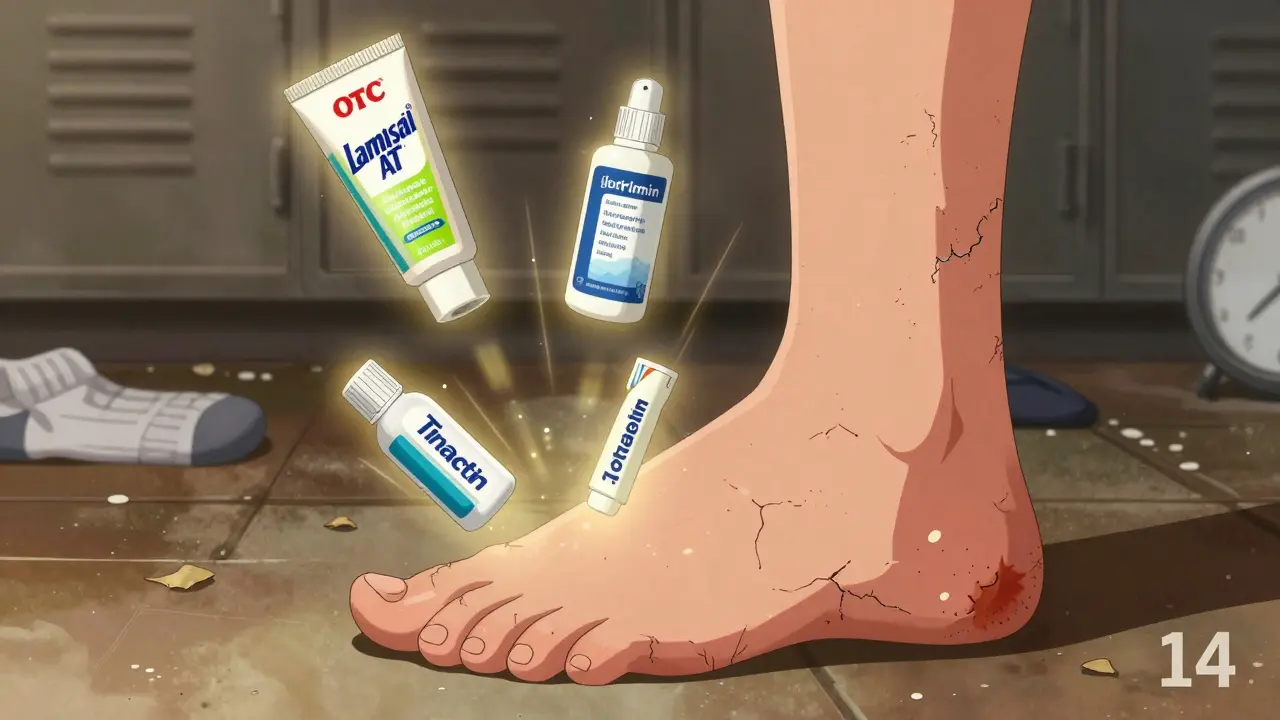
When your feet start itching, peeling, or burning-especially between the toes-you’re not alone. About 1 in 5 people deals with athlete’s foot at any given time. It’s not a sign of poor hygiene. It’s a common fungal infection caused by fungi that thrive in warm, damp places like shoes, locker rooms, and sweaty socks. The good news? You don’t need a prescription to treat it. Over-the-counter (OTC) antifungal treatments work well for most cases-if you use them right.
What Actually Works? The Top OTC Active Ingredients
Not all OTC creams, sprays, and powders are created equal. The active ingredient makes all the difference. Here are the five most common ones, backed by clinical data:
- Terbinafine (Lamisil AT): Fungicidal-it kills the fungus. One daily application for 1-2 weeks. Cure rate: 83% in clinical trials.
- Clotrimazole (Lotrimin): Fungistatic-it stops fungus from growing. Apply twice daily for 2-4 weeks. Cure rate: 74%. Works well for mixed infections.
- Miconazole (Micatin): Similar to clotrimazole. Twice-daily use. Good for itching relief.
- Tolnaftate (Tinactin): Older but affordable. Twice daily for 4 weeks. Cure rate: 65%. Best for moist, between-the-toes cases.
- Undecylenic acid: Found in powders. Less effective alone, but helps keep feet dry.
Terbinafine is the most effective single agent. Studies show it clears infections faster than the others. A 2007 review of over 10,000 patients found terbinafine worked significantly better than clotrimazole, miconazole, and tolnaftate. It’s also the easiest to stick with-once a day, no guesswork.
Formulation Matters: Creams, Sprays, Powders
The type of product you choose affects how well it works. Here’s how they stack up:
- Creams (65% of users): Best for dry, flaky skin on the sole or sides of the foot. They stay on longer and penetrate better.
- Sprays (20%): Great for hard-to-reach areas and people who hate rubbing cream in. Easy to apply on socks or shoes too.
- Powders (10%): Ideal for sweaty feet. Use daily to prevent recurrence. Tolnaftate powder costs under $9 and is the go-to for prevention.
- Gels and liquids: Rare. Mostly used for stubborn nail involvement.
Many people combine them. Use a cream during the day and a powder at night. Or spray your shoes every morning. A 2023 survey of 1,200 users found 78% preferred sprays for daily use because they’re quick and mess-free.
How to Apply It Right-The 5-Step Rule
Most people fail not because the product doesn’t work, but because they apply it wrong. Follow these steps every time:
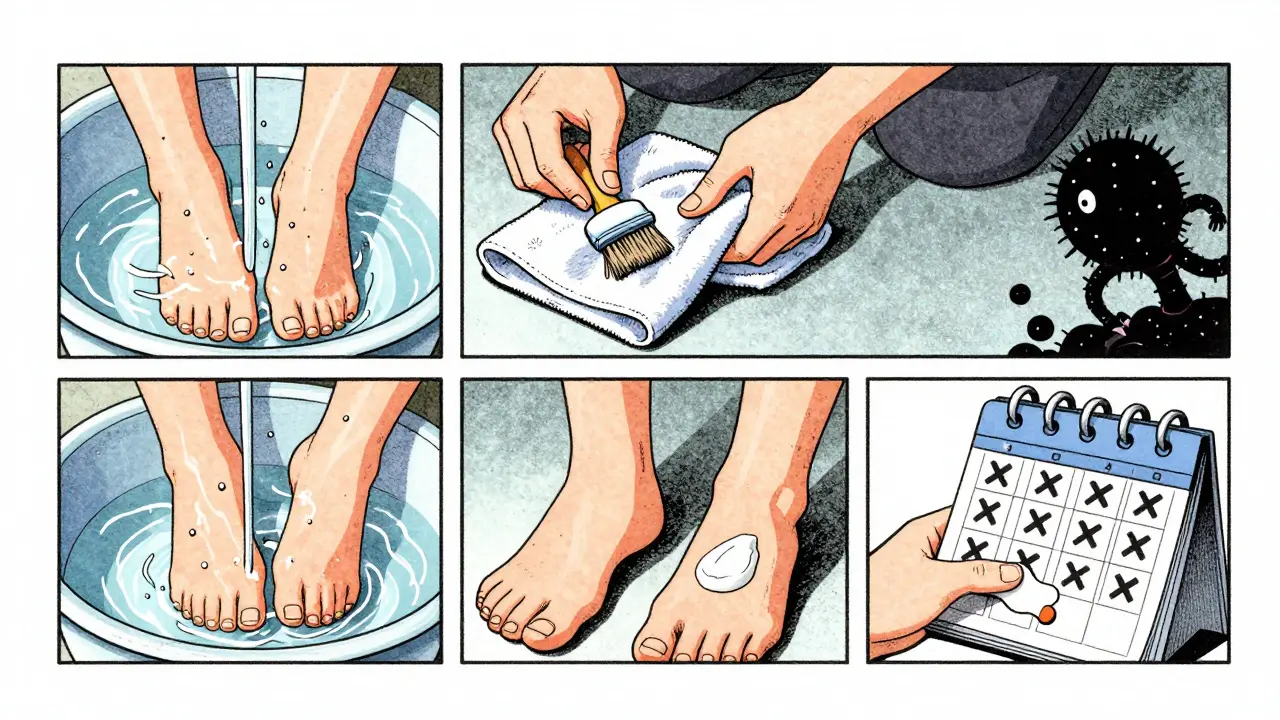
- Wash your feet with soap and water. Pay attention to between the toes.
- Dry thoroughly. Use a separate towel just for your feet. Then, blow-dry with a cool setting for 30 seconds-yes, really. Fungus loves moisture.
- Apply a thin layer of antifungal to the infected area and a 1-inch border around it. Don’t pile it on. Thick layers don’t help-they just make a mess.
- Treat both feet. Even if only one looks infected, the fungus is probably on both. Treating just one side leads to reinfection.
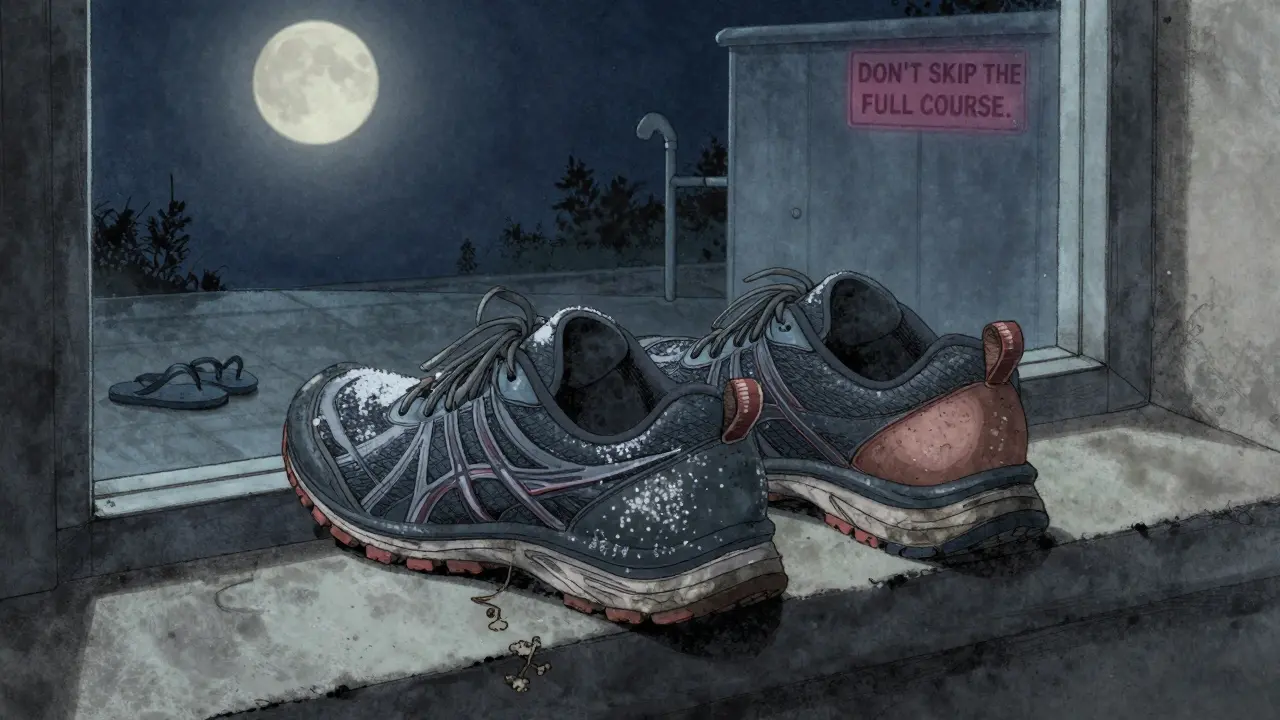
- Keep going. Don’t stop when the itching stops. For terbinafine, finish 1-2 weeks. For clotrimazole or tolnaftate, finish the full 2-4 weeks. Stopping early is why 63% of treatments fail.
A Reddit user named ActiveRunner87 shared: “Terbinafine cleared my mild case in 6 days-but I skipped one day because my feet felt fine. Two days later, the itching came back. I had to start over.”
Prevention: Stop It From Coming Back
Treating the infection is only half the battle. Without prevention, it’ll return. Here’s what actually works:
- Change socks twice a day. Cotton or moisture-wicking fabrics only. No synthetics.
- Rotate shoes. Don’t wear the same pair two days in a row. Let them air out for 24-48 hours. Fungus dies without moisture.
- Use antifungal powder daily. Even after the infection clears. Sprinkle it in shoes and on feet. This cuts recurrence by 63%.
- Wear flip-flops in public showers, pools, and gyms. Reduces transmission risk by 85%.
- Don’t share towels, shoes, or nail clippers. Fungus spreads easily.
Dr. Wong from GoodRx says: “70% of recurring cases happen because people stop preventive habits too soon. They treat the itch, then go back to wearing closed shoes and dirty socks. It’s like turning off the fire alarm but leaving the kitchen on fire.”
When to See a Doctor
OTC treatments work for 85% of cases. But if you see any of these signs, it’s time for professional help:
- Pus, swelling, or increased redness (signs of bacterial infection)
- Infection covering more than 70% of your foot
- No improvement after 2 weeks of consistent treatment
- You’re diabetic, immunocompromised, or have poor circulation
For these cases, doctors prescribe oral terbinafine (250mg daily for 2 weeks), itraconazole, or topical ciclopirox. Oral meds work faster and deeper. A 2023 study showed 89% of stubborn cases cleared with ciclopirox after OTC failure.
What Not to Do
Here are the most common mistakes-and why they backfire:
- Using steroid creams (like hydrocortisone) to stop itching. They make fungal infections worse.
- Wearing tight shoes during treatment. You’re trapping moisture. Go for open-toed sandals if you can.
- Skipping foot drying. Washing isn’t enough. If your skin stays damp, the fungus survives.
- Buying cheap generics without checking the active ingredient. Some “antifungal” products have no real antifungal at all. Always check the label.
Cost and Value: What You Really Pay
OTC treatments are cheap-but not all are worth it:
- Tolnaftate (Tinactin): $5.99 for 1 oz cream. Low efficacy, but fine for prevention.
- Clotrimazole (Lotrimin): $12-$18. Good for itching, but needs twice-daily use.
- Terbinafine (Lamisil AT): $18-$25. One daily dose. Highest cure rate. Best value long-term.
- Tolnaftate powder: $8.99 for 30g. Best for shoe treatment and prevention.
On Amazon, Lotrimin Ultra has over 14,000 reviews with a 4.2-star rating. Common praise: “Relief in 24 hours.” Common complaint: “Didn’t work for my severe case.”
Terbinafine may cost a few dollars more upfront-but you’ll save time, frustration, and repeat purchases.
What’s Next? The Future of Treatment
New products are on the horizon. Some OTC creams now include dimethicone to form a moisture barrier. Others use nanoemulsions to push antifungal deeper into the skin. Clinical trials show these could cut treatment time to just 3-5 days.
But there’s a warning: antifungal resistance is rising. Terbinafine resistance in Trichophyton rubrum-the most common fungus-jumped from 0.2% in 2010 to 1.7% in 2023. That’s why using the right product, the right way, and for the full course matters more than ever.
Can I use OTC athlete’s foot treatments on my nails?
OTC creams and sprays are not designed to penetrate thick toenails. For nail fungus, you need oral medication or a specialized nail lacquer like ciclopirox. If your toenails are yellow, thick, or crumbling, see a doctor. OTC foot treatments won’t fix nail infections.
Is athlete’s foot contagious?
Yes. It spreads through direct contact with infected skin or surfaces like shower floors, towels, or shared shoes. That’s why wearing flip-flops in public showers and not sharing footwear is so important. It’s not a hygiene issue-it’s a fungal environment issue.
Why does my foot itch more after applying the cream?
Temporary itching can happen as the antifungal kills the fungus and triggers an immune response. If it lasts more than 2-3 days or turns into burning or rash, stop the product. You might be allergic to the base (like lanolin or preservatives). Try switching to a different formulation-like a spray or powder.
Can I use antifungal treatments while pregnant?
Topical terbinafine, clotrimazole, and tolnaftate are considered low-risk during pregnancy. The amount absorbed through the skin is minimal. Still, talk to your OB-GYN before starting any treatment. Avoid oral antifungals unless prescribed.
How long does it take for athlete’s foot to go away?
Symptoms like itching and redness usually improve in 3-7 days. But the fungus can hide deep in the skin. Complete clearance takes 1-4 weeks depending on the product. Always finish the full course-even if you feel fine. Stopping early is the #1 reason it comes back.




Patrick Jackson
March 5, 2026 at 19:52
This is literally the most thorough guide I’ve ever read on athlete’s foot. Like, I didn’t even know terbinafine had an 83% cure rate 😮 I’ve been using Lotrimin for years and just thought I was ‘bad at hygiene.’ Turns out I just didn’t know how to use it. Thanks for this. 🙏