Begin typing your search above and press return to search.

Osteoarthritis of the Hip: How Weight Loss Can Preserve Your Joint and Reduce Pain

Osteoarthritis of the Hip: How Weight Loss Can Preserve Your Joint and Reduce Pain

Osteoarthritis of the Hip: How Weight Loss Can Preserve Your Joint and Reduce Pain

When your hip starts to ache with every step, it’s not just discomfort-it’s your body screaming that something’s off. For millions of people over 50, especially those carrying extra weight, that pain often comes from osteoarthritis of the hip. Unlike the more commonly discussed knee OA, hip osteoarthritis doesn’t always improve with simple fixes. But here’s the truth most doctors won’t tell you: losing weight isn’t just a suggestion-it’s one of the few proven ways to slow down joint damage and actually feel better.

Why Your Hip Hurts When You’re Overweight

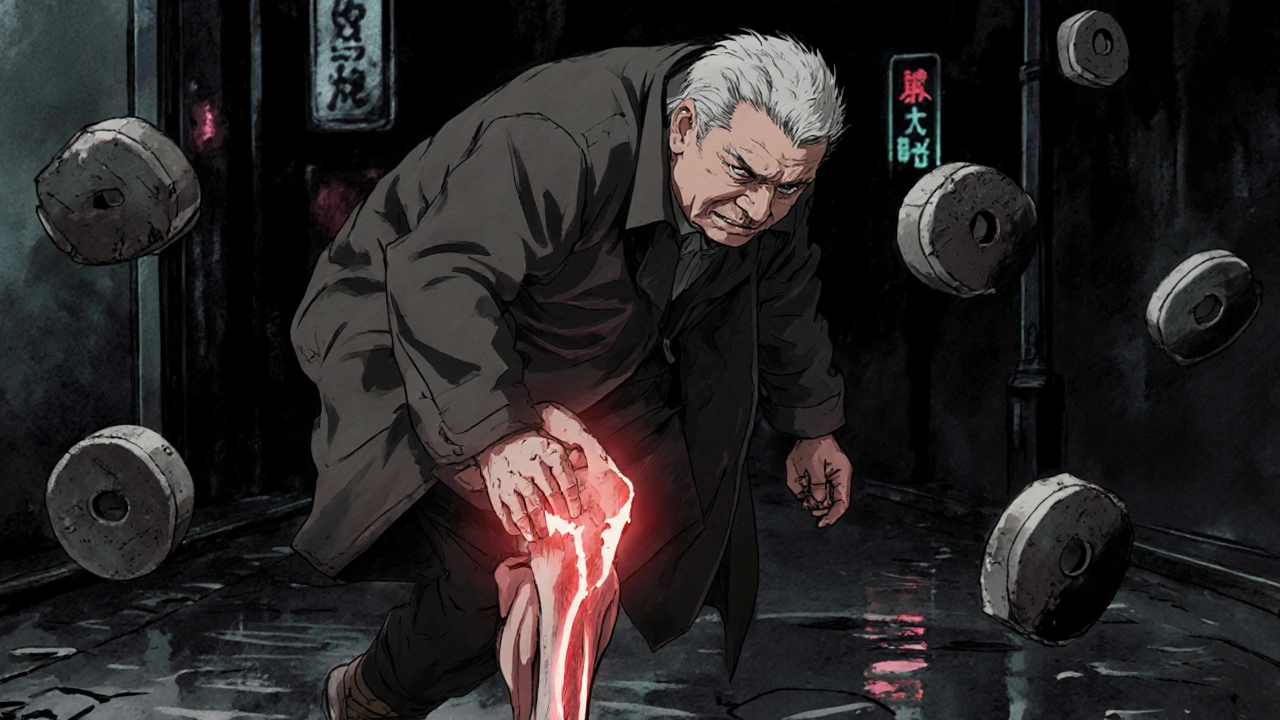
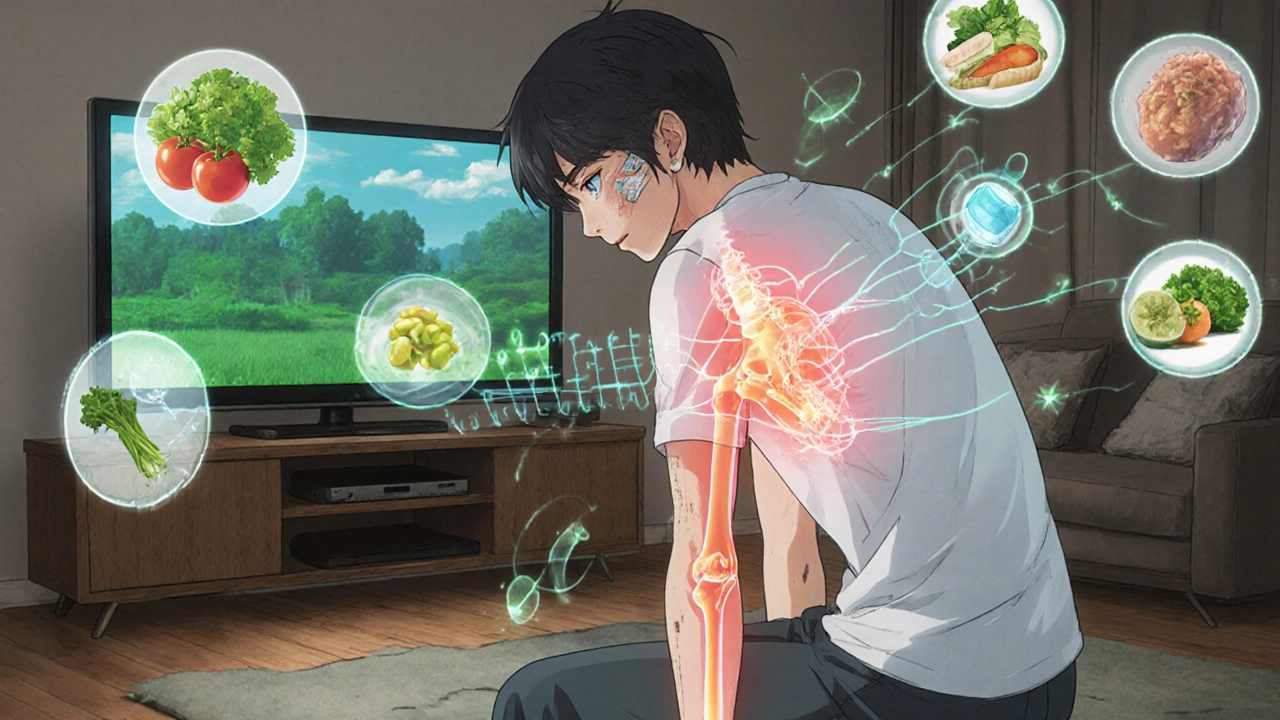
Your hip joint is built to carry your whole body weight. Every time you walk, climb stairs, or even stand up from a chair, your hip bears three to six times your body weight. When you’re carrying extra pounds, that pressure piles up. Over time, the cartilage-the smooth cushion between your bones-wears down. Bone starts to rub on bone. Inflammation kicks in. Pain follows.

It’s not just about mechanical stress, though. Fat tissue isn’t just padding-it’s active. It releases chemicals that trigger low-grade inflammation throughout your body, including your joints. That means even if you’re not putting more strain on your hip, your body is still attacking it from the inside.

Studies show that people with a BMI over 30 are far more likely to develop hip osteoarthritis. And once it starts, the cycle gets worse: pain makes you move less, which leads to muscle loss, which makes movement even harder, which leads to more weight gain. It’s a loop, and breaking it starts with your weight.

The Weight Loss Myth: Why Hip OA Is Different From Knee OA

You’ve probably heard that losing weight helps with knee arthritis. That’s true-and the evidence is rock solid. But hip osteoarthritis? The story gets messy.

In 2023, NEJM Journal Watch published a blunt take: “Osteoarthritis of the Hips Is Unaffected by Weight Loss.” That headline made waves. And for a while, it felt like maybe dieting wasn’t worth the effort if your hip was the problem.

But here’s what they didn’t say: that study looked at pain levels at six months. And then came the 2024 Nature study tracking 65-year-olds with hip OA and obesity. The results? People who lost more than 10% of their body weight saw a 31% improvement in their quality of life. Pain dropped. Mobility improved. Stiffness eased. The bigger the weight loss, the better the results.

The key difference? Timing. Knee OA pain often improves within months. Hip OA takes longer. The 2023 clinical trial that showed no pain difference at six months? At 12 months, the group that lost weight had significantly better function and less pain than those who only exercised. Your hip doesn’t heal fast-but it does heal if you give it time and enough weight loss.

How Much Weight Do You Actually Need to Lose?

Forget the 5% rule. That number came from knee OA studies. For your hip, the data points to a higher target.

- Less than 5% weight loss? Minimal change in symptoms.
- 5-7%? Some improvement in stiffness and daily movement.
- 7-10%? Clear, measurable improvement in pain and function.
- Over 10%? Major gains-up to 31% better quality of life, according to the Nature study.

One Australian program, the Osteoarthritis Healthy Weight For Life (OAHWFL), targets 7-10% weight loss over 18 weeks. Participants didn’t just lose weight-they regained the ability to walk without pain, get out of bed without help, and even play with their grandkids again.

And here’s the kicker: losing 20% didn’t give you much more benefit than losing 10%. That means you don’t need to become skinny. You just need to lose enough to take the pressure off.
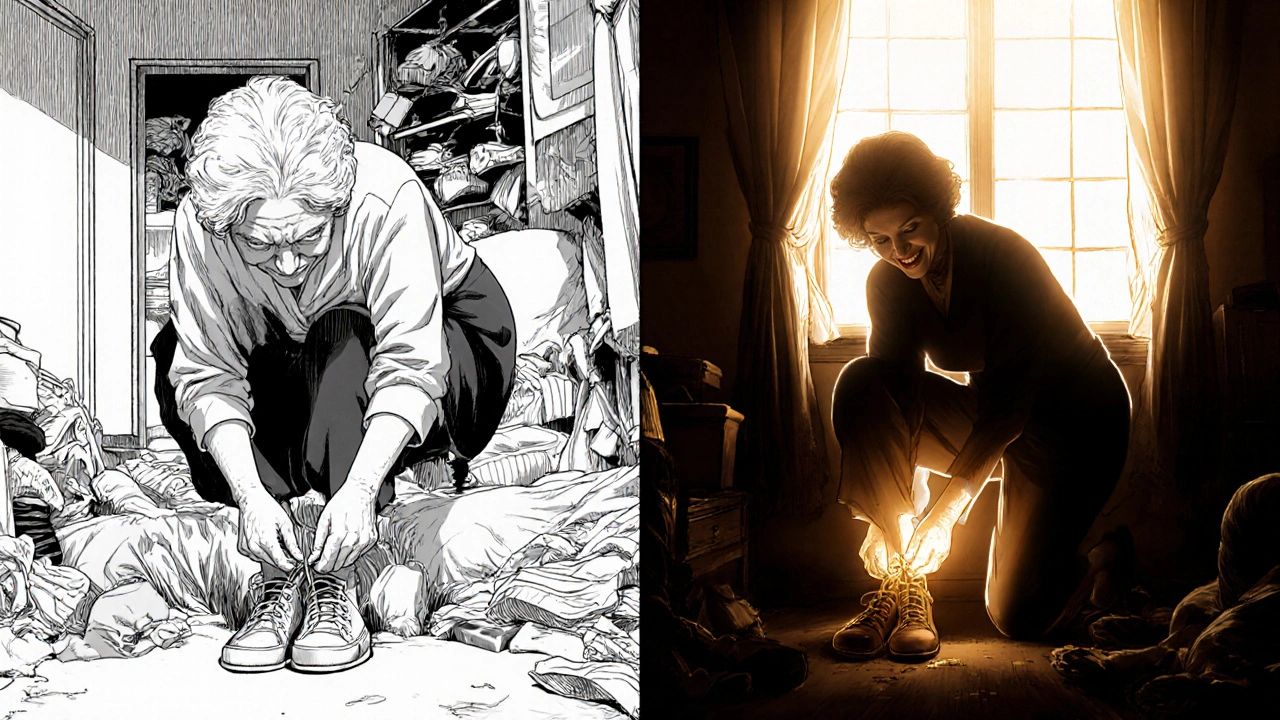
Woman successfully tying her shoes after weight loss, contrasted with her past struggle.

What Works: Diet, Exercise, and the Right Combo

You can’t just diet. You can’t just exercise. You need both.

A 2023 trial compared two groups: one did a very-low-calorie diet plus exercise, the other did exercise alone. The diet group lost 8.5% more weight. At six months, pain levels were almost the same. But at 12 months? The diet-plus-exercise group had better hip function, less pain, and improved walking speed. Why? Because exercise rebuilt the muscles around the hip. Diet reduced the load. Together, they protected the joint.

The best plan? A low-carb or Mediterranean-style diet paired with strength training. Focus on:

  • Reducing sugar and refined carbs-these spike inflammation.
  • Eating more vegetables, lean protein, and healthy fats-these reduce swelling.
  • Doing seated leg lifts, glute bridges, and resistance band walks-these strengthen the hip without pounding the joint.
Avoid high-impact activities like running or jumping. They hurt more than they help. Instead, try swimming, cycling, or walking on flat ground. Even 30 minutes a day, five days a week, makes a difference.

Real Results: What Happens When People Actually Lose Weight

In a 2012 study, 35 people with hip OA and a BMI over 25 followed an eight-month program of diet and exercise. They lost an average of 10% of their body weight. What happened next?

- 32.6% improvement in physical function (measured by WOMAC scores).
- Pain dropped by nearly half.
- Walking speed increased by 20%.
- Many stopped needing painkillers.

One participant, a 68-year-old woman from Sydney, told researchers she hadn’t been able to tie her shoes in three years. After the program, she did it without help. “I didn’t think I’d ever get that back,” she said.

These aren’t outliers. They’re what happens when you treat hip OA like a lifestyle disease-not just a joint problem.

What About Weight Loss Drugs?

If you’ve tried everything and still can’t lose the weight, medications like semaglutide or tirzepatide are now approved for obesity in people with BMI over 30. But here’s the catch: they’re not first-line. The American College of Rheumatology says you should try diet and exercise for at least six months before considering them.

Why? Because drugs help you lose weight. But only lifestyle changes help you keep it off-and rebuild the muscles that protect your hip. Medications are a tool, not a fix.

Also, they’re expensive. And not everyone qualifies. For most people, the real solution is still food, movement, and consistency.
Person doing glute bridge at home, transparent hip joint showing reduced pressure, healthy foods nearby.

How to Start-Without Getting Overwhelmed

You don’t need a gym membership or a personal trainer. Start small.

1. Track your food for one week. Use a free app like MyFitnessPal. Just see where the calories hide-soda, sauces, snacks.

2. Swap one high-calorie item per day. Replace sugary cereal with eggs. Swap soda for sparkling water with lemon. Small changes add up.

3. Walk 10 minutes after dinner. That’s it. No need to go far. Just move.

4. Do two glute bridges a day. Lie on your back, knees bent, lift your hips for three seconds. Lower slowly. Do 10 reps. Do it while watching TV.

5. Set a 7% goal. If you weigh 90 kg, aim to lose 6.3 kg. That’s 1.5 kg a month. Achievable. Sustainable.

You don’t need to be perfect. You just need to be consistent.

When to See a Specialist

If you’ve lost 7-10% of your weight, stuck with exercise for six months, and still can’t walk without pain-it’s time to see a rheumatologist or orthopedic specialist. They can check for other issues like hip impingement or early-stage arthritis that might need targeted treatment.

But don’t wait for surgery. Joint replacement is effective, but it’s not a cure. You still need to manage your weight afterward. Otherwise, the new joint wears out faster.

Final Thought: Your Hip Isn’t Broken-It’s Overloaded

Osteoarthritis of the hip doesn’t mean you’re doomed. It means your body’s asking for help. You don’t need to be thin. You just need to be lighter than you are now.

Losing weight won’t erase arthritis. But it can stop it from getting worse. It can give you back your mornings. Your walks. Your independence.

And that’s worth every step.

Comments

steffi walsh

steffi walsh

November 18, 2025 at 00:27

Just started walking 10 mins after dinner like the post said and already feel less stiff in the morning. Not magic, but it’s something. Small wins count.

Conor McNamara

Conor McNamara

November 18, 2025 at 20:12

they dont want you to lose weight because then the drug companies lose billions. theyll tell you its your joints but its the food additives and glyphosate. im not saying im right but look at the data before the 2000s. hip replacements were rare. now its like buying a new pair of shoes.

Kristina Williams

Kristina Williams

November 19, 2025 at 18:37

glyphosate is not even in the food chain anymore in the US. you’re just reading reddit posts. the real reason is aging populations and sedentary lifestyles. also, most people dont know how to walk anymore.

Katelyn Sykes

Katelyn Sykes

November 20, 2025 at 05:16

im just here to say i lost 8% and my hip stopped screaming at me when i stood up. no fancy meds. just less sugar and more walking. i know it sounds basic but its working. also i cry sometimes from the pain before. now i just make tea and stretch.

Shilpi Tiwari

Shilpi Tiwari

November 21, 2025 at 12:07

the biomechanical load hypothesis is well documented but the inflammatory cytokine cascade driven by adipose tissue is the real driver here. IL-6 and TNF-alpha upregulation in visceral fat directly accelerates cartilage degradation. weight loss reduces serum CRP and leptin, which correlates with improved WOMAC scores. also, glute medius activation via resistance band walks improves joint proprioception. its not just about calories.

Leilani O'Neill

Leilani O'Neill

November 22, 2025 at 12:18

Irish people are the worst at this. You think a bit of walking will fix your hip? You need to eat properly. No soda, no bread, no potatoes. We used to eat fish and cabbage. Now you eat chips and Guinness and wonder why you can’t stand. It’s not science. It’s culture.

Riohlo (Or Rio) Marie

Riohlo (Or Rio) Marie

November 24, 2025 at 05:46

Oh please. You think losing 7% is some heroic feat? I lost 22% and still had to get a hip replacement because the cartilage was gone. You’re romanticizing weight loss like it’s a yoga retreat. The joint doesn’t care if you’re ‘consistent.’ It either has cartilage or it doesn’t. And if it’s gone, no amount of glute bridges will bring it back. You’re just delaying the inevitable with Instagram wellness.

Christine Eslinger

Christine Eslinger

November 26, 2025 at 01:35

Leilani, you’re right that culture matters-but you’re ignoring the science. The Nature study showed measurable structural improvement in cartilage thickness over 18 months with 10% weight loss. It’s not about being perfect. It’s about reducing the load enough for your body to repair. Even a little relief is worth it. And yes, some of us are still trying. We’re not lazy. We’re just tired.

Gabe Solack

Gabe Solack

November 26, 2025 at 17:59

just wanna say to everyone struggling: you’re not failing. even if you only lose 3% this month, you’re still helping your hip. i did glute bridges while watching netflix for 6 months and now i can sit on the floor with my dog. no one saw it. no one cared. but i did. and that’s enough. 💪🦵

Denny Sucipto

Denny Sucipto

November 28, 2025 at 08:27

you know what’s wild? the woman in the story who tied her shoes after 3 years? that’s the whole point. it’s not about fitting into jeans. it’s about not needing help to do something simple. i cried when i read that. i’ve been there. you’re not alone. keep going. even if it’s one step.

Holly Powell

Holly Powell

November 28, 2025 at 13:09

the entire premise is flawed. weight loss is a proxy for socioeconomic privilege. if you work two jobs, live in a food desert, and have no access to a gym or a nutritionist, telling you to ‘lose 7%’ is classist nonsense. the real solution is universal healthcare, subsidized healthy food, and paid physical therapy-not moralizing fat people. this post is capitalism dressed as wellness.

Write a comment

About

Welcome to Viamedic.com, your number one resource for pharmaceuticals online. Trust our reliable database for the latest medication information, quality supplements, and guidance in disease management. Discover the difference with our high-quality, trusted pharmaceuticals. Enhance your health and wellness with the comprehensive resources found on viamedic.com. Your source for trustworthy, reliable medication and nutrition advice.