FDA Rejection Reasons: Why Drugs Get Turned Down and What It Means for You
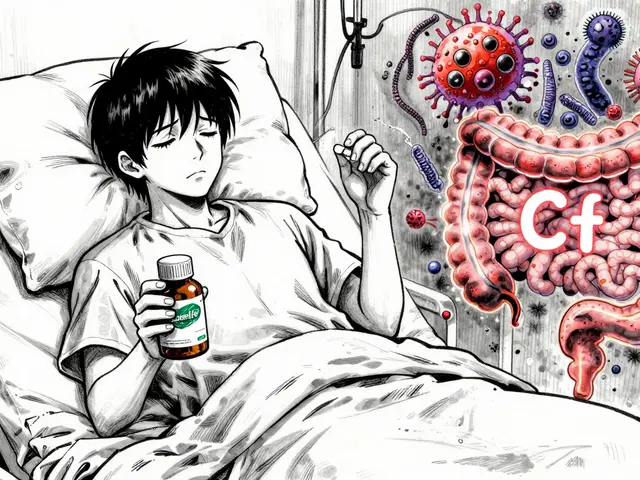
When the FDA rejection reasons, the specific criteria the U.S. Food and Drug Administration uses to deny new or modified drugs from reaching the market. Also known as drug approval failures, these rejections aren’t just bureaucratic hurdles—they directly affect what medications end up on pharmacy shelves and in your medicine cabinet. Every year, dozens of drug applications get turned down—not because they’re unsafe, but because they don’t meet the FDA’s exacting standards for proof, purity, or performance. You might think a drug works based on early results, but the FDA doesn’t rely on hope. It demands hard data: consistent manufacturing, proven bioequivalence, clean chemical profiles, and real-world safety records. If a generic version of a drug has impurities like nitrosamines—chemicals linked to cancer—it gets pulled. If a new drug doesn’t show it’s better than existing options, or if the study design is flawed, it gets rejected. This isn’t about big pharma vs. small startups. It’s about protecting you.
Many people assume that if a drug is sold in the U.S., it’s automatically safe and effective. But the FDA’s rejection list tells a different story. Take generic drugs, lower-cost versions of brand-name medications that must prove they work the same way in the body. Also known as bioequivalent medications, they’re essential for keeping healthcare affordable—but they’re also the most common source of FDA rejections. Why? Because some manufacturers cut corners. A batch might have inconsistent active ingredients. Another might not control contamination during production. We’ve seen recalls over nitrosamines in blood pressure meds, unapproved additives in sleep aids, and generics that failed dissolution tests—meaning they didn’t break down properly in your gut. Then there’s the issue of labeling. If a drug’s warning about side effects doesn’t match the latest safety data, the FDA won’t approve it. Even if the drug works, if the risks aren’t clearly communicated, it’s a no-go.
And it’s not just about the drug itself. The drug safety, the system of monitoring, testing, and regulating medications to prevent harm to patients. Also known as pharmacovigilance, it’s the backbone of every FDA decision. A drug might pass lab tests but still get rejected if post-market reports show a pattern of rare but serious reactions—like aplastic anemia from certain antibiotics or liver damage from herbal blends. The FDA doesn’t wait for thousands of cases. If a few patients report the same dangerous side effect, and the data adds up, the agency acts. That’s why you see sudden recalls of popular generics or warnings about new drug combinations. It’s not panic. It’s prevention.
What does this mean for you? If your prescription suddenly switches to a different generic, or if a medication you’ve been taking disappears from shelves, it’s likely because of an FDA rejection or recall. These aren’t random events. They’re the result of a system that’s designed to catch problems before they hurt people. You might feel frustrated when a drug you rely on gets pulled, but the reason it was approved in the first place was because it passed strict checks. When it gets rejected later, it’s because new evidence emerged. The system is working—even if it feels slow.
Below, you’ll find real cases and clear explanations of what goes wrong when drugs get turned down. From manufacturing flaws to hidden interactions, these posts show you exactly how the FDA protects you—and what you need to watch for when your meds change.
Medications
8
Comments
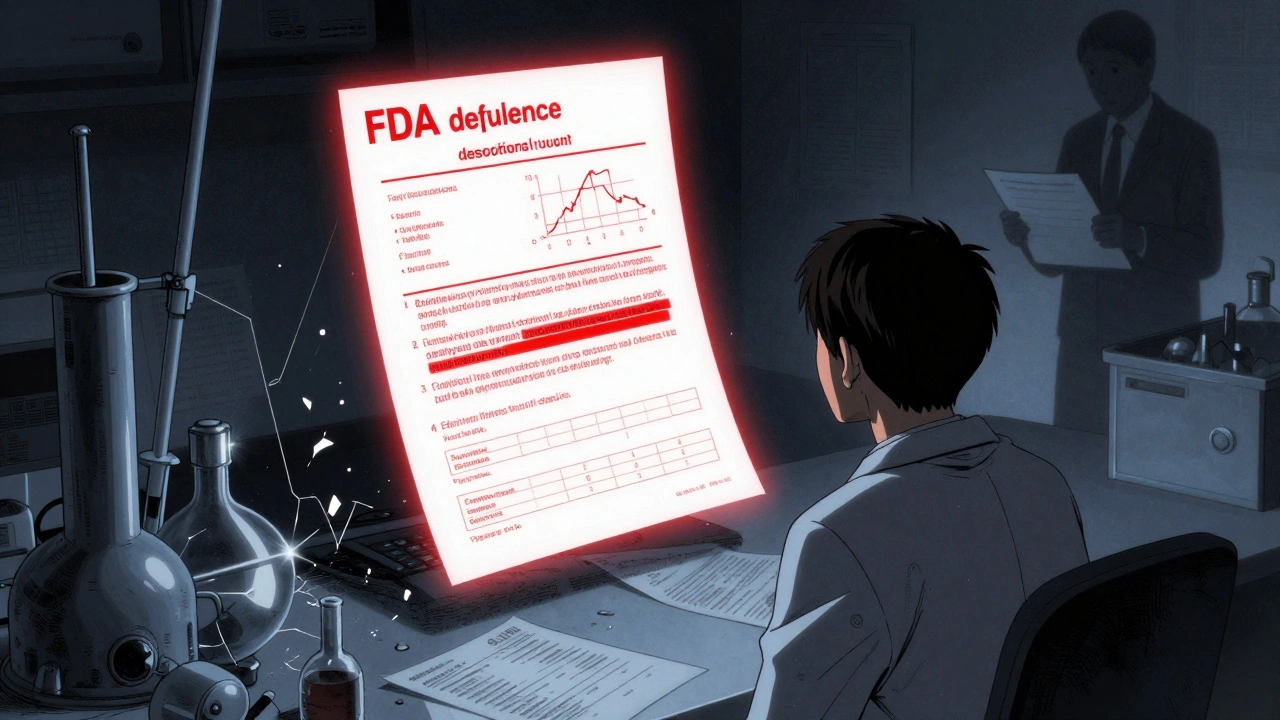
Deficiency Letters in Generic Drug Applications: Common FDA Findings and How to Avoid Them
Deficiency letters from the FDA are the main reason generic drug applications get rejected. Learn the top 5 reasons they’re issued, how to avoid them, and what’s changing at the FDA to speed up approvals.
About
Medications
Latest Posts
Nitrosamine Contamination in Generic Drugs: Recent Recalls and Regulatory Shifts
By Orion Kingsworth Nov 17, 2025
How to Read Children’s Medicine Labels by Age and Weight
By Orion Kingsworth Feb 3, 2026